Practical Sewing Room Ideas for a Budget Makeover
A sewing room makeover sounds exciting… right up until you discover that a simple thread rack may cost more than your last bundle of quilting cotton. But a sewing-room refresh doesn’t need a luxury budget, even if it sometimes feels like every makeover solution assumes you’re furnishing a boutique instead of a corner of your house where fabric crumbs and thread tails rule the floor.
A Quick Sewing-Room Reality Check
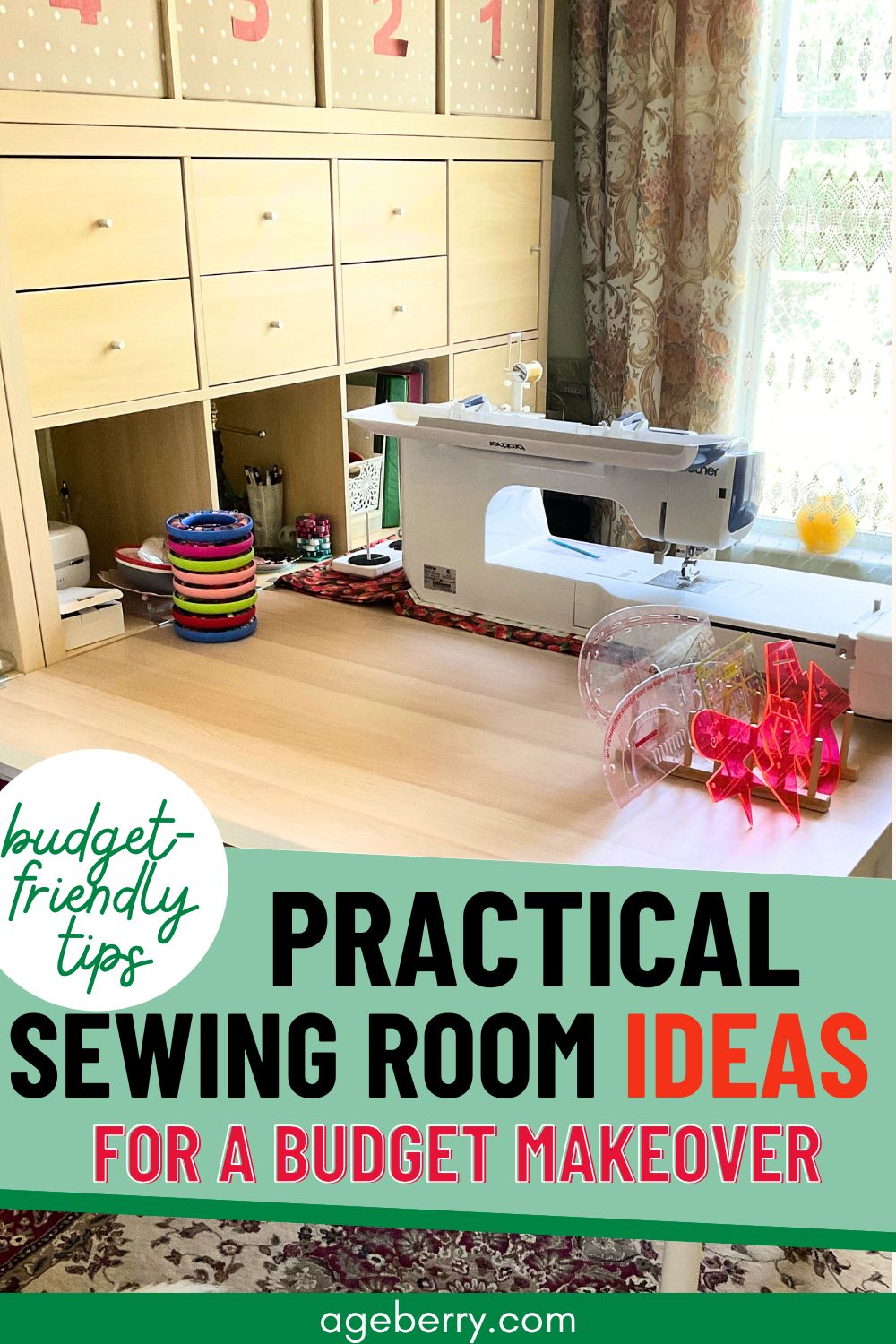
I’ve noticed something funny about sewing rooms. They start out tidy, full of good intentions and neatly folded fabric. Then one project happens. Then another. Before long, the rotary cutter has wandered off, the bobbins are scattered in places you don’t remember visiting, and the “temporary pile” on the chair has become a permanent resident.
But here’s the truth most of us forget: a sewing room doesn’t fall apart because it’s too small. It falls apart because it works hard. It’s a space where ideas and half-finished projects and fabric scraps collide on a daily basis. No wonder it gets chaotic.
The good news is that you don’t need a complete overhaul to feel at home in it again. A few well-chosen updates can make a space feel refreshed without asking you to redo the whole room. Small changes can shift the entire mood of a sewing room. And Black Friday week just makes those little upgrades a lot easier.
Why a Budget Makeover Works
A sewing room doesn’t need dramatic changes to feel better. Most of the time, it’s the small frustrations that wear you down: the dull lamp, the drawers that swallow essential tools, the stack of fabric that keeps tilting forward. Tiny things create the biggest daily annoyances, so tiny upgrades make the biggest difference.
Those small upgrades are usually the most affordable. A new set of organizers that calm the chaos on your cutting table. A bright task light that saves your eyes. A better place for the scissors that keep running away. A shelf that finally holds the fabric instead of threatening to spill it.
Black Friday week simply gives us an excuse to finally replace the things that have been testing our patience for years. Of course, none of us truly need an excuse to improve our sewing space, but the sale week makes it easier to say, “Now is the right moment.”
✅ Related tutorial: Confessions of a Fabric Collector: Why I Keep Buying Fabric (and How I Stopped Feeling Guilty)
How to Approach a Budget Makeover
A smart budget makeover starts with simple observations, not impulse purchases.
Step 1. Decide what actually annoys you in your sewing room
Think about things like:
- Light that isn’t strong enough
- Thread spools that roll to mysterious places
- Fabric that refuses to stay where you put it
- Tools that never seem to be in reach when you need them
Step 2. Pick a zone to refresh
Most sewing rooms fall into a few predictable zones. Choose one or two to focus on so the process feels doable instead of overwhelming.
Common zones:
- Cutting area — mats, rulers, scissors, rotary cutting tools
- Ironing setup — pressing tools, mats, sprays, storage
- Notions storage — bobbins, needles, clips, pins
- Machine space — lighting, tool trays, extension tables
- Fabric storage — shelves, bins, baskets
Step 3: Then check the deals
Now that you know what you actually need, it’s easy to avoid buying things that look appealing but won’t fix real problems.
Black Friday deals become more useful when they’re tied to specific sewing-room frustrations. Instead of browsing everything, you can look for:
- Better lighting
- Small storage solutions
- Upgrades for your most-used tools
- Items that help you sew more comfortably
In the paragraphs below I will mention some products I think are worth considering. However remember that there is no perfect product; there will always be people dissatisfied by one aspect or another. Key here is to notice a trend for the complaints, many complains about the same problem is a red flag.
Shopping Section: “What’s Worth Buying on Sale This Week”
A. Lighting Upgrades
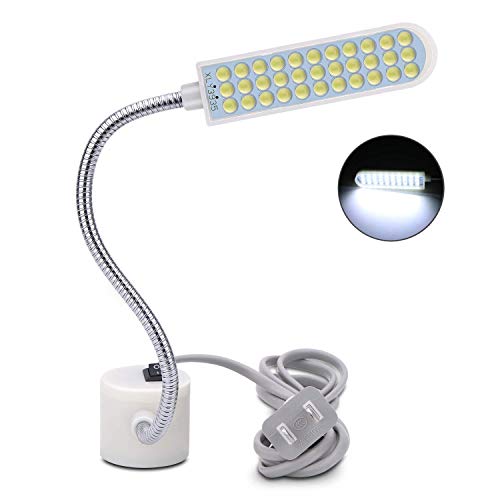
A 36-LED gooseneck light with a strong magnetic base that clamps to metal surfaces, designed to brighten your sewing machine area with daylight-toned illumination. Out of roughly 3400 reviews about 90% are positive and the price is surprisingly low.

A clamp-on LED desk lamp offering 3 color modes and 10 brightness levels via USB power, ideal for adjusting light intensity and color temperature for detailed sewing or crafting. Again, out of 8300 reviews, 91% are positive.

A 12-inch adhesive LED strip light from Madam Sew made for sewing and quilting machines, with 24 chips, a dimmer and cut-to-fit length so you can customize placement over your machine bed.
I use one of these strips on my mechanical machine, and it really helps. The only tricky part is positioning it so the light shines on your work and not in your eyes — something several buyers mentioned as well.

A flexible gooseneck clip-on LED lamp that gives 3 light modes and 10 brightness levels, energy-saving, and suitable for sewing desks, craft tables or anywhere you need task lighting. It has over 11000 reviews, 92% positive.
B. Storage Helpers

A rotating wooden thread rack keeps your spools visible, reachable, and far less likely to wander off during your next project. It spins smoothly, holds a generous amount of thread, and stays sturdy on the table without tipping or wobbling. It also has over 2,000 good reviews, which tells you plenty of sewists rely on it to keep their sewing rooms a little calmer.

These bobbin rings keep your bobbins corralled in one place so you’re not chasing them across the sewing table every time you change thread. They’re soft, flexible, and genuinely useful. They have a 4.8 rating which matches my own experience with them – I must already have about 20 of these!

These little bobbin boxes snap shut securely and keep every bobbin visible, tidy, and exactly where you left it ( which feels like a small miracle during busy sewing days). They’re simple, sturdy, and genuinely helpful, with more than 1,000 good reviews from sewists who appreciate a good bobbin storage solution.
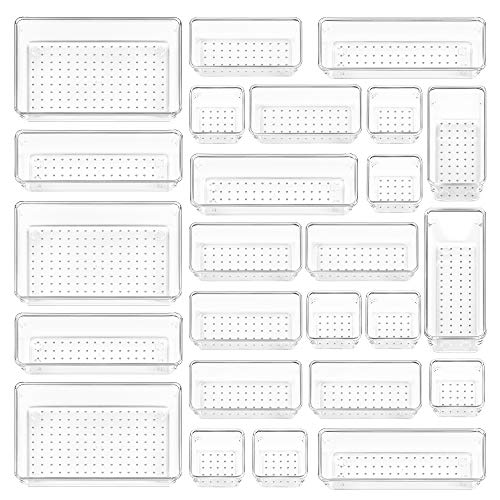
Clear drawer organizers are perfect for sorting all the tiny sewing notions that tend to drift around your workspace, and the different tray sizes make it easy to create a layout that actually fits your drawers. They’re sturdy, easy to clean, and very well-loved, with more than 38,000 ratings from people who appreciate storage that finally brings a little order to the chaos.

A pink pegboard! It’s the kind of pink that instantly lifts the mood of a sewing room and makes the whole wall feel friendlier the moment you hang it up. It keeps all your go-to tools visible and easy to reach, and the customizable hooks and bins give you room to set it up exactly how you like it. It also has many good reviews, which isn’t surprising — a little pink goes a long way in making a sewing space feel happy and organized.
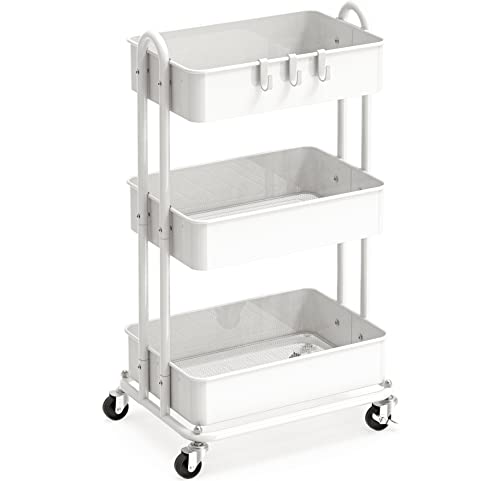
A 3-tier rolling cart gives you three full baskets of open storage on wheels—perfect for fabric, bins of notions, or a mobile project station in your sewing room. It’s a favorite among organizers with over 30,000 good reviews. I have one myself.
C. Cutting + Pressing Enhancements

A large cutting mat has a smooth, durable surface big enough for quilts, fabric bolts, or sprawling projects—and it keeps the desk underneath protected. It’s clearly trusted by many sewists, with more than 6,000 good reviews (95% positive!), so you know it’s more than a pretty grid.

This extra-wide ironing board has generous pressing surface that actually fits whole pattern pieces, large garments, and bulky fabrics without folding them three different ways. Once you try an extra-wide cover, the standard size feels tiny.
For years I managed with a regular 13″ board. It works, but not comfortably. Then I tried an 18″ board in my friend’s sewing room, and that was it — I finally understood what I had been missing. The wider surface changed everything, and since then I always recommend larger boards. They do cost more, but it’s a one-time purchase and well worth it in my experience.

A steam station is absolutely one of the best upgrades you can add to a sewing room — strong steam, a roomy 50.7 oz tank, and a smooth ceramic soleplate that glides through pressing sessions without a fuss. The large tank means you’re not running back and forth to refill it every five minutes. It already has more than 50,000 good reviews, so plenty of people clearly appreciate a steam station that keeps up with real projects instead of slowing them down.

This Sundu ironing station gives you strong steam with a big water tank, so you can press yards of fabric or whole garments without stopping to refill. I bought mine a few years ago and it’s still going strong, and the thousands of good reviews tell me plenty of other sewists appreciate an iron that can keep up with sewing projects.
Just remember that at some point, all irons will leak. No matter what the manufacturer says, the combination of water, high temperature and vibration (because an iron does not stay still) will in the end break the seals. And a leaky iron is not a tool you want – it may stain your work and instead of helping you, will only help raise your frustration level.

A wool pressing mat creates a firm, heat-holding surface that helps seams lie flatter with far less effort. It’s a simple sewing-room upgrade that fits almost anywhere and instantly makes your pressing setup feel more efficient.
✅ Related tutorial: Wool Pressing Mat: How to Use, Pros and Cons, Best Brands, Sizes
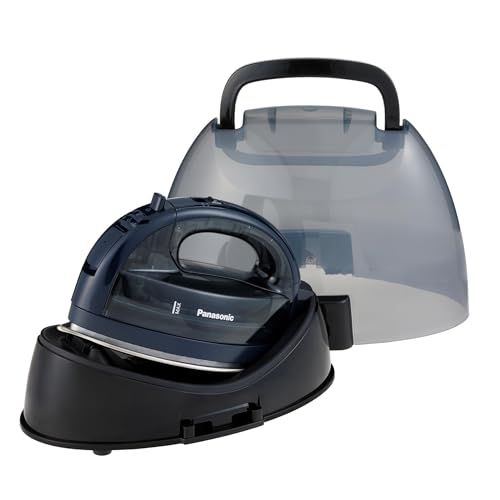
A cordless iron instantly frees up your pressing station because there’s no cord dragging across your fabric or catching on the edge of the board while you press. This Panasonic model heats quickly, glides smoothly, and has thousands of good reviews.
The cordless iron has some “cons” going against it. It is not a proven technology, the standard iron has been with us for many decades while the cordless is relatively new. It can’t be used for a very long time (continuously). But the cord of the classic iron is bothering me like crazy – seems to have a mind of its own and is in the way constantly.
D. Machine Essentials

Attaching this Singer extension table to your Singer machine instantly gives you a bigger, flatter workspace—so your fabric stops draping awkwardly off the side and you finally feel like you can tackle those larger projects without frustration. With a strong reputation for stability, this model already has a good rating and over 2,000 reviews, which tells me lots of sewists are enjoying the upgrade.

A stay-put machine mat does one very important thing for a sewing space: it keeps your machine from dancing across the table during every seam. It absorbs vibration, steadies your stitches, and makes a sewing-room refresh feel noticeable right away.

This cordless mini vacuum reaches into the tight spots around your sewing machine and serger where lint, thread tails, and fabric crumbs love to hide. It was designed for cars and desks, but it works beautifully in a sewing room and makes cleanup quick without dragging out a full-size vacuum.

Compressed gas dusters are great for clearing the light dust that settles on shelves, thread racks, and the corners of your sewing table that never seem to stay clean. You won’t use them inside your sewing machine, but they’re perfect for tidying the rest of the room, especially the small spaces that cloth dusters and wipes can’t reach.
E. Sewing Machines
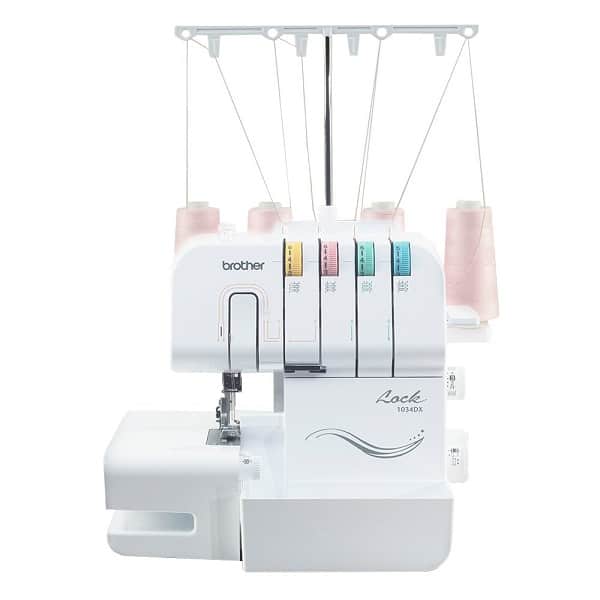
A sewing room makeover sometimes means letting go of an old, unreliable machine and choosing something that makes sewing easier. Beginner-friendly machines like the Brother CP60X and Janome 2212 offer essential features, a gentle learning curve, and strong reviews — a good match when you want a fresh start without stretching the budget.

With over 92% favorable reviews, the Brother CP60X Computerized Sewing Machine is offered for sale at an incredibly low price. It might be a beginner’s sewing machine, but it has about all what you would need to start.

The Janome 2212 is a quality entry level model. I owned one and I can attest that it’s really a sturdy little machine, ready to do whatever you ask of it. And now it’s offered at a very low price for this Black Friday sale. You can see an image of my machine in my article Mechanical vs Computerized Sewing Machine (and probably others) since I used it for a long time as a “reserve” machine.
F. Comfort + Ergonomics
Upgrade to a Good Chair
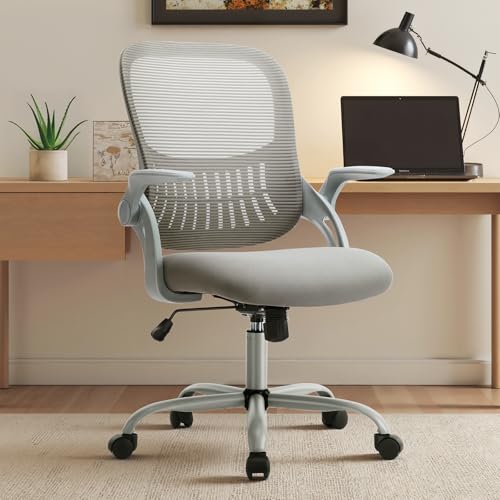
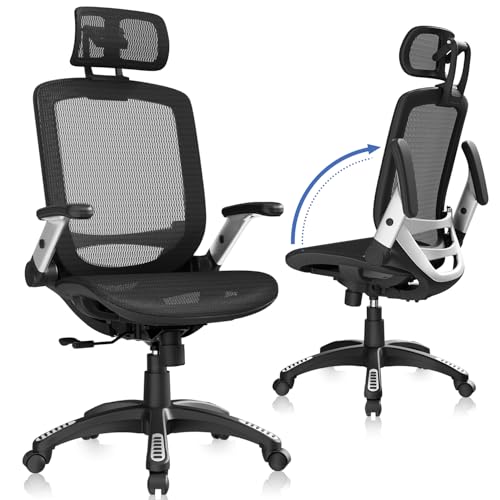
A good sewing chair matters more than most of us admit. You spend hours cutting, stitching, and leaning forward in ways that would make a chiropractor wince, so the chair under you needs to support all that movement without creating new aches.
The best sewing-room chairs share a few things in common. Mesh backs keep the air flowing so you don’t overheat. Wheels help you move easily between your machine and serger. A chair that isn’t too heavy is easier to reposition as you work. And movable armrests are important because they drop out of the way when you need to slide close to the table.
I notice the difference the moment I sit in anything that isn’t built for real work. When I visit my daughter’s house, she has a beautiful velvet chair — absolutely gorgeous, but it does no favors for my back. After a few days, my back starts to complain. In my sewing room, I never have that problem. The right chair supports me, follows my movements, and quietly keeps the whole room more comfortable.
A well-chosen chair isn’t glamorous, but it can completely change how you feel during and after a project. And if it’s on sale, even better!


Round Ottoman with Storage
I also rely on round ottomans with storage, and they solve a very specific problem in my sewing room. I have several tables where I sew, but it doesn’t make sense (and I don’t have the space either) to keep a full chair at every single one. The ottoman is easy to move, light enough to shift from station to station, and perfect for quick tasks like finishing a seam on the serger.
The hidden storage inside is a bonus because it holds all the machine cords, chargers, and odds and ends that never look tidy laying out. It’s not meant for long sewing sessions, but as a portable seat with a secret storage compartment, it earns its place in the room.


G. Little Upgrades with Big Impact
Color Catcher Sheets
Let’s talk about color catcher sheets. They look simple, but they do something very helpful: they absorb loose dye in the wash so colors don’t spread onto everything else. You toss one sheet into the washing machine, and it grabs wandering dye molecules before they settle on your handmade garments. I just bought a two-pack of Shout a couple of days ago.
While not a sewing notion per se, this matters in a sewing room because new fabrics often bleed during the first few washes, especially bright reds, deep blues, and dark colors. Using a color catcher is a tiny, budget-friendly upgrade that protects the items you’ve spent hours creating and keeps your laundry from becoming an accidental tie-dye experiment.


Digital Clock
A simple wall clock is one of those sewing-room additions you don’t think about until you finally hang one up. It keeps you aware of time during projects, helps prevent “just one more seam” from turning into a late-night marathon, and sets a calm rhythm in the room.
The best choice is a large, easy-to-read clock that you can see from any corner of your sewing space, and it absolutely needs to be non-ticking so you don’t sew to the soundtrack of a constant little click. It’s an easy, inexpensive upgrade, but it quietly improves how the whole space feels — and how you move through it.


Wall Art
Wall art might feel like just a finishing touch, but in a sewing room it does something surprisingly helpful. A bright print or a funny sewing quote lifts the mood the moment you walk in, especially on days when your sewing machine misbehaves or your seam ripper gets too much attention.
Positive reminders keep the space feeling encouraging, and a little humor keeps it from feeling too serious — both of which matter when you spend hours creating in the same room. Even one framed piece can shift the whole atmosphere, making the space feel more personal, more inviting, and a lot more “you.”


Magnetic Pincushion
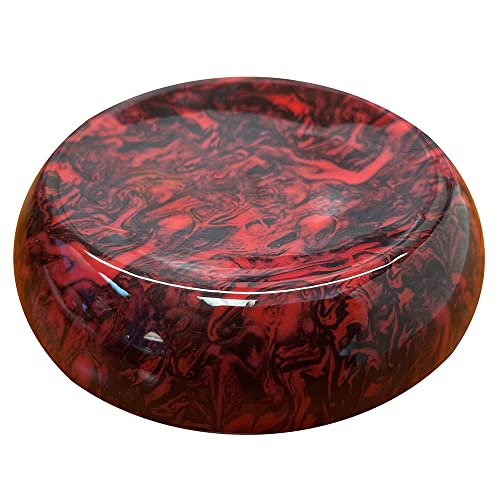
Would a magnetic pincushion be a good upgrade for your sewing room? I think so, because it solves the constant problem of runaway pins that roll, hide, and appear only when you least want to find them.
Instead of trying to poke them into a traditional cushion while you’re in the middle of a seam, you can drop them near the dish and the magnet pulls them in. It’s a tiny improvement, but it keeps your table tidier, speeds up your workflow, and helps the whole space feel more organized.

Trash Can
A good trash can is one of the most underrated tools in a sewing room. We all use something for threads, fabric crumbs, and tiny scraps, but it’s often a random plastic bin or an old container that doesn’t match anything else in the room.
Sewing creates more little bits of waste than most hobbies, so having a trash can that actually looks nice — and has no lid — makes cleanup much easier. You can toss scraps in without interrupting your rhythm, and you’re not wrestling with a lid while trying to hold fabric in the other hand.
There are so many beautiful, well-made trash cans now, and upgrading this one unglamorous item quietly makes the whole room feel tidier and more intentional. It’s a small change, but you see it every single day, and it helps your sewing space feel cared for.


If this guide gave you a few ideas for your sewing room, feel free to save the pin below to your sewing board on Pinterest. That way you can return to these tips anytime you want to refresh your space. You can also follow me on Pinterest for more practical sewing advice, tutorials, and inspiration.

latest posts
- Knit Presser Foot: How It Works, How to Use It, and My Sewing Tests
- How to Sew Neat Mitered Corners at Acute Angles
- Sewing Machine Needle Organization: A Clever System I Tried
- DIY Car Armrest Organizer: Sewing Tutorial
- Easy DIY Potholder Sewing Tutorial: Better Shape, Better Grip, Smart New Design
- How to Buy a Sewing Machine (Even If You Already Have 10)
- 23 Kitchen Items That Belong in Your Sewing Room
- What Is a Sewing Machine Piping Foot And How to Use It
- Fixing Sewing Mistakes: Repair an Accidental Cut in Fabric