Sewing Machine Needle Organization: A Clever System I Tried
What Needle Is in My Machine?
You sit down at your sewing machine, ready to start sewing. There’s already a needle in the machine. Great. Except… what needle is it? Universal? Stretch? Embroidery? Microtex? And what size?
This happens to me all the time because I sew many different kinds of projects and change sewing machine needles quite often. I may use a Universal needle today, switch to a Stretch needle tomorrow, and then put in a Denim needle for the next project.
A few days later, I look at the needle in the machine and have no idea what I installed.
I can remember where I bought a piece of fabric ten years ago, but apparently remembering which needle I put in the machine three days ago is asking too much.
Of course, there are ways to figure it out. You can remove the needle and try to read those tiny markings. You can check the color coding. You can search for the package you think it came from. Or you can stand there looking at it and hope your memory suddenly comes back.
That last method has not been especially reliable for me.
Recently, Dena Hartigan, the inventor of Needle Noter, sent me two of her sewing notions to try: the Needle Noter and the Needle Storage Pillow. I tried them, and because I liked what they do, I decided to create this review. This is not a paid review; it is my honest opinion.
Disclosure: Dena sent me the Needle Noter and Needle Storage Pillow free of charge so I could try them. I was not paid to write this review, and all opinions in this article are my own.
The Needle Noter is designed to help you keep track of the type and size of the needle currently installed in your sewing machine. The Needle Storage Pillow gives you an organized place for needles you remove but still want to use again.
After using both, I think these are very simple sewing tools, but they solve two small problems that come up again and again when you sew.
And sometimes the best sewing tips are not complicated at all. They are simply little systems that save you from asking, once again:
What needle is in my machine?
Why Keeping Track of Sewing Machine Needles Is Harder Than It Sounds
The problem is that most of us don’t use just one kind of needle for everything.
Different fabrics and sewing techniques call for different types of sewing machine needles. Depending on what I’m making, I might reach for a Universal, Stretch, Jersey, Microtex, Embroidery, Quilting, Denim/Jeans, or Topstitch needle.
And type is only half of the story. There are also different sewing machine needle sizes.
For example, knowing that I installed a Stretch needle is useful — but was it a 75/11 or a 90/14? Those two needles are meant for different fabric weights. The same goes for Universal, Microtex, Denim, and other needle types. I have several sizes of each in my sewing room.
If you’d like a refresher on what all these needles are for, I have a detailed guide to sewing machine needle types that explains the differences and when to use them.
I also have a separate article about sewing machine needle sizes — including what numbers such as 70/10, 80/12, 90/14, and 100/16 actually mean.
And there is another reason keeping track matters: we often change a needle long before it is worn out.
Suppose I use a new Universal needle for a short sewing project, then switch to a Stretch needle because I want to sew knit fabric. I am certainly not going to throw away that Universal needle after only a little use. It still has plenty of sewing left in it.
So I save it.
Then perhaps I switch from the Stretch needle to a Denim needle, and that Stretch needle is still perfectly usable too.
Very quickly, the problem is no longer simply Which needle is in my machine? It is also Which of these slightly used needles is which?
Of course, sewing machine needles do need to be replaced regularly. But changing to a different needle type or size does not automatically mean the needle you removed belongs in the trash.
That’s why a system for keeping track of both the needle in the machine and the usable needles you have taken out can be so helpful.
A good sewing machine needle guide can help you choose the correct needle in the first place. But after that needle goes into the machine — and especially after you start switching among several still-good needles — you need some way to keep everything straight.
✅ Related tutorial: A Guide to Schmetz Needle Color Codes: What They Mean and How to Use Them
What Is the Needle Noter?
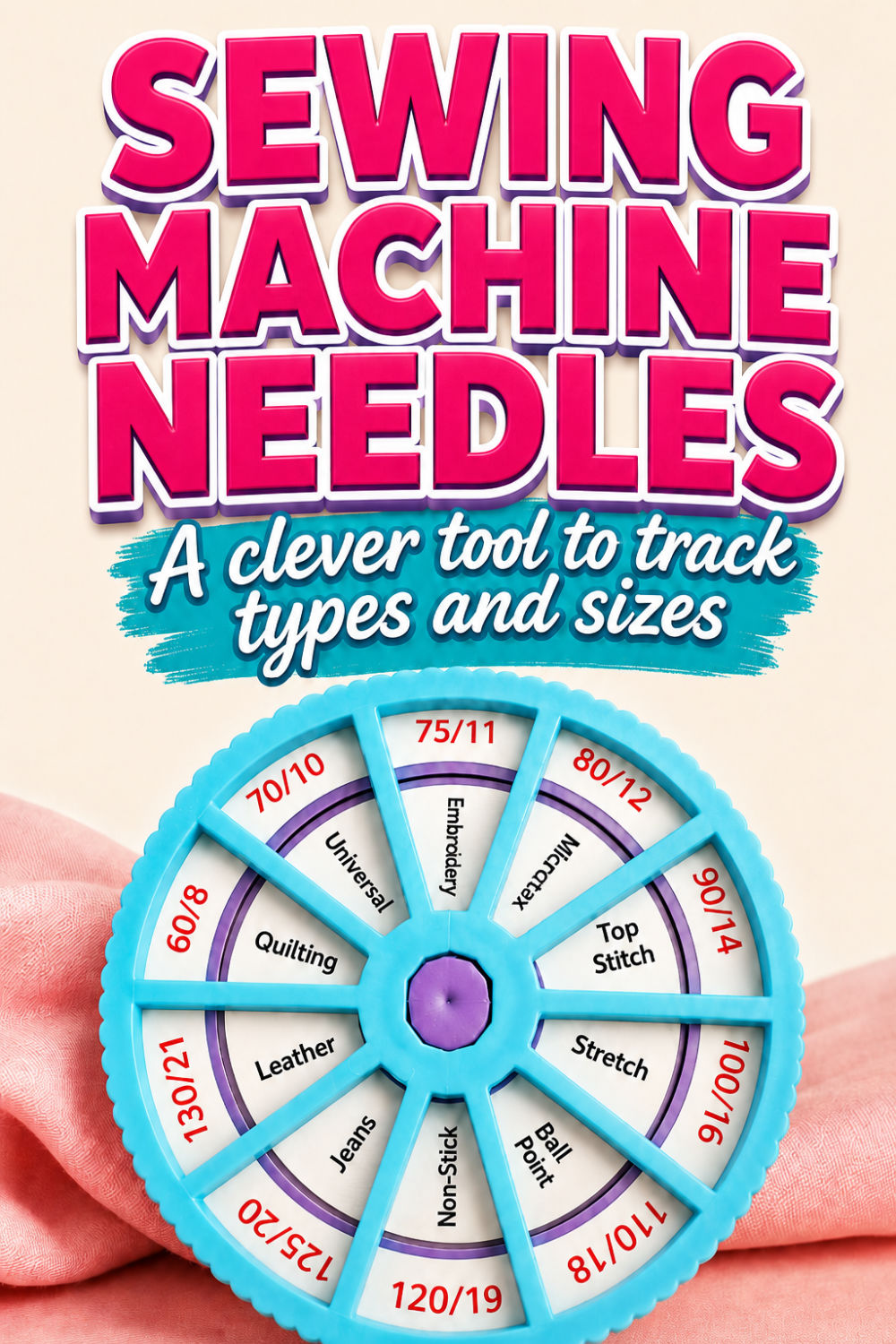
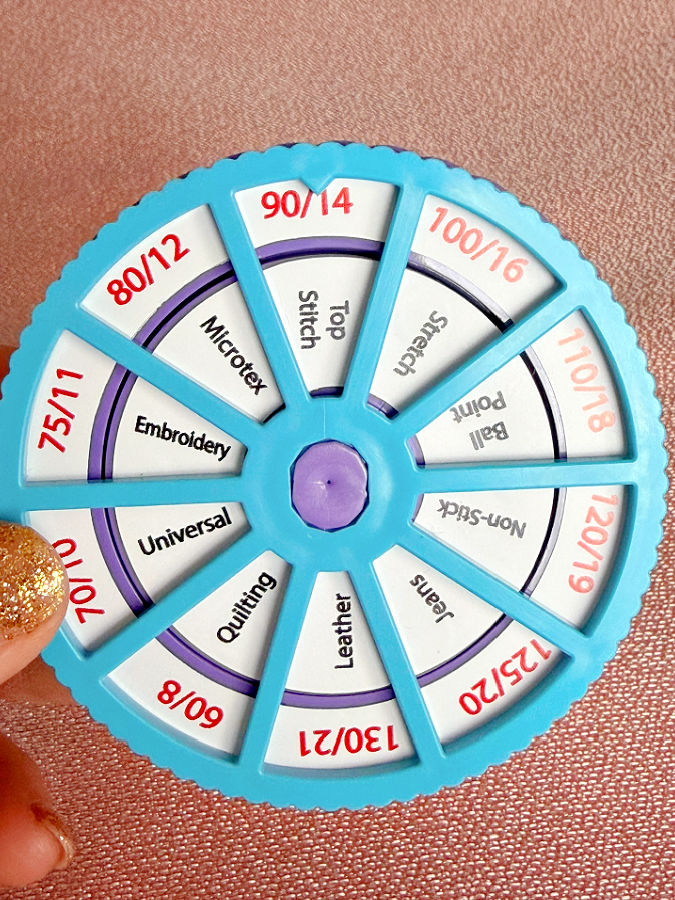
The Needle Noter is a small round device that attaches to your sewing machine and keeps a visible record of the needle you are currently using.
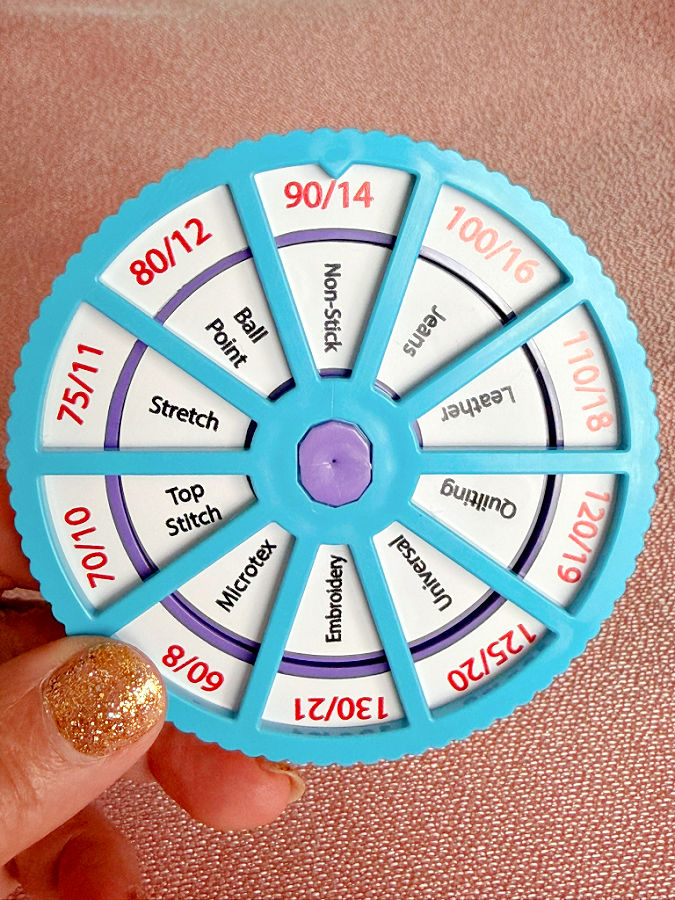
It is about 3 inches in diameter, so it is large enough to read easily but small enough that it doesn’t take up much space on the machine.
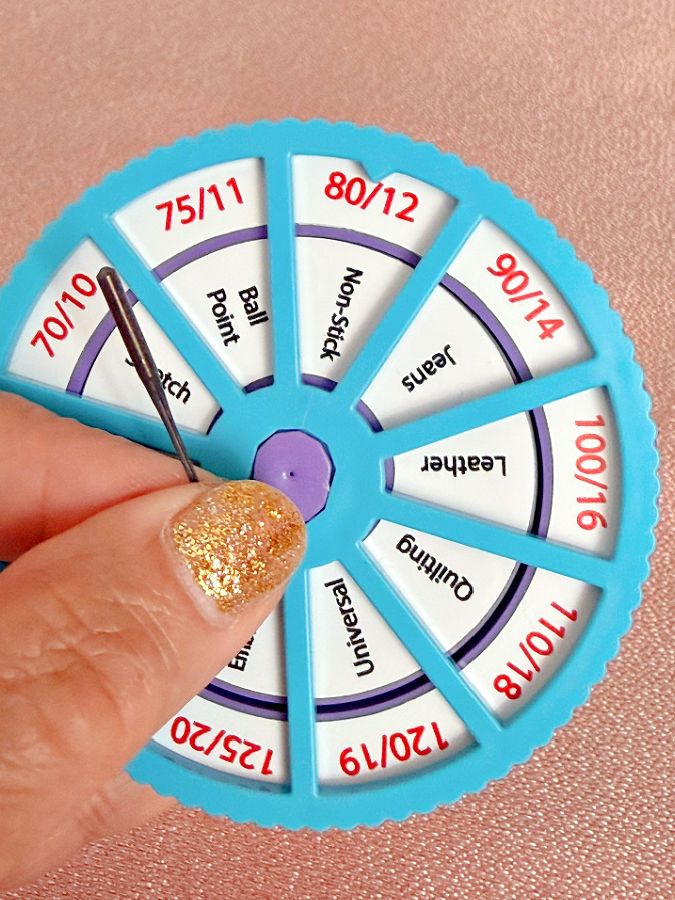
The design is very simple. It has three movable discs:
- The bottom disc shows the needle type
- The middle disc shows the needle size
- The top disc has an arrow that points to your selection
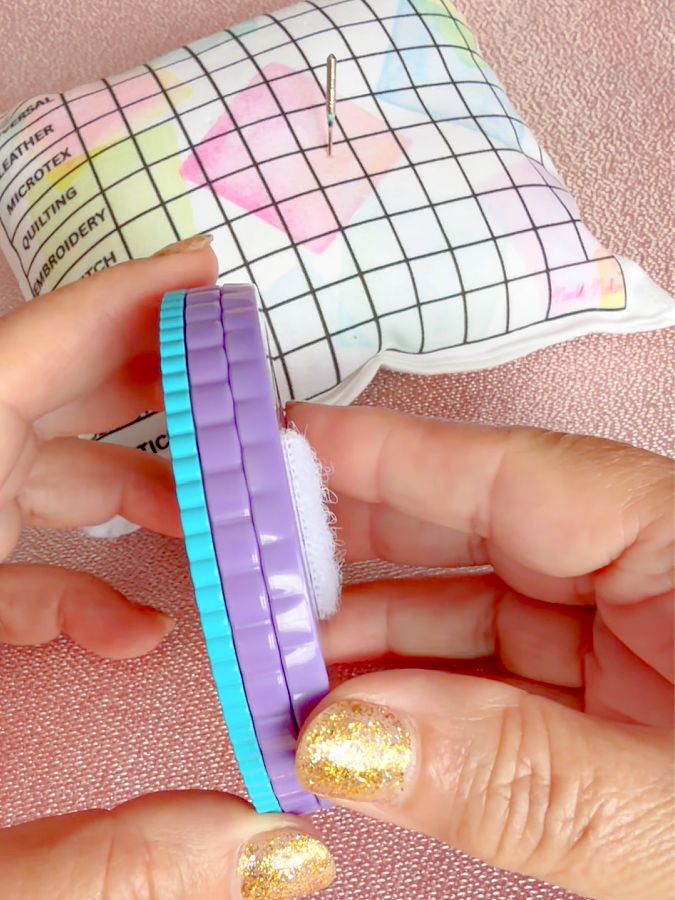
The available needle types include Universal, Embroidery, Microtex, Top Stitch, Stretch, Ball Point, Jersey, Jean, Leather, Quilting, and Non-Stick. The sizes range from 60/8 to 130/21, so it covers the sewing machine needles most of us are likely to use.
You simply turn the discs until the correct type and size line up, then position the arrow to mark your selection.
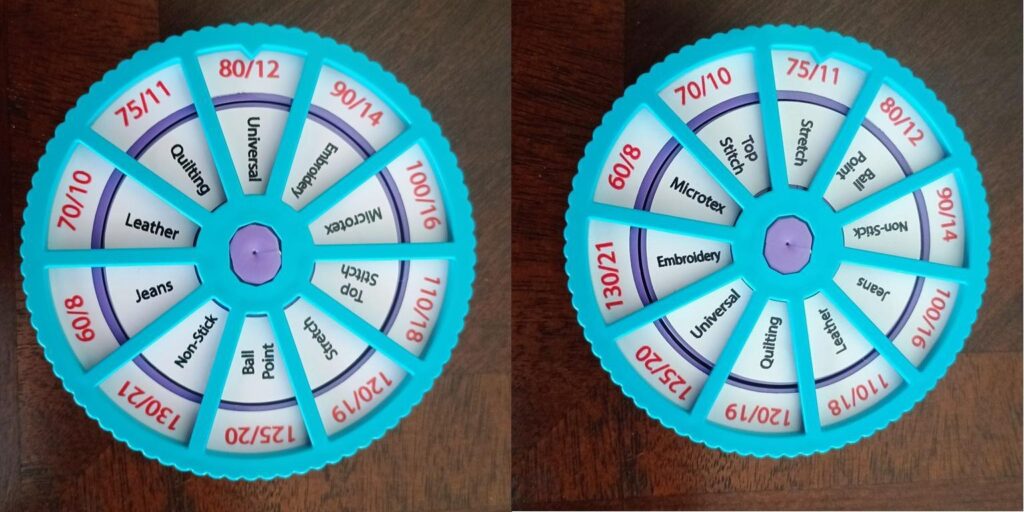
For example, if I put a Universal 80/12 needle into my machine, I set the Needle Noter to Universal — 80/12.
If I later switch to a Stretch 75/11, I change the setting at the same time.
The Needle Noter attaches to the sewing machine with a hook-and-loop backing. This means it can stay right on the machine where you can see it, but you can also remove it when needed.
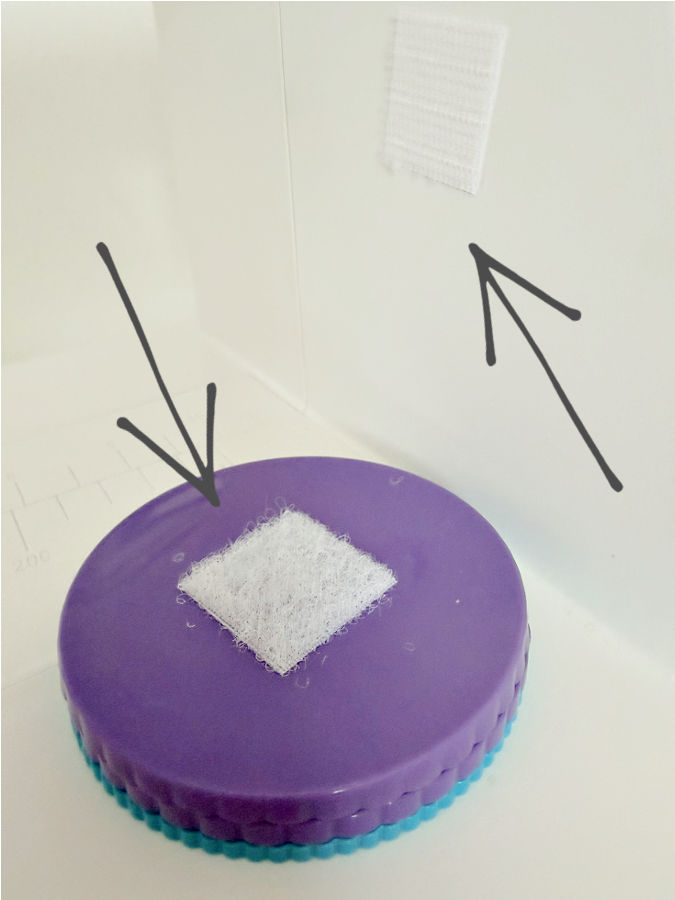
And there is nothing electronic about it. No batteries, no app, no charging, no programming, and nothing to download. Among all the complicated sewing tools we can have around our machines, I rather like that this one is purely mechanical.
One thing is important to understand, though: the Needle Noter does not identify the needle for you automatically.
✅ Related tutorial: Everything You Ever Wanted to Know About Schmetz Needles
It doesn’t somehow look at the needle and tell you what is installed. You have to set it yourself whenever you change the needle. So the system depends on developing one very simple habit:
Change the needle, change the Needle Noter.
Once you do that, it works almost like a little sewing machine needle organizer attached directly to your machine — except instead of storing needles, it stores the information about the one currently in use.
It’s a very simple idea for a sewing notion, which is probably part of why I like it. There isn’t much to figure out, and once it is attached to the machine, the information is right there in front of you.
Where to Buy the Needle Noter
If you want to try the Needle Noter or the Needle Storage Pillow, you can buy them directly from Dena’s website here. If you want to try the device and you are subscribing to my newsletter, you will also get a 20% off coupon! The coupon code is in the newsletter.
This is not an affiliate link. I don’t earn a commission if you purchase anything through it — I’m simply sharing the direct link to her shop.
How I Attached the Needle Noter to My Sewing Machine
Attaching the Needle Noter doesn’t require any tools. The back has hook-and-loop material, so you just need to choose a flat spot on the sewing machine where it will be easy to see.
I wanted mine somewhere I could glance at it without having to move around the machine or go looking for it. At the same time, I didn’t want it anywhere that would interfere with threading, opening a cover, using the controls, or sewing.
Because the Needle Noter is only about three inches across, finding a suitable place wasn’t difficult. Once attached, it stays out of the way and doesn’t affect anything I normally do at the machine.
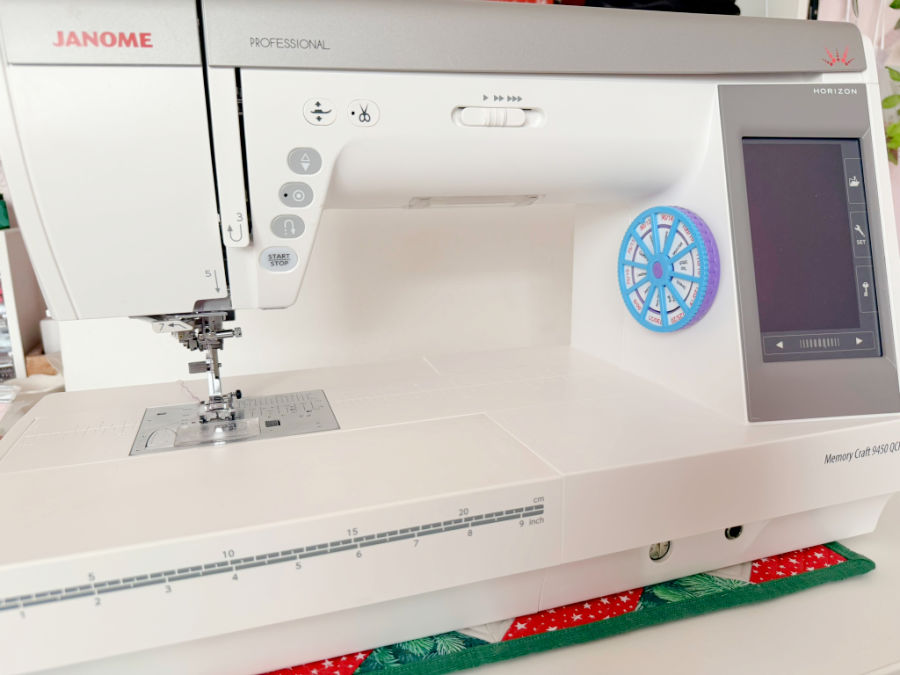
I also like that the attachment isn’t permanent. The Needle Noter can be removed from the hook-and-loop backing if I need to, so I don’t feel as though I have permanently added something to my sewing machine.
The attachment is simple, but that is exactly what I want here. This is something I need to see easily, not another accessory I have to take out of a drawer every time I change a needle.
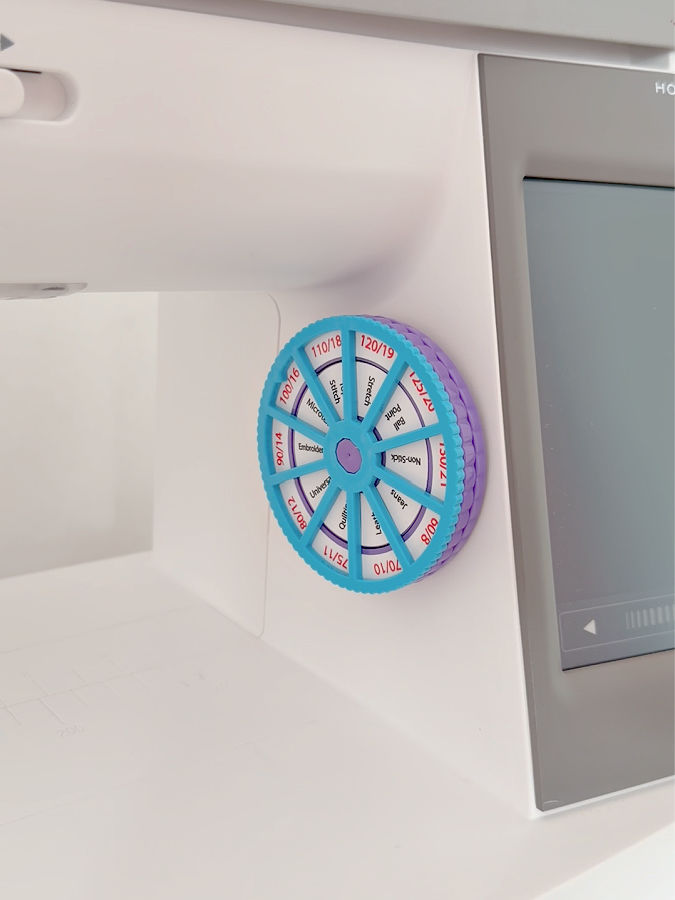
And keeping it on the machine is important. If I put the Needle Noter somewhere else in my sewing room, I suspect I would soon be asking two questions instead of one:
What needle is in my machine? and
Where did I put the thing that’s supposed to tell me?
How the Needle Noter Works
Using the Needle Noter is very straightforward.
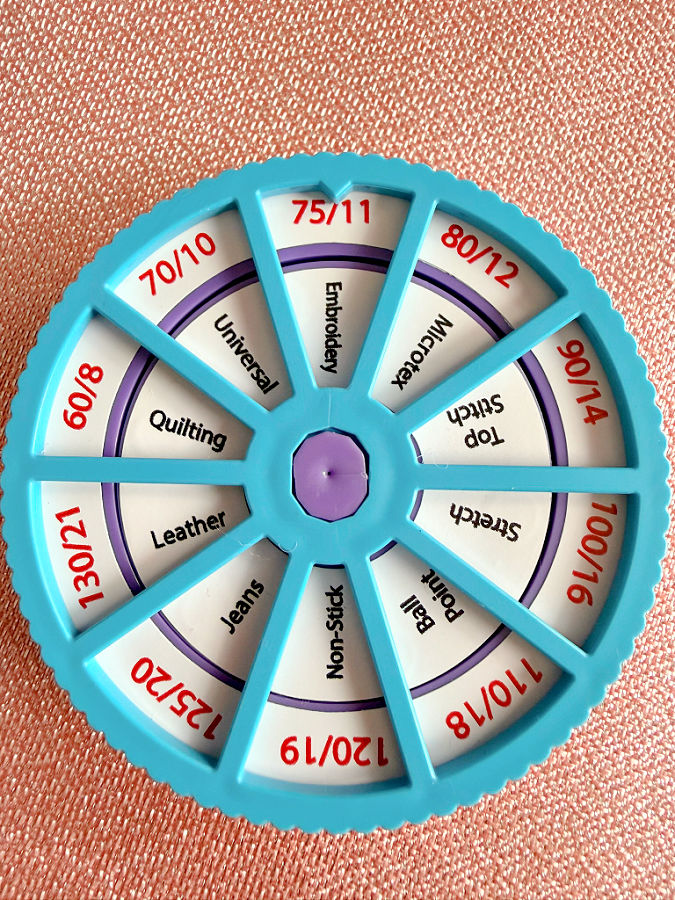
Suppose I install an Embroidery 75/11 needle in my sewing machine. I turn the discs until Embroidery — 75/11 is indicated, then point the arrow to that setting.
That’s it.
✅ Related tutorial: Unique In the hoop embroidery project: a Zipper pouch (free design)
If I come back to the machine the next day, or even several days later, I don’t have to remove the needle or try to identify it. I can simply look at the Needle Noter and see what I installed.
When I change to another needle, I change the Needle Noter setting at the same time.
There is one important limitation, though: the Needle Noter only works if you remember to update it.
It doesn’t know when you’ve changed the needle, so the whole system depends on one small habit:
Change the needle → change the Needle Noter.
If you install a different needle and forget to turn the dial, the information will obviously be wrong.
For me, that isn’t really a drawback as much as something you need to get used to. Once changing the Needle Noter becomes part of changing the needle, the system is very simple.
And Then There Is the Needle I Removed
Keeping track of the needle in the machine solves only half of the problem.
Suppose I remove a perfectly good Universal needle because the next project needs a Stretch needle. I am not going to throw the Universal needle away after only a little use.
So now I need somewhere to put it.
Back into the original package? Maybe — but then I have to remember which needle in the package is new and which one has already been used.
On the table? That works until I forget why it is there.
In a random pincushion? Then later I am back to the same question: what kind of needle is this, and what size?
I already had my own solution for this problem. Some time ago, I made a DIY needle book specifically to keep needles organized instead of leaving them loose around the sewing room.
So when Dena sent me the Needle Noter, I wasn’t really looking for another way to store partially used needles.
But there was one more item in the package: her Needle Storage Pillow.
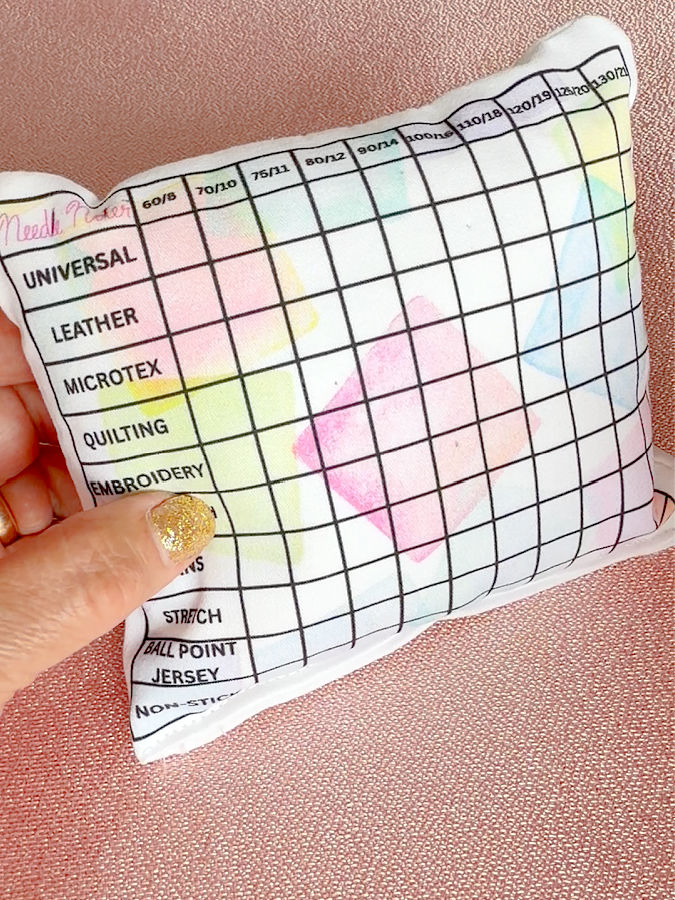
And I immediately understood why she created the two products together.
The Needle Noter keeps track of the needle that is in the sewing machine.
The Needle Storage Pillow keeps track of the usable needles that come out of it.
My needle book already gives me one good storage solution, and Dena’s pillow offers another — this one designed specifically around sewing machine needle types and sizes.
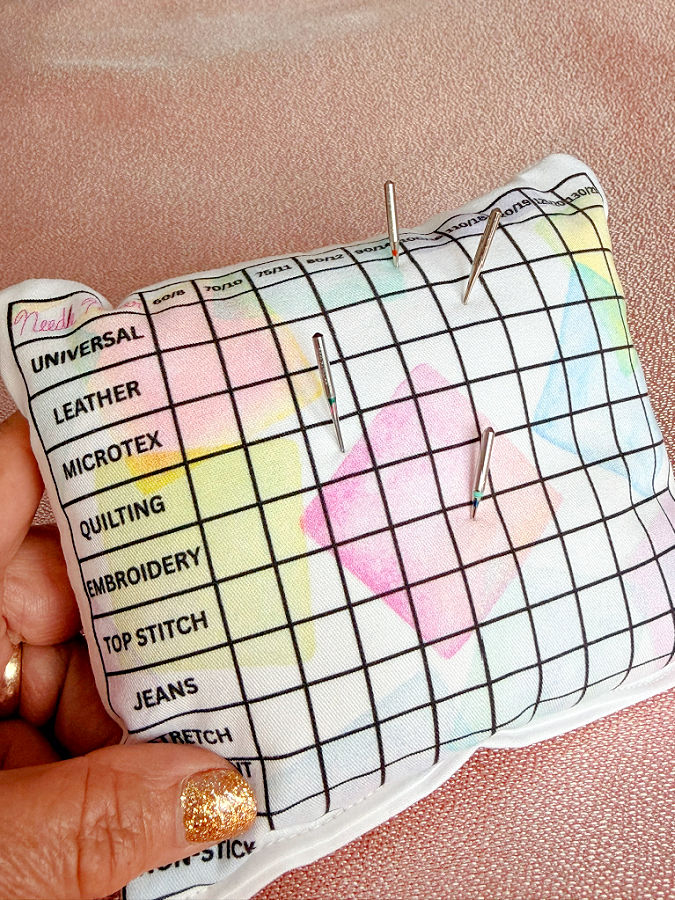
Why Store Partially Used Needles?
A sewing machine needle can leave the machine for two very different reasons.
Sometimes it comes out because it is worn, damaged, bent, or simply due for replacement. That needle is finished.
But very often, I remove a needle because the next fabric needs something different.
I may switch from a woven fabric to a knit, move from regular sewing to machine embroidery, use a Denim needle for a few seams, put in a Microtex needle for a tightly woven fabric, or simply change to a larger or smaller size.
In those cases, the needle I remove may have been used for only a short time. There is no reason to treat it as worn out just because I need another type for the next project.
The real challenge is keeping those partially used needles separate from the new ones and making sure I still know exactly what they are.
A loose needle tells you very little.
Once it is out of its package, an 80/12 Universal and a 90/14 Universal can look remarkably similar at a glance. Add Stretch, Jersey, Microtex, Embroidery, and Denim needles to the mix, and sewing machine needle storage becomes less about finding a place to put them and more about keeping their identities attached to them.
That is why I like labeled sewing needle storage. Each needle has a specific place based on its type and size, so when I need it again, I don’t have to start the identification process all over.
For me, that is the useful part of this kind of sewing organization: I can keep several needles in rotation without turning them into a collection of tiny metal mysteries.
How I Use the Needle Noter and Needle Storage Pillow Together
This is where the two products really make sense as a pair.
For example, suppose my machine currently has a Top Stitch 90/14 needle installed. The Needle Noter is already set to:
Top Stitch — 90/14
✅ Related tutorial: How To Topstitch | 17 Topstitching Tips Every Beginner Should Know
Then I decide to sew vinyl, so I want to switch to a Non-Stick needle.
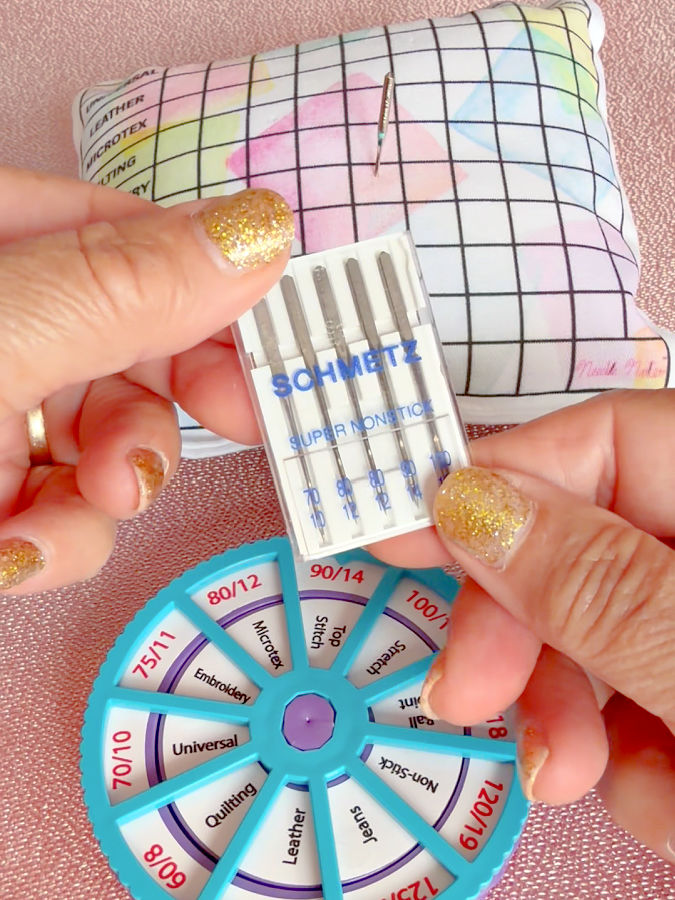
Step 1
I remove the Top Stitch 90/14 needle from the machine.
It is still perfectly usable, so I place it in the matching section of the Needle Storage Pillow.
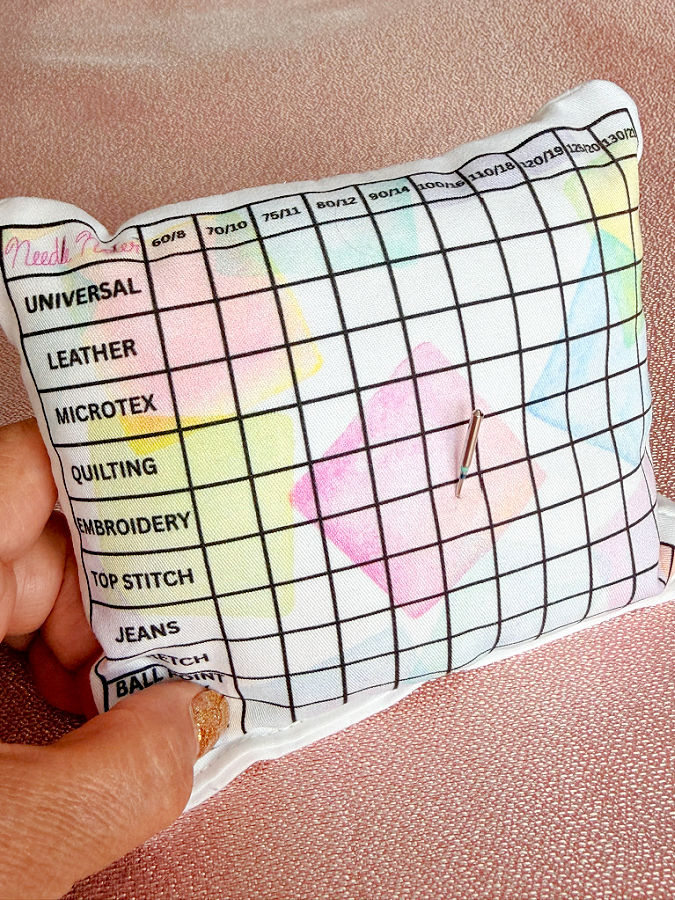
Now I know exactly what that needle is when I want it again.
Step 2
I install a Non-Stick 80/12 needle for the vinyl.
Step 3
I turn the Needle Noter to: Non-Stick — 80/12
✅ Related tutorial: Sewing Vinyl: 17+ Expert Tips For Beginners
And now the whole change is accounted for.
The Needle Noter tells me what is currently in the machine.
The Needle Storage Pillow tells me where the needle I removed went.
That is the part I find especially useful. I am not just keeping needles somewhere safe. I am keeping track of the entire swap — what came out, what went in, and where the reusable needle is now.
It is a very simple system, but when you switch needle types often, that kind of simplicity is exactly what helps.
What I Like About the Needle Noter
After using it, these are the things I like most:
- The information is right in front of me. I don’t have to remove the needle, try to read tiny markings, or hunt for the package it came from. I just look at the Needle Noter.
- It records both the needle type and size. Knowing that I have a Stretch needle in the machine isn’t enough if I don’t remember whether it’s 75/11 or 90/14. The Needle Noter keeps track of both.
- It stays on the sewing machine. This may be my favorite part. A note or needle package can easily get moved. The Needle Noter stays where I need the information.
- It’s very simple. No batteries, no app, no charging, and no setup every time I use it. I turn the discs and I’m done.
- It makes more sense the more kinds of sewing you do. If you switch between garment sewing, machine embroidery, quilting, knits, denim, vinyl, and other projects, you probably change needles quite often.
If you want to try the Needle Noter or the Needle Storage Pillow, you can buy them directly from Dena’s website here. If you buy the device and you are subscribing to my newsletter, you will also get a 20% off coupon! The coupon code is in the newsletter.
What I Like About the Needle Storage Pillow
The Needle Storage Pillow solves a different problem, and I like it for several reasons:
- Partially used needles stay separate from new needles. I don’t have to put a used needle back into a package and later wonder which ones are fresh and which ones have already been used.
- I know what each saved needle is. The labeled sections keep the needle type and size with the needle, which is the most important part of good sewing needle storage.
- Everything is visible. I can quickly see which needles I have saved instead of opening packages or examining tiny markings.
- It makes switching back easy. If I want my Top Stitch 80/12 again, I know where it is. I can take it from the pillow, install it, and update the Needle Noter.
- The pillow and Needle Noter complement each other. The Needle Noter tracks the needle currently in use. The pillow handles the sewing machine needle storage for the ones waiting to be used again. Neither product is trying to do the other’s job.
For sewing supplies organization, I like systems where I don’t have to remember very much myself. These two fit that idea nicely.
Is There Anything I Don’t Like?
I do like both products, but there are a few limitations worth mentioning.
- You have to remember to update the Needle Noter. This is the biggest one. It doesn’t detect a needle change automatically. If you change the needle and don’t change the setting, the information will be wrong. You have to make those two actions part of the same routine.
- The arrow could stand out more. The indicator is fairly small. It does its job, but I think a stronger visual contrast would make the current setting even faster to spot.
- The discs need to be turned deliberately. That’s good because you don’t want the setting changing every time you touch the machine, but it also means this isn’t something you adjust with a casual flick of one finger.
- The system is limited to the needle types and sizes printed on it. It covers many of the needles most sewists commonly use, but I also use some needles that aren’t included. For example, I have Metallic needles, several types of Twin needles, and Double Eye needles. So for those, I would still need another way to keep track of what is in the machine and where I stored it after use.
- Not everyone needs a system like this. If you use the same Universal 80/12 needle for nearly everything and rarely switch needle types or sizes, you may not get as much use from the Needle Noter and Storage Pillow. And that’s okay — not every sewing tool has to be useful for every sewist.
None of these points would stop me from using the products. To me, they are simply things to understand before buying them. The Needle Noter and Needle Storage Pillow are intentionally simple tools, and that simplicity is a big part of their appeal.
Can You Organize Your Sewing Machine Needles Without Buying Anything?
Absolutely.
You don’t need a special product to keep track of sewing machine needles. Sewists have come up with plenty of sewing organization ideas over the years.
You can use:
- Sticky notes on the sewing machine with the needle type and size written on them.
- The original needle package, putting a partially used needle back into its own slot.
- A homemade needle cushion with labeled sections for different needle types and sizes.
- A needle book. I made my own DIY needle book for storing and organizing needles.
- Small labeled containers for different types of needles.
- A handwritten chart where you record which needle is currently installed.
- A pill organizer. This came up in a discussion in my Facebook sewing group. Those little compartments meant for pills can also be labeled and used to separate different sewing machine needles.
So no, the Needle Noter and Needle Storage Pillow aren’t the only way to solve this problem.
What I like about Dena’s system is the convenience.
The Needle Noter stays directly on the sewing machine, so the information about the needle currently in use is right where I need it. And the Storage Pillow gives partially used needles clearly labeled places instead of mixing them with new ones or leaving me to identify them later.
For me, good sewing supplies organization isn’t about buying a special organizer for everything. It’s about finding a system that makes it easy to know what I have and where it is.
These are simply two very practical sewing tips and tricks for doing that — and in this case, I happen to like the ready-made solution.
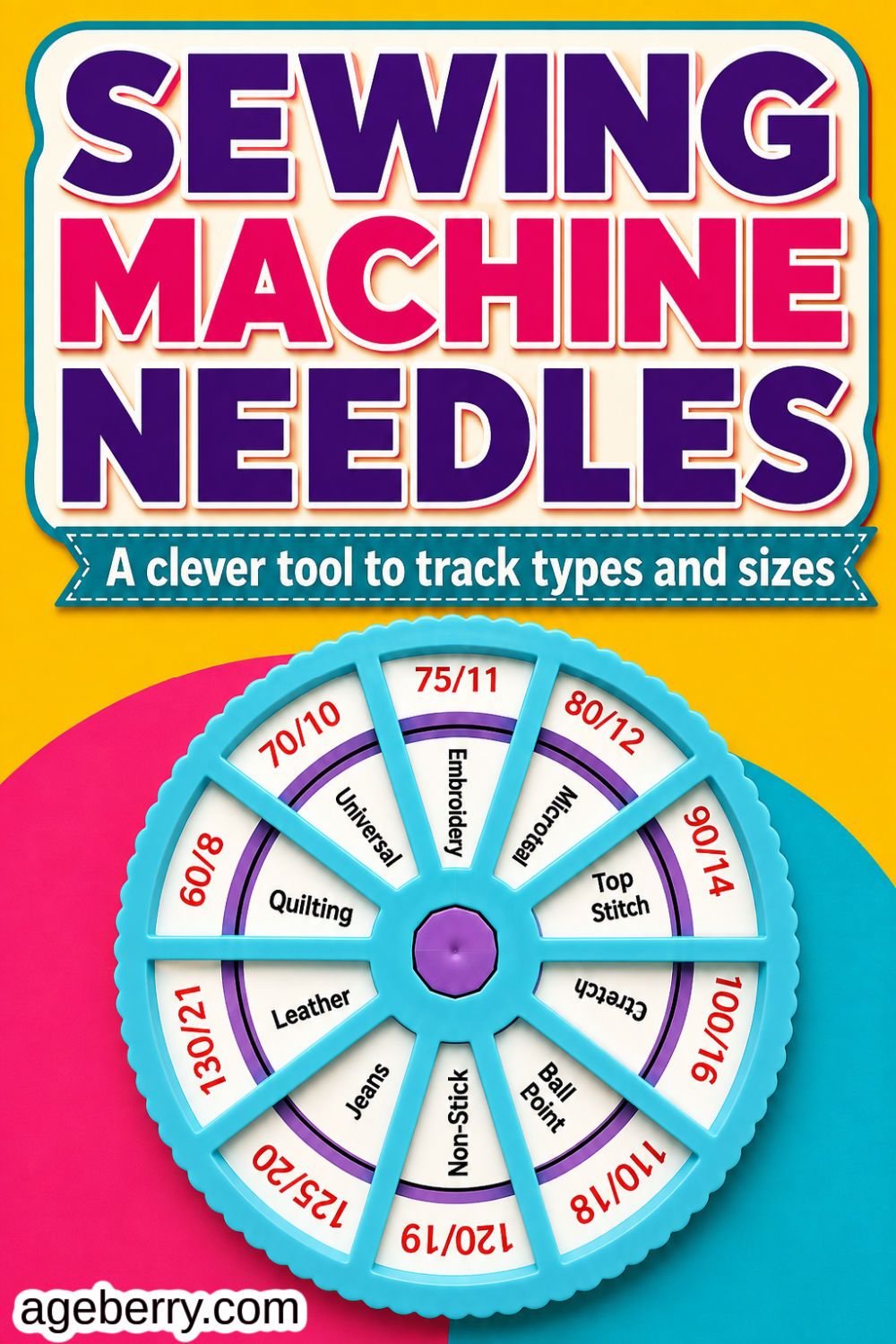
Does the Needle Noter or the Needle Pillow look like something you may try? If so, save this pin (see below) on your sewing board so you can come to this tutorial later when you are ready, and follow me on Pinterest for more tips, tutorials, and inspiration!

latest posts
- 10 Easy-to-Miss Features on Sewing Supplies You Should Be Using
- Twin Needle Sewing: My First Try Was a Mess, But Here’s What Worked
- 10 Rules That Made Me a Better Sewist
- How to Make a Lightweight Summer Neck Scarf with a Lettuce Hem
- What Sewists Hate About Sewing: Common Complaints and Practical Fixes
- Knit Presser Foot: How It Works, How to Use It, and My Sewing Tests
- How to Sew Neat Mitered Corners at Acute Angles
- Sewing Machine Needle Organization: A Clever System I Tried
- DIY Car Armrest Organizer: Sewing Tutorial