How Fabrics Are Made – And Why It Matters
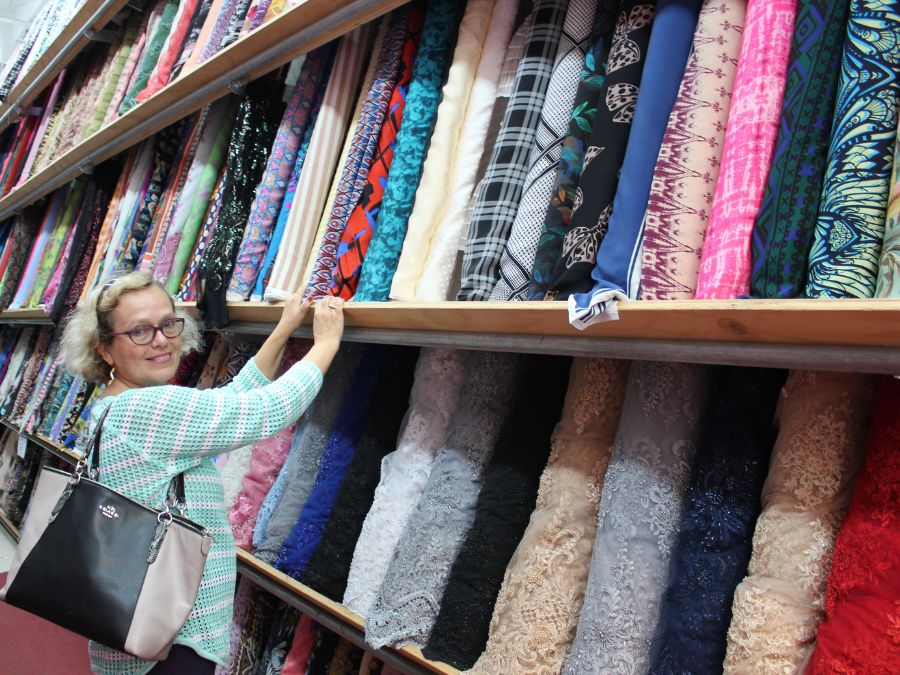
Walk into any fabric store and it feels like you’re staring at thousands of different surfaces.
There’s quilting cotton in cheerful prints, whispery chiffon that slides through your fingers, heavyweight denim in rich indigo, soft fleece in baby pastels, and classic suiting that drapes just right.
And then you spot something really tempting.
For me, it was a silver-gray velvet with delicate red flowers and tiny green leaves. The kind of fabric that practically begs to be taken home. And it was 50% off – how could I possibly walk away from that?
But before I let my imagination run wild with pattern ideas, I had to stop and ask the most important question: Is this a woven fabric – or a knit?
That one question changes everything.
Because how a fabric is made tells you how it behaves under the needle. It tells you what kind of stitch to use, how to cut your pattern, how it will drape, and whether it will stretch in unexpected places. If you skip this step, it’s easy to end up with puckered seams, saggy necklines, or a beautiful fabric that doesn’t work with your pattern at all.
The good news is that you don’t have to memorize a list of hundreds of fabric names.
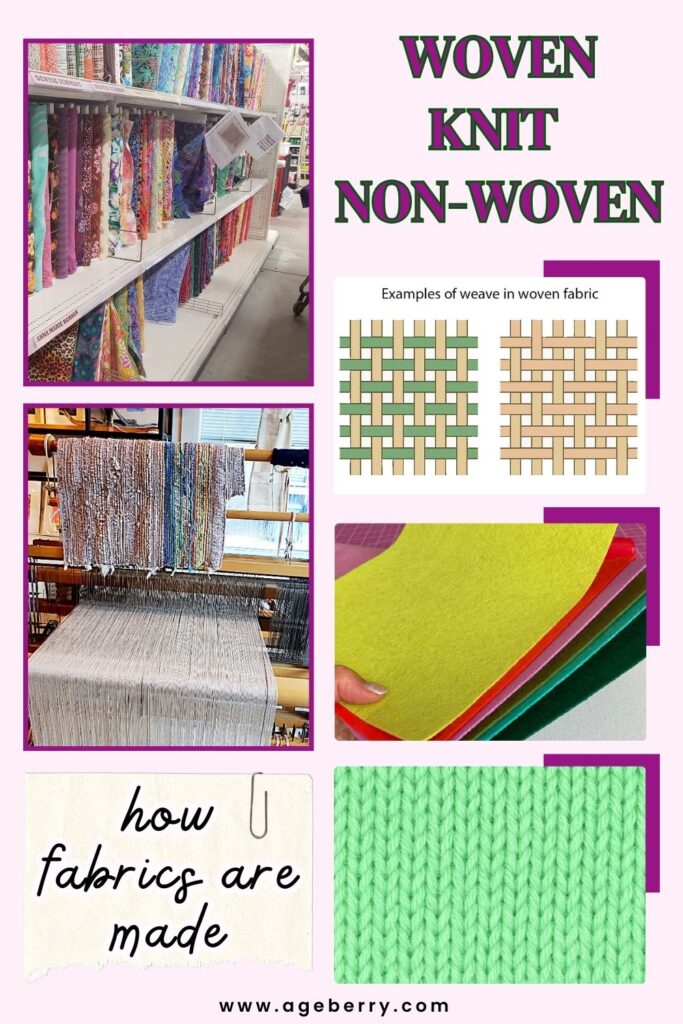
Every fabric you’ll ever use – no matter how it looks or feels – falls into one of three families:
- Woven
- Knit
- Non-woven or knit
Once you understand how these three are made and how they behave, you’ll know exactly how to approach any fabric you pick up. It’s the kind of knowledge that makes sewing feel easier – and even fun.
Woven Fabrics
Woven fabrics are made by interlacing two sets of threads: warp threads that run lengthwise, and weft threads that run side to side. The warp and weft threads cross each other at precise right angles, forming the fabric’s stable structure.
Note: Some of the links on this page are affiliate links. This means I will receive a commission if you order a product through one of my links. I only recommend products I believe in and use myself.
If they aren’t perfectly aligned, it means the fabric came off-grain – a manufacturing flaw that can sometimes be corrected by squaring up the fabric before cutting.
Most of the time, these threads are too fine to see clearly, but how they’re arranged makes a big difference in how the fabric looks, feels, and behaves.
Examples of wovens: quilting cotton, wool gabardine, silk charmeuse, denim, canvas.
Here are some examples of woven fabric from an online store which I like and use sometimes (Mood Fabrics): woven fabric in general, silk/wool blend, charmeuse (polyester or silk), quilting fabric (cotton, linen).
Types of Weaves
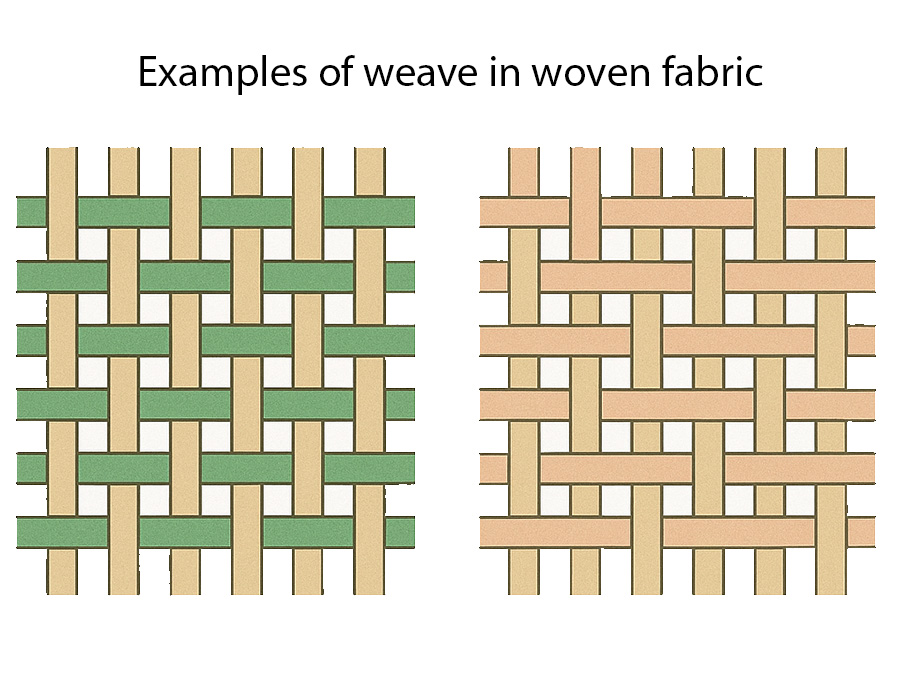
Woven fabrics aren’t all the same. The way the threads are interlaced creates different weaves, and each weave gives the fabric its own personality. For example,
- Plain weave: One over, one under. This makes a flat, firm fabric like quilting cotton or poplin.
- Twill weave: Threads go over two and under one (or some variation). This creates a diagonal line across the fabric and gives you durable fabrics like denim or gabardine.
- Satin weave: Threads float over several others before going under. This gives a smooth, shiny surface, like in silk charmeuse or satin.
There are also other weaves. The weave affects everything – drape, shine, strength, how easily it frays, and how it handles under the needle.
Fabric Grain
Fabric grain is about the direction of those warp and weft threads. And it matters – a lot. Here’s how it breaks down.
- Straight grain (warp): This runs parallel to the selvage (the tightly woven edge that doesn’t fray). It has the most stability and very little stretch.
- Cross grain (weft): This runs across the fabric from one selvage to the other. It may stretch a tiny bit more than the straight grain but is still quite stable.
- Bias grain: This is a 45-degree angle to both the warp and the weft. Fabric cut on the bias has a lot of give and drape. That’s why bias-cut skirts and dresses hug the body so well.
Most garment pieces are cut on the straight grain because it helps the fabric hang properly and prevents twisting. If you cut a dress or pants off-grain, it can warp or twist after a wash – even if it looked fine at first.
A Glimpse Into How Woven Fabrics Are Made
When we talk about wovens, it sometimes feels abstract — warp threads, weft threads, straight grain… But here are the real pictures.
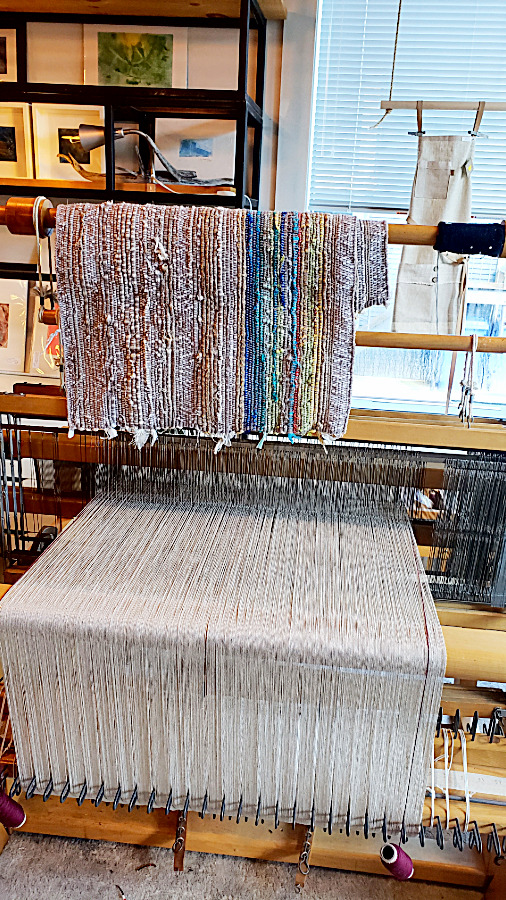
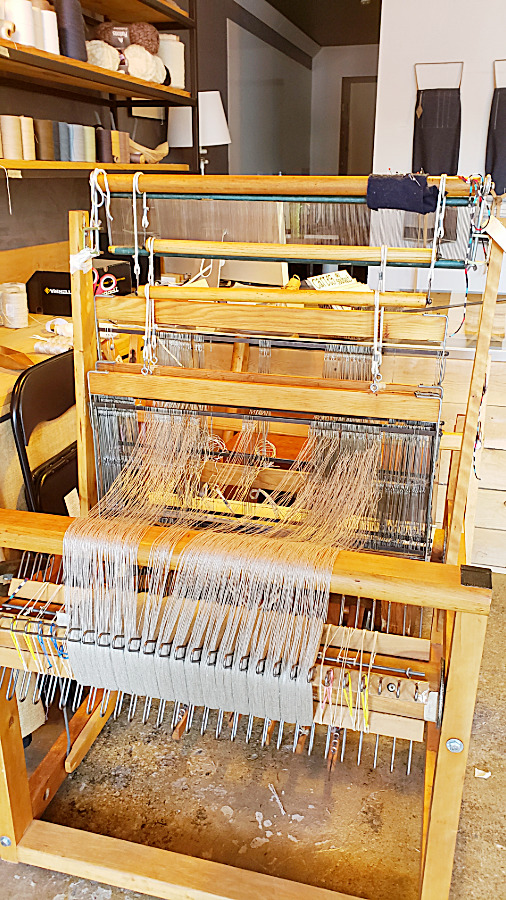
During a trip to a small town in Quebec, Canada, I stumbled upon this weaving machine (also called a loom) in action. The long threads stretched tightly from top to bottom are the warp threads — they form the backbone of the fabric. The colored threads running across are the weft threads, carefully interlaced over and under the warp to create the fabric itself.
Seeing it in person makes it clear:
- Woven fabrics are literally built thread by thread at right angles.
- The way those threads cross (plain, twill, satin weave etc.) determines how the final fabric looks and behaves.
- Once you understand this structure, you know why woven fabrics don’t stretch (unless elastane is added), why they fray at the edges, and why grainline is so important when cutting.
That machine was a reminder that every bolt of woven cotton, denim, or silk we see in a store started with this simple, rhythmic process — warp and weft coming together to form something strong, stable, and beautiful.
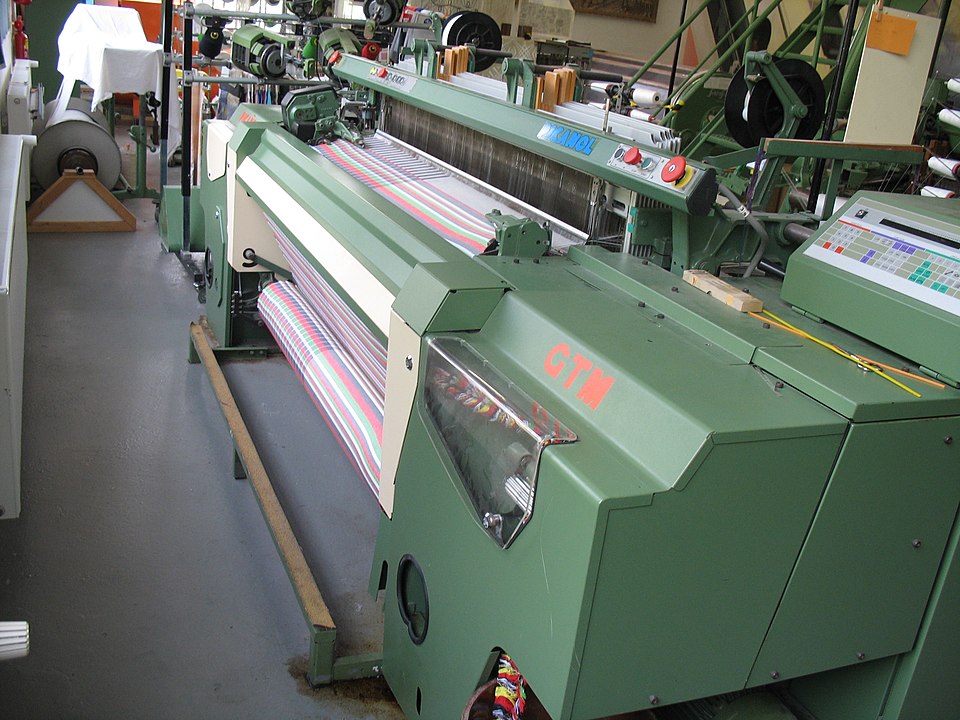
Of course modern automated looms look differently but the principle is the same. This is an image of a modern machine (courtesy Loom – Wikipedia)
What Happens If You Cut Off-Grain (Even Just a Bit)?
If your pattern piece is off grain even just a bit, that may not seem like a big deal. But it can quietly cause problems:
- The fabric may twist after washing. A side seam that looked straight on your sewing table can suddenly spiral around your body.
- The garment won’t hang evenly. Even one skirt panel cut off-grain can cause the hem to dip or wave.
- It affects stretch and drape. You might notice odd pulling across the chest or shoulders, or fabric sagging strangely – especially in lighter materials.
- Matching prints becomes a nightmare. Plaids, stripes, or florals will shift subtly and won’t line up where they should.
In short: a little off can become very noticeable once the fabric is worn and washed.
So How Do You Actually Follow That Grainline Arrow?
Most pattern pieces have a long arrow labeled “grainline.” That arrow is telling you, “This line must run exactly parallel to the selvage.” So you need to place your pattern piece accurately, even if you can’t see the threads.
- Find the selvage – that’s your north star. Even if you trim it off later (and you should), keep it while laying out your pattern.
- Place the upper end of the arrow at some distance from the selvage, but don’t pin yet.
- Use a clear ruler or measuring tape to measure the distance from the arrow to the selvage. Let’s say it’s 5 inches. You decide the distance.
- Go to the other end of the arrow and adjust it so that it’s also exactly 5 inches from the selvage.
- Now pin or weight the pattern piece in place. If both ends of the grainline arrow are the same distance from the selvage, your piece is on grain.
For large pieces like skirts or wide-leg pants, I usually extend the grainline arrow across the entire pattern piece to help keep everything lined up.
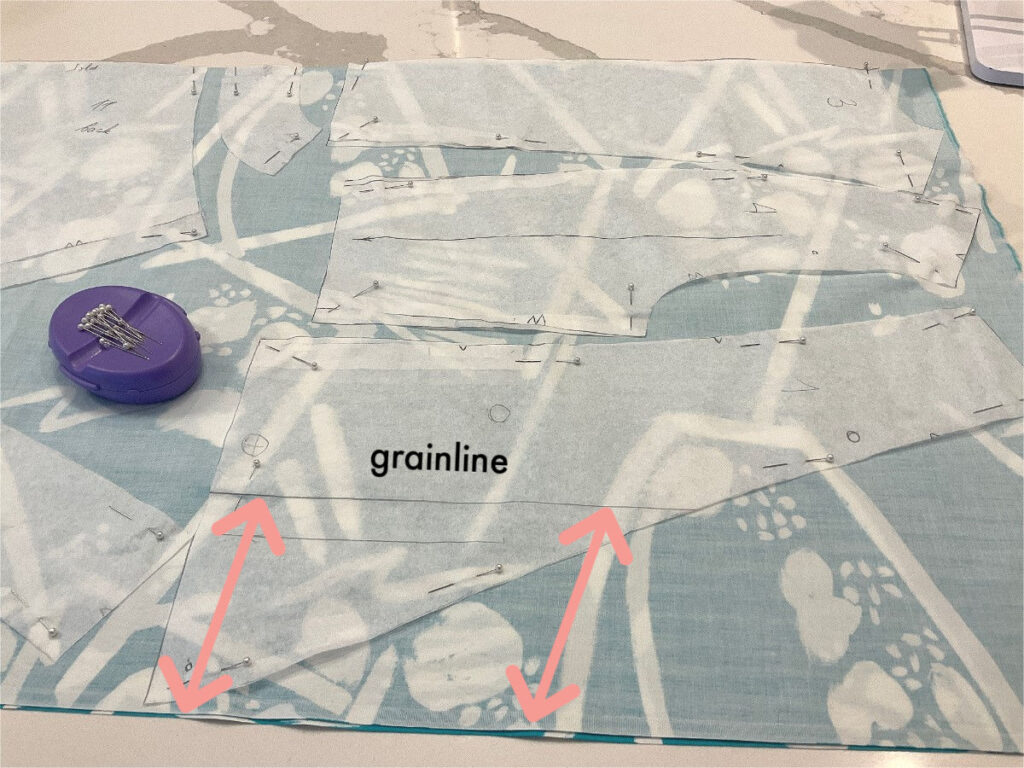
If the fabric is particularly slippery or stretchy, I sometimes remove the pattern piece and draw a long straight line directly on the fabric using a fabric marker. Then I place the pattern back down and align the grainline arrow with that marked line.
Knit Fabrics
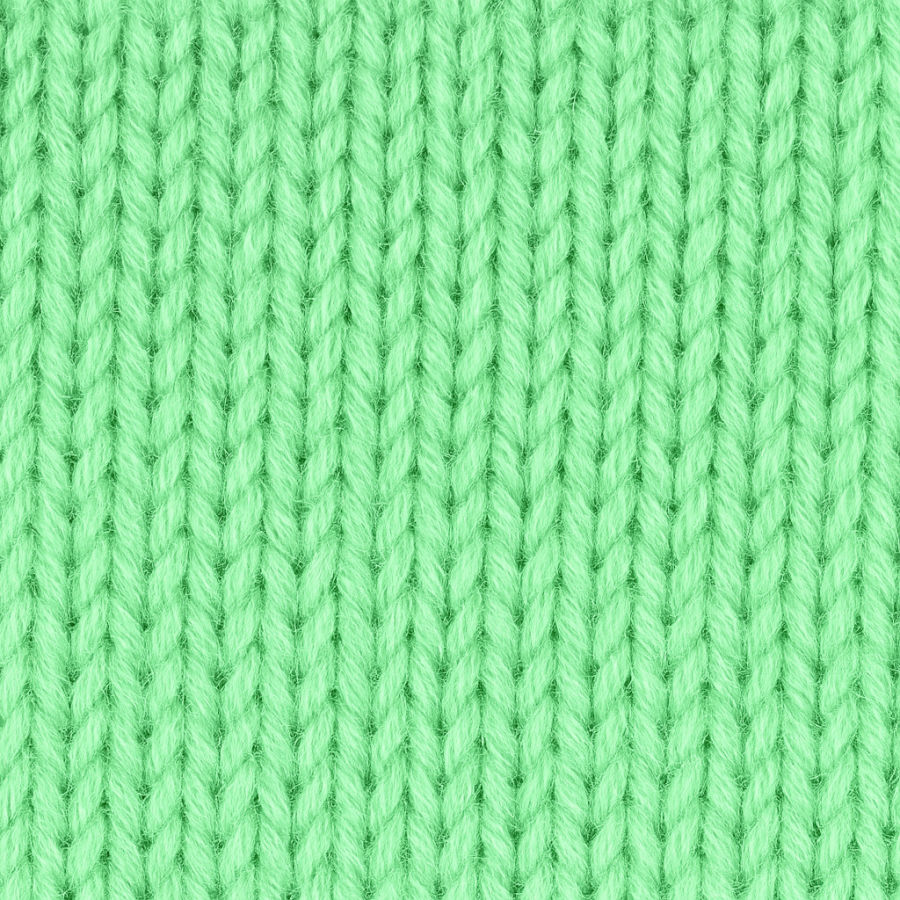
If woven fabrics are made from intersecting threads, knits are made from one continuous yarn looped together row by row. These loops are what give knits their signature stretch and softness.
Knit Fabric or Knitted Fabric?
Technically, both are correct. “Knitted fabric” refers to the way the fabric is made – through knitting. “Knit fabric” is the term most commonly used in sewing and fabric stores. So if you’re talking about t-shirt material, you’d probably just call it knit fabric.
Why Do Loops Matter?
Knit fabrics behave differently because of the loops. The yarn can shift slightly, so knits stretch and recover. You don’t need darts or zippers in most knit garments because the fabric moves with your body. That’s why T-shirts, leggings, and sweaters feel so comfy.
But those loops? They can be hard to see. Especially on dense or fuzzy knits.
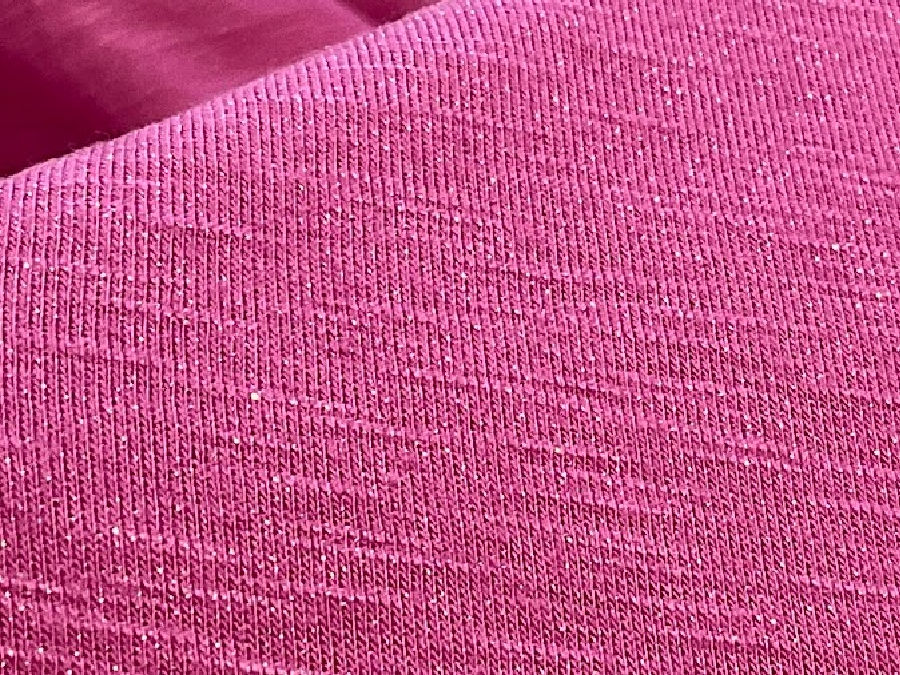
Mood Fabrics has a large variety of knit fabric: jersey and knits in general, jacquard (special type of knit with an intricate pattern built in), tricot (swimwear, sportswear, lingerie, etc.) and many others.
So… How Do You Tell if It’s a Knit or a Woven?
If the loops aren’t obvious (and they often aren’t), here’s how to figure it out:
- Pull it gently crosswise. Knit fabrics will usually stretch much more than wovens. Wovens only stretch (and not much) if they have elastic fibers like spandex.
- Look at the edge. If you snip a corner, woven fabrics tend to fray into threads. Knits may curl at the edges but usually won’t fray.
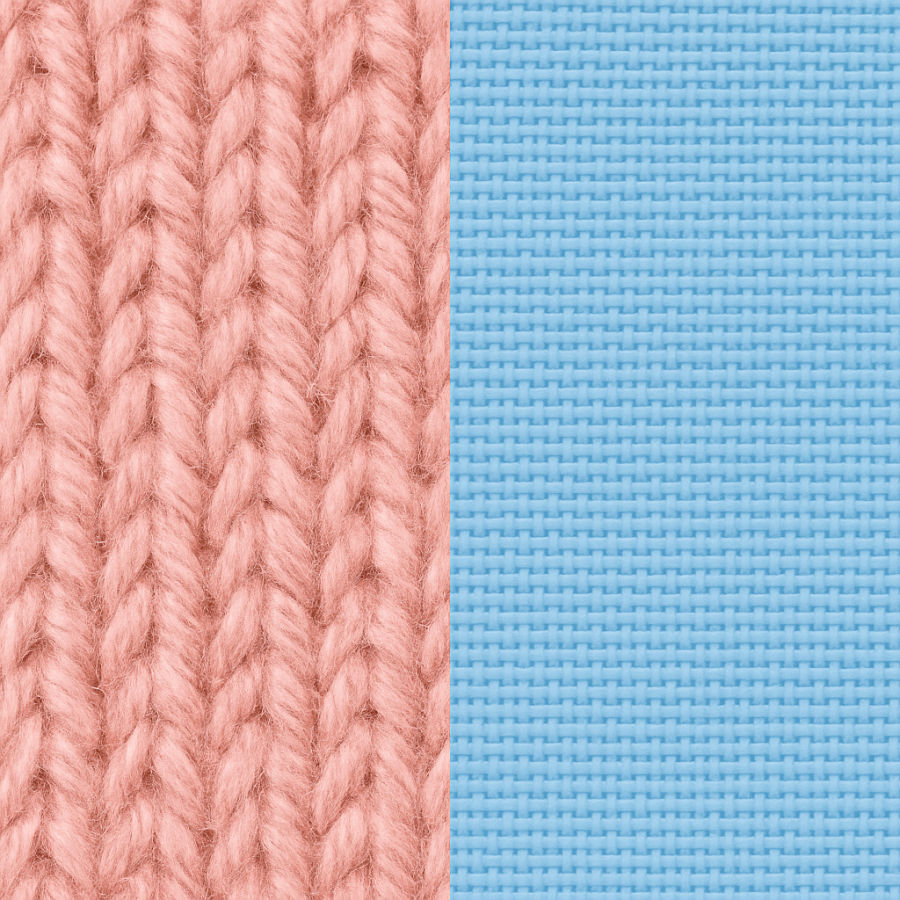
- Use a magnifying glass. If you’re still not sure, a magnifier can help. Woven fabrics have a grid. Knits have loops – the front has small V-shaped patterns (called wales) and the back shows little bumps (called purls). These are the same as in hand-knitting – just smaller.
Do Knits Have a Grainline?
Yes – but it looks and behaves differently than on wovens. Since knits are made from loops rather than crisscrossed threads, you won’t see a warp and weft. Instead, you’ll see:
- Wales – vertical columns of loops (like little V’s stacked on top of each other).
- Courses – horizontal rows of loops.
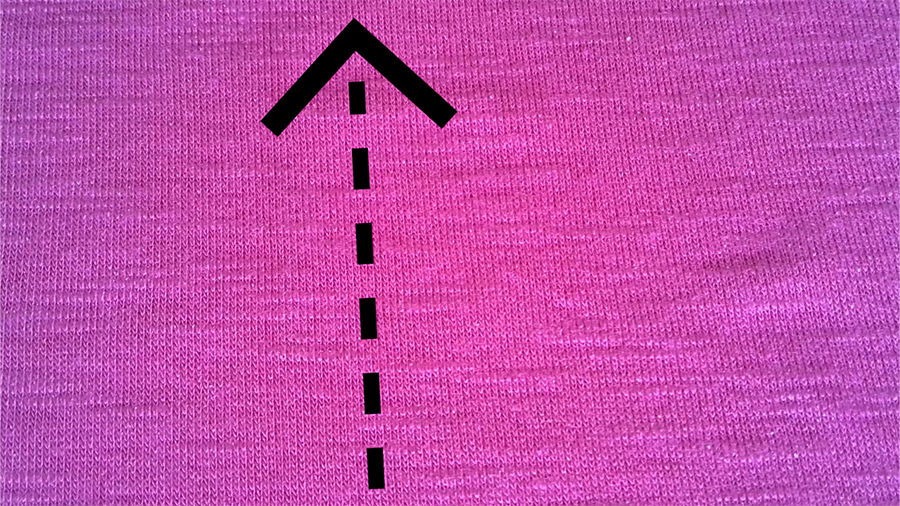
The “straight grain” in knits runs along the wales. This is the direction your pattern’s grainline arrow should follow. Just like in wovens, placing your pattern on-grain keeps the garment from twisting and helps it hang as intended.
How to Find the Grainline on Knits
- Use the selvage. On knits, the selvage edge usually runs along the wales, which matches the grainline direction.
- Gently stretch the fabric. Knits usually stretch more crosswise (along the courses) than lengthwise (along the wales). The direction with the least stretch is your straight grain.
Look closely for the vertical V’s. On a t-shirt knit, they’re often visible on the right side of the fabric.
Why It Matters
If you place your pattern piece slightly off the wales, the fabric may twist or ripple when worn. For example, leggings cut off-grain will twist around your legs after a few washes. A t-shirt may torque so the side seam creeps toward the front.
So yes, knits do have a kind of grainline – and respecting it saves you from those annoying “why does my seam look crooked?” surprises.
Wait… Is Fleece a Knit?
Yes – most fleece fabrics used in sewing are knits. That might be surprising because they don’t look like a t-shirt fabric. But underneath all that soft fluff, fleece has a looped knit structure. That’s why it stretches slightly and why it doesn’t fray when you cut it.
Even sweatshirt fleece and polar fleece are knit fabrics, even though their brushed or fuzzy surfaces hide the loops.


Why does this matter? Because knits and wovens need different sewing techniques.
Why You Must Know the Difference Between Knits and Wovens
Understanding which one you’re working with will save you from puckered seams, stretched-out necklines, or clothes that mysteriously twist after one wash.
1. Stretch vs. Structure
- Knits stretch naturally because of their looped construction. They move with the body and return to shape.
- Wovens don’t stretch (unless there’s added elastic fiber). They hold their shape and provide structure.
If you make a fitted t-shirt from a woven cotton, it won’t stretch over your shoulders. If you sew a blouse from a knit, it may droop or sag where you expected crisp lines.
2. Different Stitches Required
- Knits need flexible stitches – like zigzag, lightning stitch, or a serger stitch – so the seams can stretch without popping.
- Wovens do best with straight stitches and often need seam finishing to prevent fraying.
If you use a straight stitch on knit fabric, the thread can snap the first time you pull the garment on.
3. Pattern Choices Are Fabric-Specific
- Knit patterns are drafted with negative ease. This means the finished garment is smaller than your body, but stretches to fit.
- Woven patterns use positive ease. The garment is larger than the body to allow for movement and fit without stretch.
Sewing a knit pattern in a woven can feel like squeezing into a too-small garment. Using a woven pattern for knits can result in a loose, shapeless look with odd fit issues.
4. Fabric Handling at the Machine
- Knits can stretch while sewing, especially around curves like necklines or armholes. This leads to rippling.
- Wovens tend to stay flat and are easier to guide under the presser foot.
You’ll use different handling techniques and tools. For example, knit stay tape or fusible interfacing can help control very stretchy knits.
5. Edge Behavior
- Knits usually don’t fray but may curl at the edges.
- Wovens fray over time unless edges are finished.
With knits, you can often skip overcasting. With wovens, leaving a raw edge could mean unraveling seams after washing.
6. Closures and Shaping
- Knits are flexible and body-hugging, so they rarely need zippers, buttons, or darts. The stretch does the shaping for you.
- Wovens don’t stretch to fit, so they usually require extra construction – darts, pleats, princess seams, zippers, or button plackets – to fit the body properly.
If you try to skip closures on a woven dress, you might not be able to get it over your head. And if you try to add darts to a knit top, it may end up with puckers instead of shaping.
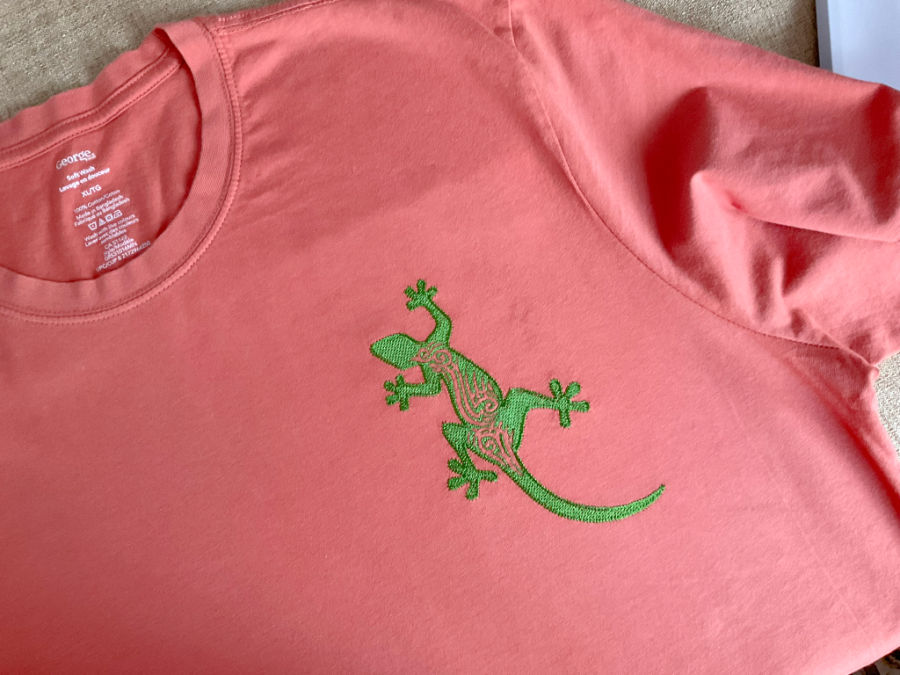
7. Embroidery on Knits and Wovens Requires Different Techniques
Wovens are stable and don’t stretch, which makes them the easiest fabrics to embroider.
- They can handle dense stitch designs without shifting
- You can hoop them tightly without worrying about distortion
- They don’t need special stabilizers (though using one is still a good idea)
Now knits… that’s a different story.
Knits stretch and recover — which is lovely for wearing, but tricky for embroidery. If you embroider them like a woven, you’ll likely get:
- Puckering around the design
- Distorted fabric (especially after washing)
- Stitches that sink in or get lost in the texture
You’ll usually need a cut-away stabilizer, a ballpoint needle, and sometimes even a water-soluble topper to keep the stitches from sinking into the fabric.


And here’s the key: you can’t hoop knit fabric with tension like you do with wovens. If you stretch it in the hoop, the design will shrink or pucker when the fabric relaxes.
Getting embroidery right means adjusting your method based on fabric type — and that starts with knowing whether it’s knit or woven.
Is Stretch Fabric Woven or Knit?
The short answer? It can be either. Stretch isn’t about whether the fabric is woven or knit – it’s about how the fabric is made and what fibers are used.
Let’s break it down clearly.
1. Knit Fabrics Are Naturally Stretchy
Knits have built-in stretch and are very flexible – especially across the width of the fabric. The fabric bounces back after being pulled. Most of knits stretch even without any elastane/spandex added.
T-shirts, leggings, sweatshirts, underwear, and swimwear are all made from knit fabrics.
So yes – if you’re holding a fabric that stretches, it might be a knit.
2. Some Woven Fabrics Can Stretch, Too
Wovens don’t stretch on their own – unless something stretchy is added. So stretch wovens are fabrics that have elastane blended into the yarns.
This gives them a controlled, limited stretch – usually just a bit and only across the cross-grain.Common stretch wovens: stretch denim, stretch poplin, stretch sateen, stretch suiting.

The stretch in these fabrics is more firm and subtle. It adds comfort without the drapey feel of a knit.
What is the difference between elastane, spandex, and Lycra?
- Elastane is the generic fiber name used internationally. You’ll see it listed on most fabric content labels outside of North America.
- Spandex is the American name for the same fiber. There is a large collection of such fabric at Mood Fabrics.
- Lycra is a brand name, owned by The Lycra Company (originally developed by DuPont). It’s a trademarked type of spandex/elastane.
Amazon also has a large assortment of elastane/spandex/lycra fabric.
So in short:
- All Lycra is spandex.
- All spandex is elastane.
- But not all elastane is technically Lycra (just the branded kind).
Why it matters in sewing
Regardless of what it’s called, these stretchy fibers:
- Are blended into other fabrics like cotton, polyester, silk, or rayon
- Add stretch and recovery – meaning the fabric bounces back after being stretched
- Are commonly used in stretch woven and knit garments
So when you see 5% spandex or 5% elastane, you’re getting the same result – a little stretch added to a fabric.
If you are looking at an in-depth description of fabric containing spandex, this site Spandex Fabric Wholesale has a variety of fabric types with descriptions and technical details about them.
Can You Combine Woven and Knit Fabrics?
Yes – but with care.
Woven and knit fabrics behave differently. If you mix them without thinking through how they’ll interact, you might end up with:
- Puckering seams
- Stretchy areas that droop
- Woven sections that restrict movement
- Uneven drape or unexpected pulling
So it’s not just about whether you can – it’s about how to do it successfully.
When Does Combining Them Work?
It works best when:
- The design allows for different fabric behavior in different places
- The pattern is drafted with that contrast in mind
- You stabilize where needed to keep seams behaving
Some examples where the combination is very effective below:


Tips for Combining Woven and Knit Fabrics
- Stabilize seams that join the two
Add clear elastic or stay tape to seams where the knit might stretch out (especially shoulder seams or side seams). - Match stretch percentages when possible
If your woven has stretch (like stretch denim or sateen), it’ll be easier to pair with a stable knit. - Mind the grainlines
Even though knits don’t have a true “grain” like wovens, aligning wales correctly still matters – especially if joining to a woven piece that’s on grain. - Finish edges thoughtfully
A raw knit edge might curl against a finished woven seam. Use serging, bindings, facings, or linings to clean things up.
Good Combinations to Try
- Knit top + woven skirt (think: t-shirt dress)
- Woven bodice + knit sleeves (adds comfort and range of motion)
- Knit neckband on a woven blouse (stylish and soft)
- Woven placket on a knit garment (adds structure where needed)
I often combine wovens and knits in my sewing projects, and these two outfits are examples I made and love to wear.
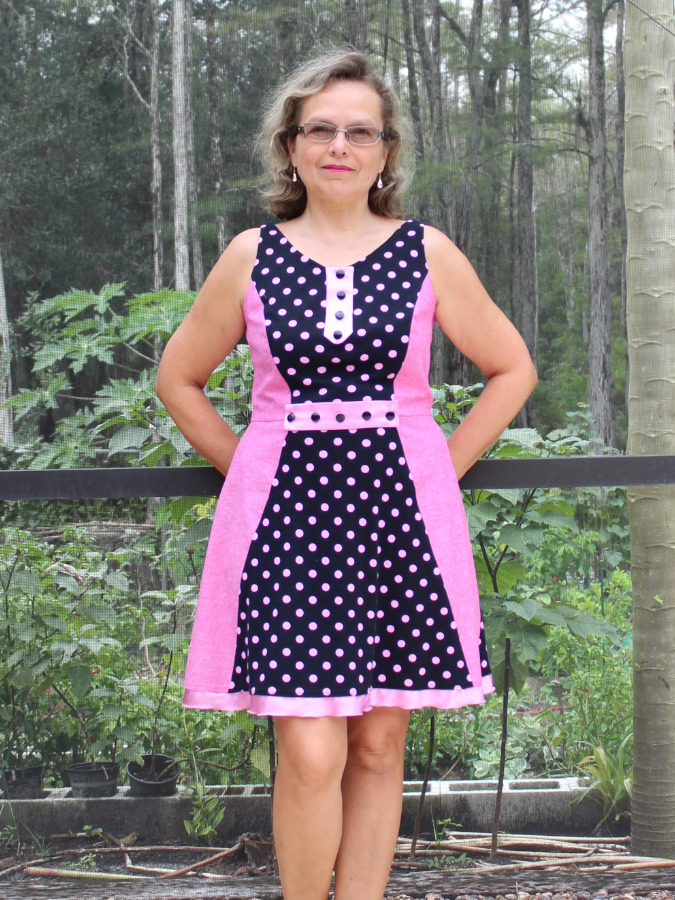
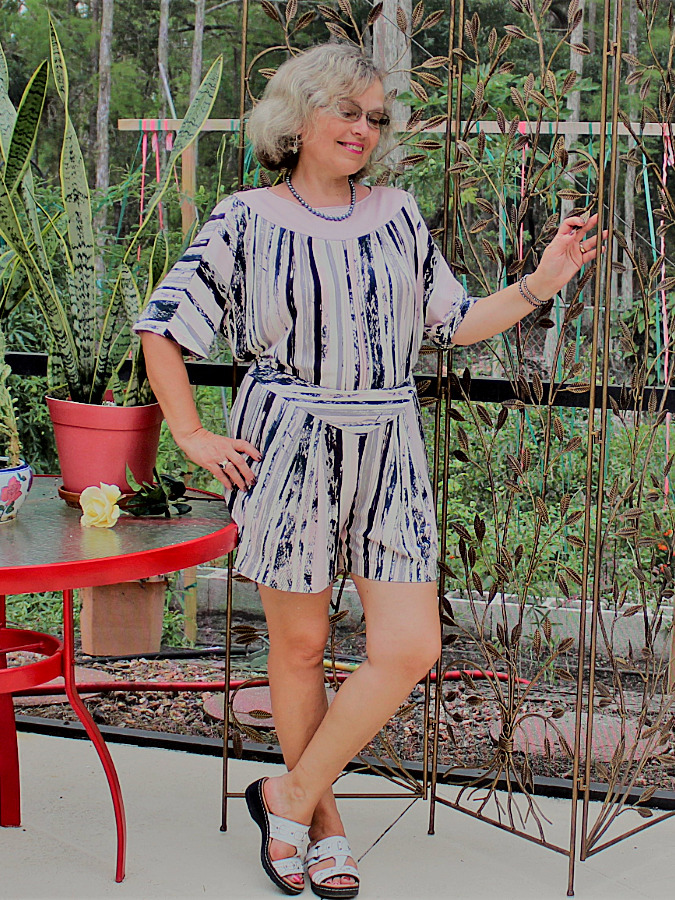
- In the first outfit, I used a striped rayon knit for the main pieces and added woven fabric at the neckline for stability. This way the outfit feels comfortable like a knit but still keeps its shape.
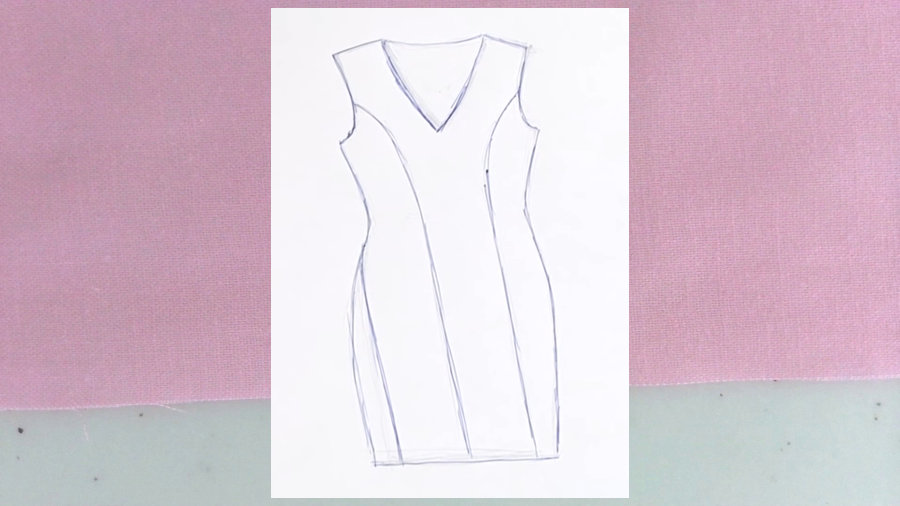
- In the second dress, the polka dot sections are knit — giving the dress flexibility and movement. The pink side panels and trim are woven, adding structure so the dress holds its A-line shape and doesn’t stretch out. The result is a dress that fits well but still feels easy to wear.
Mixing the two fabric families can be tricky, but with the right techniques, it opens up lots of creative design possibilities.
When to Avoid Mixing
- Very delicate knits with heavy wovens (like chiffon with denim)
- Projects where structure and stretch need to be consistent throughout (like leggings or fitted dresses)
Non-Woven Fabrics
Non-woven fabrics aren’t woven or knitted. There are no visible threads running in neat directions. Instead, non-wovens are made by bonding fibers together using heat, pressure, adhesives, or even embrodery. The fibers are randomly arranged and fused into a flat sheet.
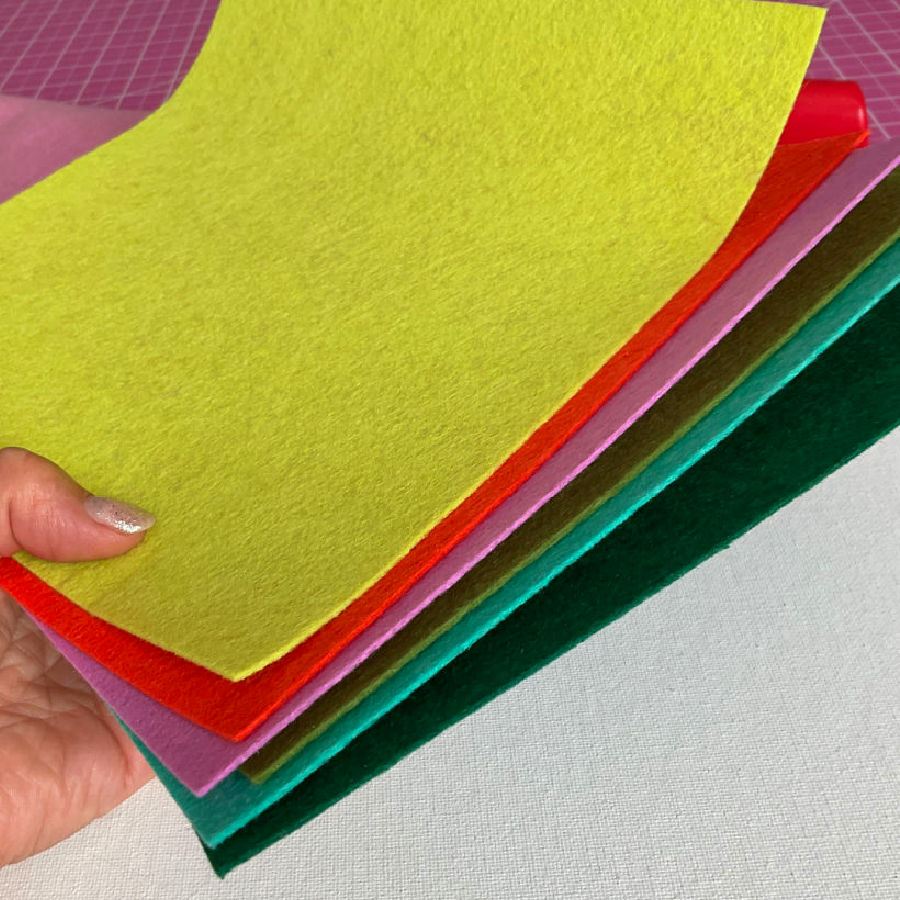
So when you cut into a non-woven fabric, you’re not cutting along a weave or a series of loops – you’re just slicing into a compressed tangle of fibers.
Compared to the drape of a knit or the crispness of a woven, non-wovens often feel flat or stiff.
What Are Some Examples of Non-Wovens?
- Felt – Both wool and synthetic types can be non-woven. (Some wool felts are technically woven or knitted first, then felted, but craft wool felt is usually non-woven.)
- Interfacing – Most fusible interfacings are non-woven. They feel papery and don’t fray. I wrote about this in my articles How To Use Fusible Interfacing (Video + Tips And Tricks) and How to use fusible interfacing for applique.
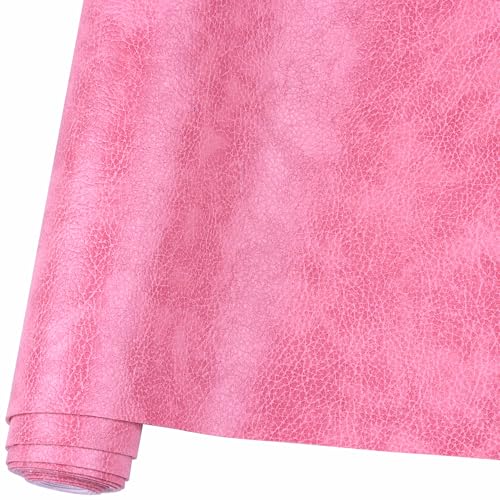
- Vinyl and faux leather – Most of these are non-woven. See current offers of such fabric at Amazon.
Medical fabrics – Think face masks and disposable gowns – all non-woven.
Why It Matters for Sewing
Non-wovens can be easy to work with in the right project – no grainline to fuss over, no fraying, and they hold shape. But they also come with some limitations.
- They don’t stretch or recover, so if they’re under tension they might tear.
- They don’t breathe well, which is fine for toys, bags or accessories, but not great for garments.
- They’re often stiffer, making them good for structure, but not for drape.
- Once pierced, the holes stay. This is especially true with vinyls and some interfacings, so unpicking stitches isn’t always an option.
What About Lace?
Lace is a special case as it doesn’t belong to just one fabric family. Depending on how it’s made, it might be a knit, a woven, or even non-woven or knit.
- Stretch lace can be a knit – soft, flexible, and perfect for lingerie or fitted dresses
- Rigid lace (like eyelet lace) is usually woven. There is a large assortment of such fabric at Amazon.
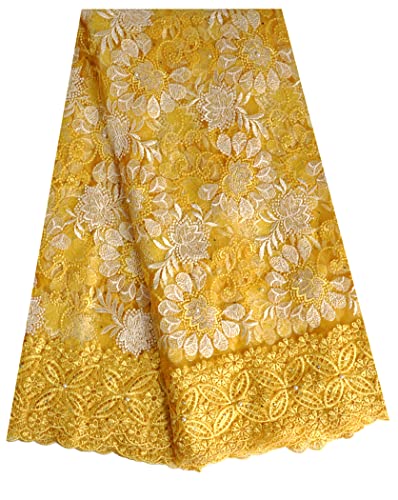
- Embroidered lace is technically non-woven or knit (like guipure lace)



Did you find this guide on fabric types useful? If yes, why not save this pin to your Pinterest board? That way, you can easily return to the article whenever you need a refresher on this topic. And for an ongoing stream of handy tips, tutorials, and all sorts of creative inspiration, make sure to follow me on Pinterest.

latest posts
- Knit Presser Foot: How It Works, How to Use It, and My Sewing Tests
- How to Sew Neat Mitered Corners at Acute Angles
- Sewing Machine Needle Organization: A Clever System I Tried
- DIY Car Armrest Organizer: Sewing Tutorial
- Easy DIY Potholder Sewing Tutorial: Better Shape, Better Grip, Smart New Design
- How to Buy a Sewing Machine (Even If You Already Have 10)
- 23 Kitchen Items That Belong in Your Sewing Room
- What Is a Sewing Machine Piping Foot And How to Use It
- Fixing Sewing Mistakes: Repair an Accidental Cut in Fabric
Olga,
I just wanted to let you know how much I appreciate your newsletters and blog. I have been sewing for close to 60 years and I still learn something new almost every day! Your writing style and sense of humor add to my enjoyment every time I open your emails.
Keep up the good work, please!
Thank you; we all learn something new every day. Well, except the days when we do not sew. I can’t remember a day when I did not sew.