Non-Slip Grips For Quilting Rulers: A Small Notion With A Useful Job
This review is about one of those tiny quilting notions that does not look impressive at first, but can make rotary cutting feel much steadier: non-slip ruler grips.
That sounds like a very small notion to get excited about, I know. But if you use a rotary cutter, you already understand the problem.


Get the printable PDF bundle in my shop: Useful Sewing Notions: Mini Clips, Fabric Eraser, Non-Slip Grips. It includes this article plus two more sewing tool reviews, all ad-free and ready for offline reading.
Most acrylic quilting rulers are smooth on the bottom. That smooth surface lets you see the fabric, the lines, and the cutting mat clearly. But it also means the ruler can skate across fabric with very little warning.
This usually happens at the worst moment:
- near the end of a long cut
- while trimming a quilt block
- while cutting several fabric layers
- while cutting narrow strips
- while your rotary cutter is already moving
A slipping ruler can ruin fabric, distort measurements, and put your fingers too close to the blade. So this is not only about accuracy. It is also about safety.
Non-slip ruler grips add just enough traction to the back of the ruler. They help the ruler stay where you placed it, without blocking the ruler lines.

What Are TrueCut TrueGrips

I am using TrueCut TrueGrips Non-Slip Ruler Grips. The package includes 30 transparent adhesive grips: fifteen larger grips and fifteen smaller grips.
Note: This is an affiliate link. This means I will receive a commission if you order a product through one of my links. I only recommend products I believe in and use myself.
They are clear adhesive rings and dots that stick to the underside of a quilting ruler. The manufacturer describes them as transparent, easy to apply, and useful for rulers, templates, and other crafts that use a rotary cutter.
They are thin, and that part matters a lot.
A good ruler grip should help the ruler stay put without raising it too far above the fabric. If the grips are too thick, the ruler can wobble. Then the tool that was supposed to help becomes one more thing to argue with at the cutting table.

Why Thin Grips Are Better
Not all ruler grips sold on Amazon are equally useful for sewing and quilting. Some look good in the package but are too thick for rotary cutting.
A thick grip can lift the ruler edge away from the fabric. That small lift may not seem important, but it can cause a few problems.
The ruler may rock slightly under your hand. The rotary cutter blade may not sit tight against the ruler edge. Thin fabric can shift under the raised ruler. Small pieces can move instead of stay flat.
For quilting, rulers need traction, not height.
This is why I prefer very thin grips like TrueCut TrueGrips. They give the ruler more hold, but they do not turn it into a tiny acrylic table.
Where To Place Non-Slip Ruler Grips
Turn the ruler over so the printed side faces down. The grips need to go on the underside of the ruler.
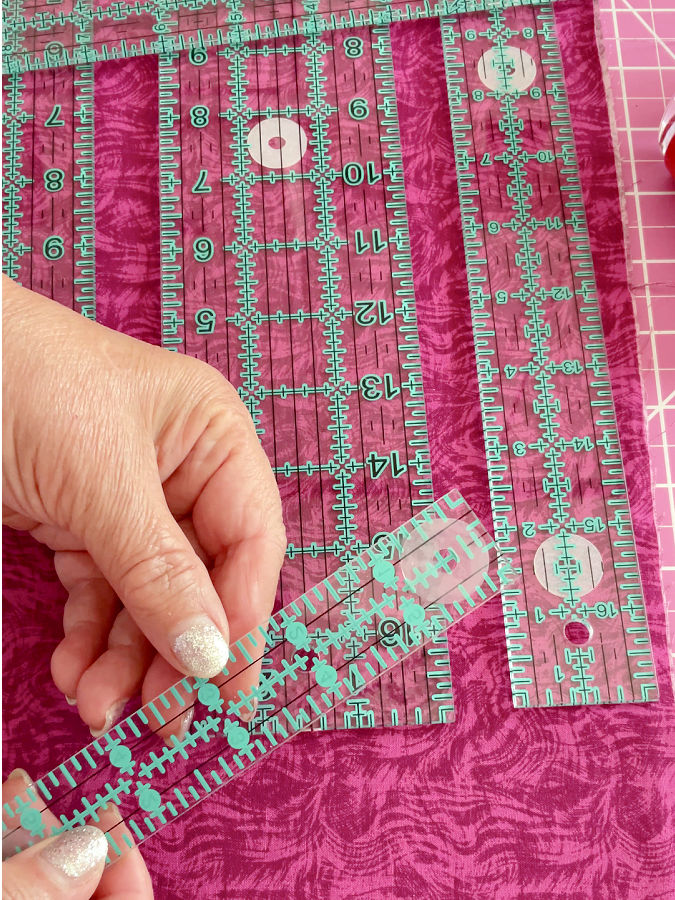
Place them away from the cutting edge. You do not want the rotary cutter blade to hit them.
For a small ruler, use a few grips near the corners and one near the center.
For a long ruler, place grips along the length of the ruler. Keep them spaced out so they support the ruler evenly.
For a square ruler, place one grip near each corner and one or two toward the middle.
Do not cover important ruler markings if you can avoid it. Grips are transparent, but clear does not always mean invisible under every light.
How To Apply Non-Slip Ruler Grips
Start with a dry ruler. Wipe the underside to remove lint, dust, or fingerprints. Adhesive sticks better to a surface that is free from sewing-room debris. And yes, sewing-room debris has a way of appearing ten seconds after you clear the table.
Peel one grip from the sheet.
Place it on the underside of the ruler.
Press it firmly with your finger.
Add the rest of the grips.
Set the ruler flat on your cutting mat and press down lightly. You should feel more control right away.
Test the ruler on a scrap of fabric before you cut your real project pieces. This gives you a chance to move your hand placement and check if the ruler feels steady.
How Many Grips Do You Need?
You do not need to cover the whole ruler. Too many grips may make the ruler feel sticky and awkward to reposition.
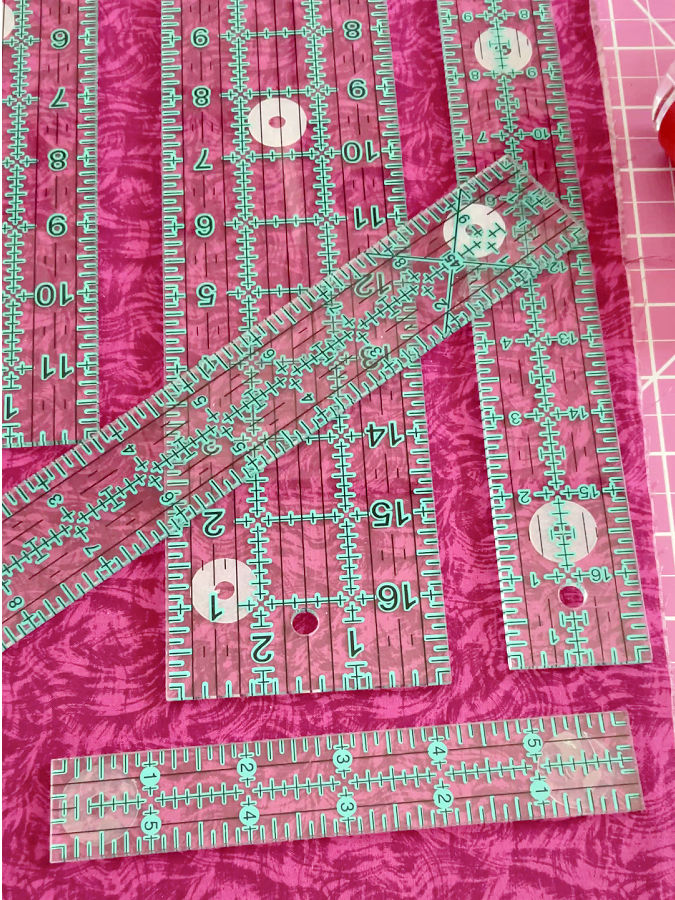
For a 6 x 12 inch ruler, try four or five grips.
For a 6 x 24 inch ruler, use more along the length. Long rulers need support near both ends and in the middle.
For small templates, use the smaller dots from the center of the rings.
The TrueCut TrueGrips package includes both larger and smaller grips, which is useful because tiny templates do not need the same size grip as a long quilting ruler.
How They Feel During Cutting
The ruler still moves when you lift it and reposition it. It does not glue itself to the fabric, which is good.
But when you press down with your hand, the grips help the ruler stay in place. This is especially helpful for long strips, bias cuts, and fabric that likes to shift.
They can make a basic acrylic ruler feel much more reliable.
They are also helpful for specialty rulers. Some triangle rulers and trimming rulers have awkward shapes, and they can slide right when you need precision.
What To Watch Out For
The adhesive may not last forever. Any sticky-backed sewing notion can collect lint or lose grip over time. If a dot starts to peel, replace it.
Do not place grips right at the ruler edge. Keep the cutting path clear.
Do not buy thick bumper-style dots for quilting rulers unless you have tested them first. They may be fine for cabinet doors, but rotary cutting has different rules.
Do not expect the grips to fix poor cutting posture. You still need to keep your hand steady, spread your fingers safely, and move the rotary cutter away from your body.
Are Non-Slip Ruler Grips Necessary?
For many quilters, yes, they are worth having.
You can cut fabric without them. Of course you can. People also sew without automatic needle threaders, but we do not need to make life harder on purpose.
Non-slip grips are especially useful if you cut a lot of strips, trim quilt blocks, work with slippery fabric, or use older rulers without built-in grip texture.
They are also helpful for beginners because they reduce one common cutting problem. A new sewist already has plenty to think about: fabric grain, ruler lines, blade angle, seam allowance, and the strange mystery of why a 2 1/2 inch strip can somehow become 2 3/8 inches by the end.
A steadier ruler removes one source of frustration.

TrueCut TrueGrips are a small sewing notion, but they solve a real problem. They help quilting rulers stay steady without blocking the view of the fabric.
If your ruler slides while you cut, try a few non-slip grips on the underside. Start with your most-used ruler. You may be surprised how much calmer rotary cutting feels when the ruler stops trying to escape.
Save the pin below to your sewing tools board so you can find these non-slip ruler grip tips later. Follow me on Pinterest for more sewing tutorials and practical sewing tips.


latest posts
- 10 Easy-to-Miss Features on Sewing Supplies You Should Be Using
- Twin Needle Sewing: My First Try Was a Mess, But Here’s What Worked
- 10 Rules That Made Me a Better Sewist
- How to Make a Lightweight Summer Neck Scarf with a Lettuce Hem
- What Sewists Hate About Sewing: Common Complaints and Practical Fixes
- Knit Presser Foot: How It Works, How to Use It, and My Sewing Tests
- How to Sew Neat Mitered Corners at Acute Angles
- Sewing Machine Needle Organization: A Clever System I Tried
- DIY Car Armrest Organizer: Sewing Tutorial