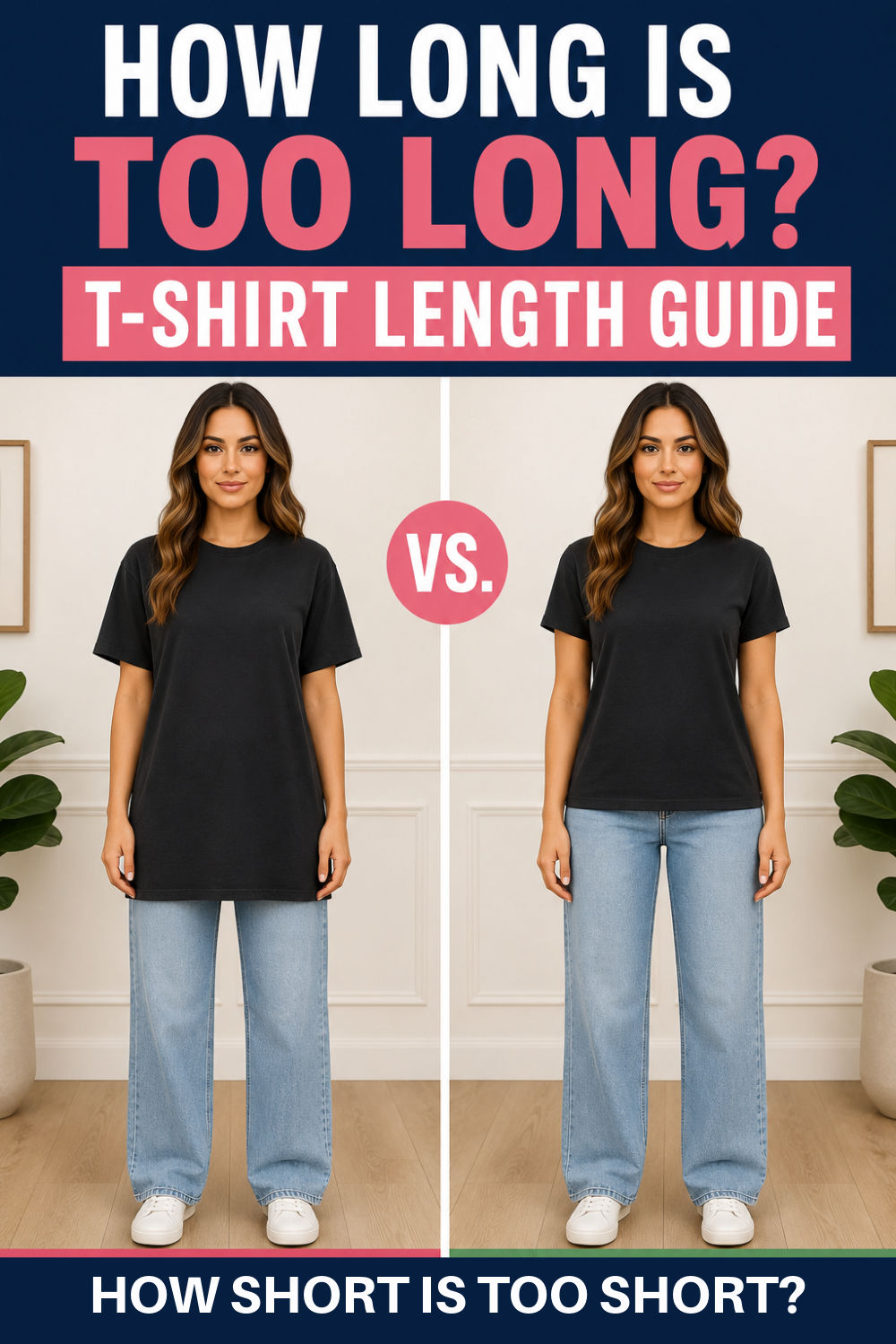
How Long is Too Long? T-Shirt Length Guide
The right T-shirt length is not one fixed number. It depends on the person, the shirt, and the rest of the outfit.
I saw proof of this after I shared a before-and-after photo on Facebook. The original T-shirt reached well below my hips. In the second photo, I wore the same shirt after I shortened it. I preferred the shorter version.
Many people agreed with me. Others liked the longer “before” version much better.
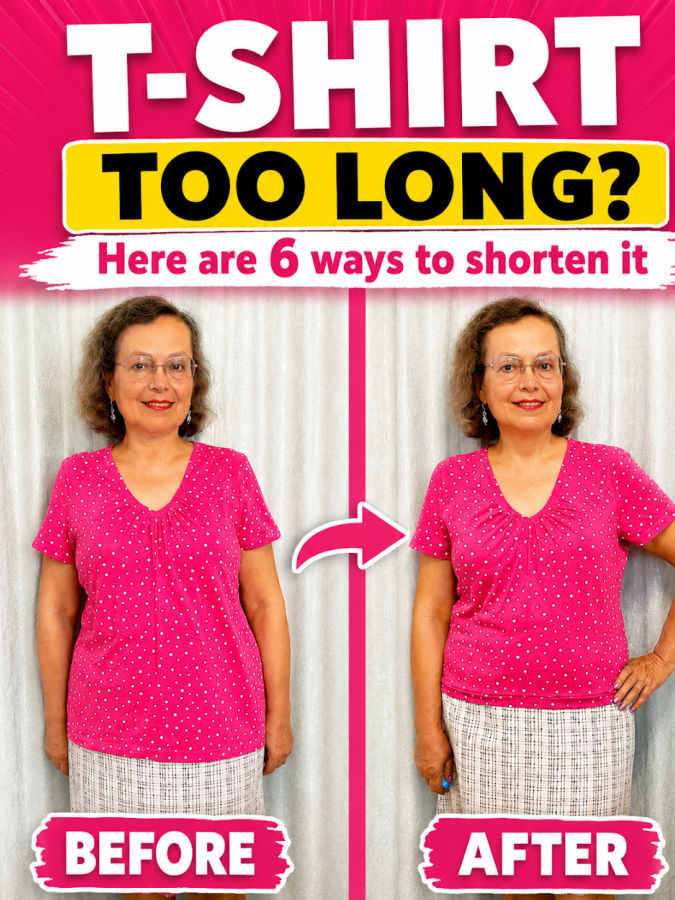
Nobody was looking at a different shirt. We all saw the same two photos, yet we did not agree about which length looked best.
That response says a great deal about T-shirt length. What seems too long to one woman may look comfortable and balanced to another. A hem that feels too short on a long torso may sit just right on a short torso.
Prefer to read without ads?
I created a PDF version of this guide for anyone who likes to keep sewing guides saved, printed, or easy to read without ads. It includes the same helpful information in a simple format you can download and use whenever you need it.
The PDF is available in my shop for a small fee. It’s a nice option if you want to support my work and keep this tutorial close to your sewing machine.
Still, a few guidelines can help. This t-shirt length guide explains the most common top lengths, the effect of body proportions, and the role that pants and skirts play in hemline placement. I will also cover a temporary way to shorten a shirt with magnetic clothing clips.
There Is No Universal “Correct” T-Shirt Length
Clothing stores often treat shirt length as part of the size. A small shirt is one length, a medium shirt is slightly larger, and so on.
Bodies do not follow that system.
Two women may wear the same size across the bust, but one may have a long torso and the other may have a short torso. One may prefer full hip coverage. The other may want the waistband of her skirt to remain visible.
Bust shape also affects the finished shirt length. A fuller bust uses more fabric from the shoulder to the hem. This can make the front appear shorter than the back.
The hips matter too. A fitted shirt may ride upward if the hem is too narrow. At first glance, the shirt may seem too short. The real problem could be a lack of room across the hips.
This is why a useful shirt length guide cannot declare that every regular T-shirt must measure a certain number of inches. Measurements help, but body landmarks give us a better starting point.
Shirt Length Chart: Common Top Lengths
The names used for tops are not always consistent. One company may call a shirt “cropped,” while another company may describe the same length as “waist length.”
This shirt length chart shows the general meaning of each term.
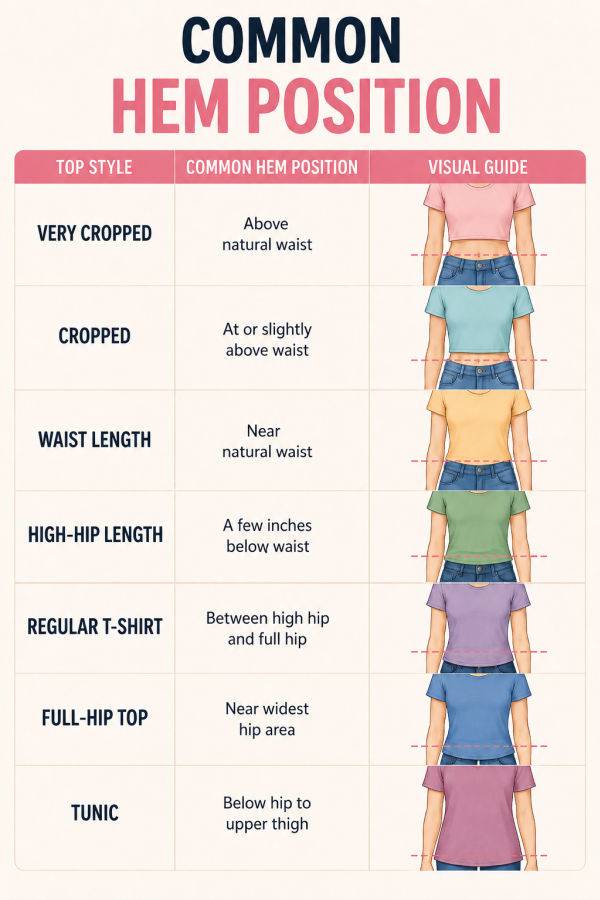
A regular T-shirt often ends somewhere between the high hip and full hip.
The Rest of the Outfit Changes the Answer
From my point of view, a shirt cannot be judged on its own.
The same T-shirt may look just right with one outfit and too long with another. The hemline placement changes the whole look of the outfit. A top that feels fine with one bottom may seem heavy, awkward, or too long with something else.
This is why I do not look at the shirt by itself. I look at the shirt together with the pants, shorts, leggings, or skirts I plan to wear.
With long pants
A regular hip-length top often works well with long pants. It can look relaxed and easy to wear, especially with straight-leg or narrow-leg pants.
But if the shirt is too long, it may make the outfit look a bit heavy. This is more noticeable if the pants are loose or wide through the leg. In that case, a slightly shorter top may look better.
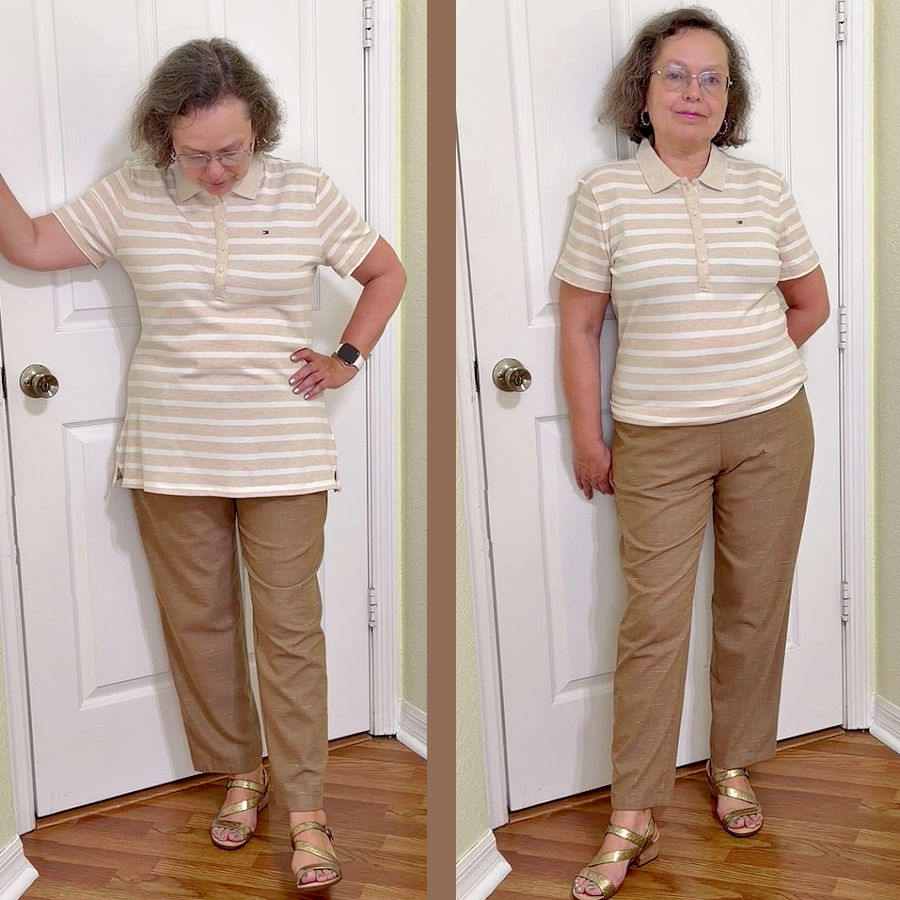
These photos show the beige striped polo at two different lengths with full-length pants.
For the second photo, I turned the lower part of the shirt to the inside to create a temporary shorter hem.
That extra fabric adds some bulk around the lower edge. The folded version does not lie as smoothly as a properly shortened and hemmed shirt would. That is fine for this comparison. I only wanted to show how the outfit changes when the hem sits higher.
In the first photo, the shirt extends below the full hip and comes close to the upper thigh. It has a relaxed, tunic-like shape. It provides more coverage, but it also makes the upper part of the outfit appear longer.
In the second photo, the temporary hem sits near the high hip. More of the pants remain visible, and the leg line begins higher. I prefer this length with these pants because the shorter hem divides the outfit in a more balanced place.
The longer version is not wrong. It creates a different proportion and may suit someone who prefers extra hip coverage. This simple fold is only a visual test, but it helps compare shirt lengths before any fabric is cut.
With cropped pants or capri pants
This is the type of pants that sits between full-length pants and shorts. Capri pants or cropped pants show more of the leg, so the hem of the shirt becomes more noticeable.
A top that is too long may throw off the proportions here. The shirt may cover too much of the body and leave only a short section of leg visible. A shorter top often looks better with this kind of pants.
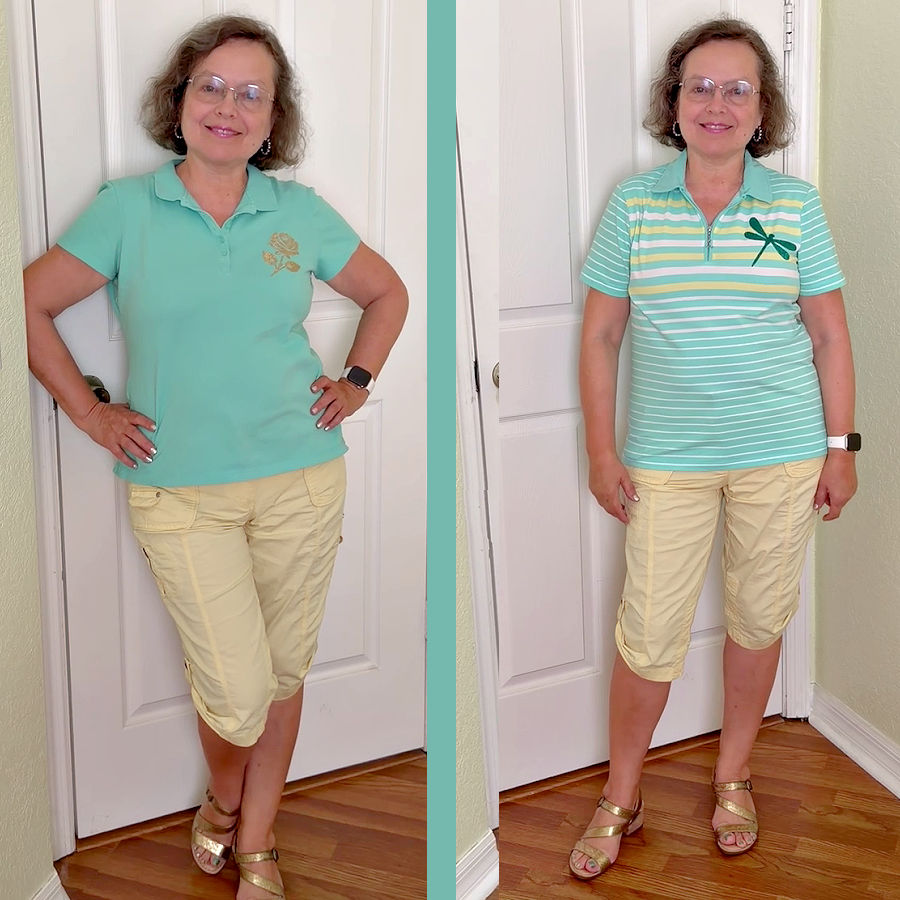
These two outfits show why cropped pants make shirt length more noticeable.
The solid mint polo ends near the high hip. It leaves a larger section of the pants visible between the shirt hem and the knees. This keeps the upper and lower parts of the outfit from competing for space.
The beige striped polo reaches below the full hip. It covers much more of the upper pants and leaves a shorter visible leg section. To my eye, this shirt feels too long for these particular pants, even though the same length may work well with leggings or full-length narrow pants.
The shirts differ in color and fit, so this is not an exact controlled comparison. Still, their hem positions show the main difference clearly.
With shorts
A long T-shirt can easily look too long with shorts. Sometimes it gets so close to the shorts hem that the outfit starts to look unclear.
A shorter top usually works better here. It helps the outfit look more intentional and lets the shorts stay visible.
With leggings
A longer top often works well with leggings. Many women like extra coverage in this combination, especially over the hips and upper thighs.
This is where a hip-length top or even tunic length can make sense. A shirt that feels too long with pants or shorts may look quite good with leggings.
With skirts
Skirts change the picture a lot.
A long T-shirt can hide the shape of the skirt. This is often the case with fuller skirts, gathered skirts, or skirts that have interesting details at the waist.
A shorter top often works better with skirts because it lets the skirt shape show.
But with a narrow skirt, a slightly longer top may still look nice. It depends on the shape of both pieces and on how much of the skirt you want to see.
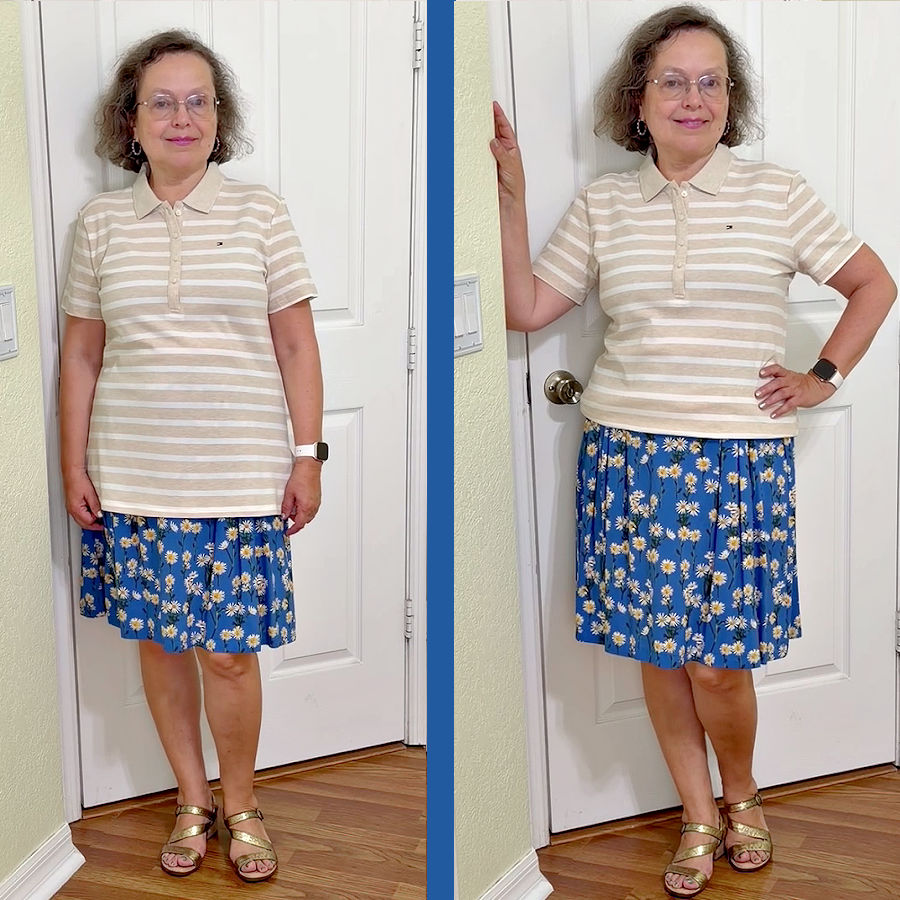
This pair shows why I often prefer a shorter top with a full skirt.
In the first photo, the long polo covers the waist and the upper part of the skirt. It hides the place where the skirt begins to flare. The shirt creates a long, straight section above a fuller lower section.
In the second photo, the shirt ends near the waist or high hip. More of the floral skirt remains visible, and its shape becomes a larger part of the outfit. The shorter hem also gives the waist a clearer position.
This does not mean every shirt worn with a skirt must end at the waist. A narrow skirt may work with a longer top. For this full skirt, however, I prefer the shorter version.
✧✧✧ 🪡 ✧✧✧
So, the answer is not just “Is this shirt too long?” A better question is “Is this shirt too long for this outfit?”
That is why I like to test the shirt with the exact bottom I plan to wear. A hem that looks fine with leggings may seem too long with shorts. A top that works with long pants may feel wrong with a skirt.
How Garment Shape Changes the Ideal Length
The shape of a top matters just as much as the place where the hem ends. A length that works well for a fitted T-shirt may feel completely wrong on a boxy or oversized design. Width, ease, shoulder shape, and the amount of flare all change how we see the finished proportions.
Fitted T-shirts
A fitted T-shirt often looks balanced when the hem finishes near the high hip. This gives enough coverage while keeping the waist and hip area visible.
But the hem also needs enough room. If the shirt becomes too narrow where it meets the hips, it may ride up or bunch around the waist. This is especially noticeable when the fabric has limited stretch or poor recovery.
Boxy tops
A boxy top often works better with a shorter body length. The extra width already gives the garment plenty of visual volume. Adding too much length can hide the waist and make the entire top appear larger.
A hem near the waist or high hip keeps the boxy shape clear and intentional. It also works well with wide-leg pants, cropped pants, shorts, and skirts because the shorter top helps balance the volume below.
That does not mean every boxy top must be cropped. A longer boxy design can work, but it may need side vents, a curved hem, or a slightly narrower shape near the bottom.
Oversized T-shirts
An oversized T-shirt usually needs more length than a fitted tee. The dropped shoulders, loose sleeves, and wide body create a larger overall scale, and a little extra length helps keep those elements in proportion.
If an oversized shirt is very short, it can look almost square. That may be exactly what you want in a cropped design, but it should appear intentional.
For a more traditional oversized fit, the hem can finish around the full hip or slightly below it. Check that the shirt is wide enough at this point and that the hem does not pull across the hips when you sit or move.
Peplum tops
With a peplum top, the placement of the waist seam is usually more important than the total length. The seam should sit close to the intended waistline so the peplum begins in the right place.
The hem may finish above or below the high hip. A shorter peplum creates a lighter, more defined shape. A longer one gives more coverage but may add visual width if it ends at the fullest part of the hips.
Before hemming, try the top on with the pants or skirts you expect to wear with it. Even a small change in peplum length can noticeably change the proportions.
Tunics
Tunics generally finish below the hips, so they need enough width for comfortable movement. Check the fit while sitting, walking, and bending—not only while standing in front of a mirror.
High-Low Hems
A high-low hem is useful when you want a shorter appearance in front with additional coverage in the back. The front may finish near the high hip while the back extends to the full hip or below.
The transition between the two lengths is important. A smooth curve or clearly shaped side seam makes the difference look intentional. A small, poorly defined difference can look more like an uneven hem.
Sewing Adjustments for T-Shirts
Since most T-shirts are made from knit fabric, any permanent alteration must preserve the stretch of the hem.
The sewing method matters as much as the new length.
How to Shorten a T-Shirt
I have a separate tutorial that shows how to shorten a T-shirt in six different ways. I also have detailed instructions on how to hem a T-shirt and other knit garments.
For a basic shortening alteration, follow these steps:
- Put on the T-shirt with the planned pants or skirt.
- Mark the desired finished length.
- Check the mark at the front, sides, and back.
- Remove the shirt.
- Add the hem allowance below the finished-length line.
- Cut away the extra fabric.
- Press the hem allowance to the wrong side.
- Stitch the hem with a method that can keep stretch.
✅ Related tutorial: Altering Clothes DIY: How to Shorten a T-shirt with Style and Precision
A twin needle creates two parallel rows on the right side and a zigzag shape on the wrong side. A coverstitch machine creates a finish similar to many store-bought T-shirts.
A narrow zigzag or another stretch stitch can also work. Test the stitch on a scrap first.
Among common shirt hem types, you may see:
- Twin-needle hem
- Coverstitched hem
- Narrow zigzag hem
- Hem band
- Lettuce-edge hem
- Raw knit hem
The fabric and shirt style should guide the choice.
How Much Hem Allowance Should You Add?
A knit T-shirt hem allowance is often between ¾ inch and 1¼ inches. The exact amount depends on the fabric and the hemming method.
A coverstitch or twin-needle hem often works well with a wider allowance. A narrow zigzag hem may need less. Test the hem on a fabric scrap before you trim the shirt.
How to Add Length to a Shirt
A shirt that feels too short can sometimes be saved without a full remake.
Options include:
- Add a band from matching knit fabric.
- Add a contrast knit panel.
- Add a wider hem band.
- Release a deep existing hem.
- Add a lower section from another shirt.
Note: Some of the links on this page are affiliate links. This means I will receive a commission if you order a product through one of my links. I only recommend products I believe in and use myself.
Magnetic Clothing Clips: A Quick Temporary Shortening Method
Sometimes there is no time to shorten a shirt.
Perhaps you chose a skirt at the last minute, and the shirt seems too long. Perhaps the top looks a little too long under a jacket. You may only want to shorten it for one outfit.
Magnetic clothing clips provide a temporary option.


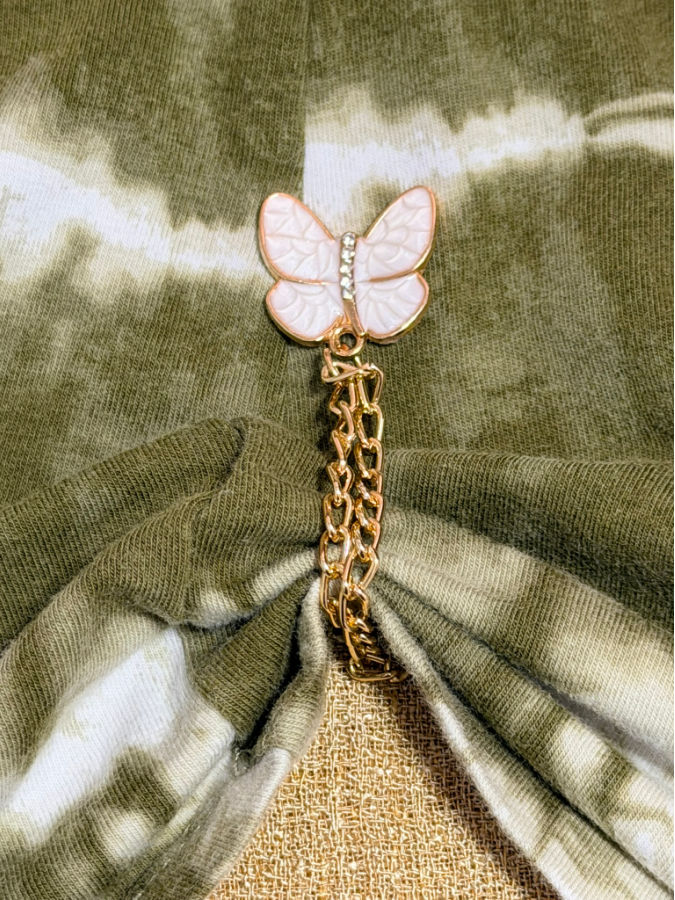
These small accessories use magnets to hold a section of fabric together. They do not shorten a shirt by several inches, but they can lift the hem enough to change the proportions.
They can also help you test a new hem position before you sew.
How to use a magnetic clothing clip
Pinch a section of fabric near the hem. Place the two magnetic pieces on opposite sides of that fold.
The clip can sit:
- At one side seam
- Near the center back
- Slightly off-center at the front
- At both sides for a more balanced shape
- Inside the shirt, where the clip stays less visible
The result depends on the fabric.
A soft jersey may form gentle folds. A thick or firm knit may create a bulky knot of fabric. Use a small fold first and check the shirt from several angles.
What magnetic clips can and cannot do
Magnetic clothing clips can:
- Lift a hem slightly
- Show more of a waistband
- Create a temporary side-gathered effect
- Help test a shorter shirt length
- Change the look of a loose top
They cannot replace a proper alteration when the shirt needs a large length change. They also do not correct poor hip fit, uneven front length, or a stretched hem.
Test the clip on delicate fabric before a full day of wear. A tight fold may leave a temporary crease. Keep strong magnets away from items that can be affected by them.
Should You Shorten the Shirt?
The response to my Facebook photo made one point very clear: personal taste matters.
Some people preferred my original, longer T-shirt. They liked the extra coverage and the way it fell over the hips.
Others preferred the shorter version. They thought it looked more balanced with my skirt and showed the body proportions more clearly.
I still prefer the after photo.
That does not make the before version wrong. It means the shorter length works better for the outfit and appearance I wanted.
A useful top length guide can show common hem positions and sewing methods. It cannot choose one correct length for every woman.
Wear the shirt with the planned outfit. Study the hem from several angles. Fold it, pin it, or use magnetic clothing clips before you remove any fabric.
The right T-shirt length is the one that works with your body proportions, your clothes, and the way you prefer to dress.
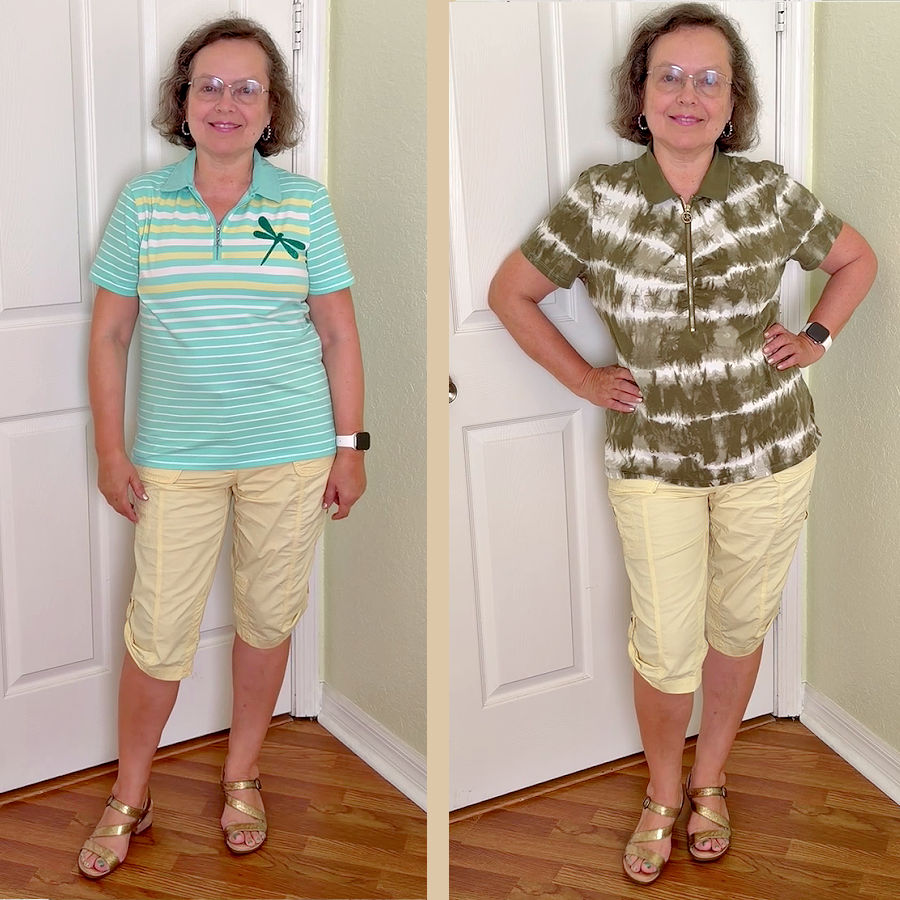
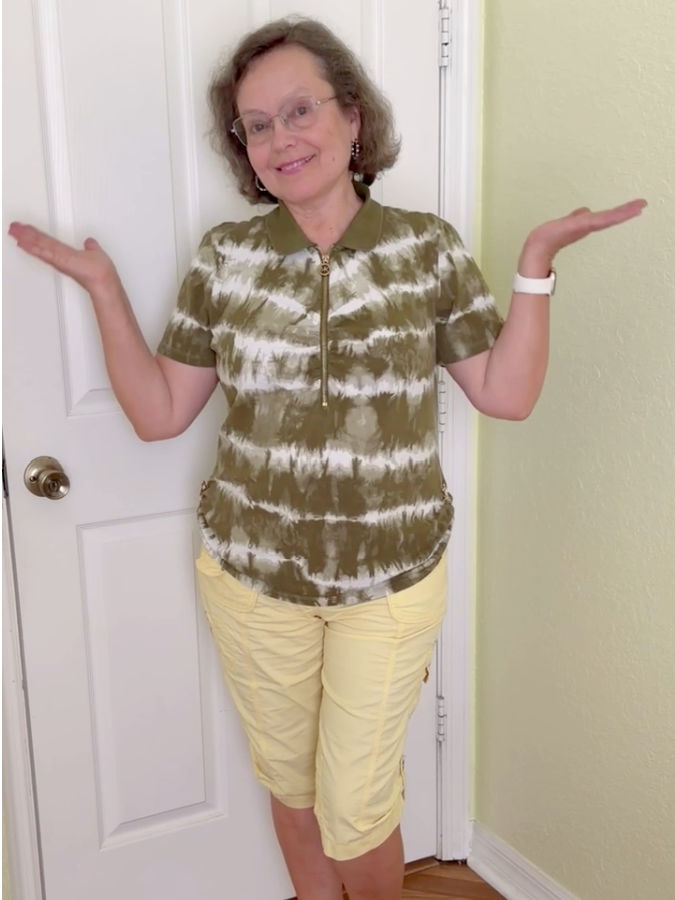
These two polo shirts have exactly the same finished length, yet the hems do not look identical in the photos. This shows that shirt length is only one part of the picture. Fit, color, print, and the way the fabric falls can change how low or high a hem appears.
The striped mint polo ends around the hip. The horizontal stripes make the hemline easy to notice because the eye follows each stripe across the body.
The shirt also fits a little closer through the torso. This makes the hem appear lower and more defined, even though its length matches the olive polo.
The olive polo has the same finished length as the striped mint shirt. Its darker print and less regular pattern make the hemline less obvious.
The fabric also falls differently around the hips, so the shirt may appear slightly shorter at first glance.
The two tops prove that equal measurements do not always create the same visual result.
Did you find this discussion helpful? If so, save this pin (see below) on your sewing board so you can come to this tutorial later when you are ready, and follow me on Pinterest for more tips, tutorials, and inspiration!

latest posts
- Knit Presser Foot: How It Works, How to Use It, and My Sewing Tests
- How to Sew Neat Mitered Corners at Acute Angles
- Sewing Machine Needle Organization: A Clever System I Tried
- DIY Car Armrest Organizer: Sewing Tutorial
- Easy DIY Potholder Sewing Tutorial: Better Shape, Better Grip, Smart New Design
- How to Buy a Sewing Machine (Even If You Already Have 10)
- 23 Kitchen Items That Belong in Your Sewing Room
- What Is a Sewing Machine Piping Foot And How to Use It
- Fixing Sewing Mistakes: Repair an Accidental Cut in Fabric