I Went From a Basic Singer to a Brother Luminaire — The Shock Was Immediate
One moment I was sewing on a very familiar mechanical machine — knobs, clunks, rattles, the usual soundtrack. The next moment I was staring at a Brother Luminaire thinking, “This is… not the machine I expected to meet in this lifetime.”
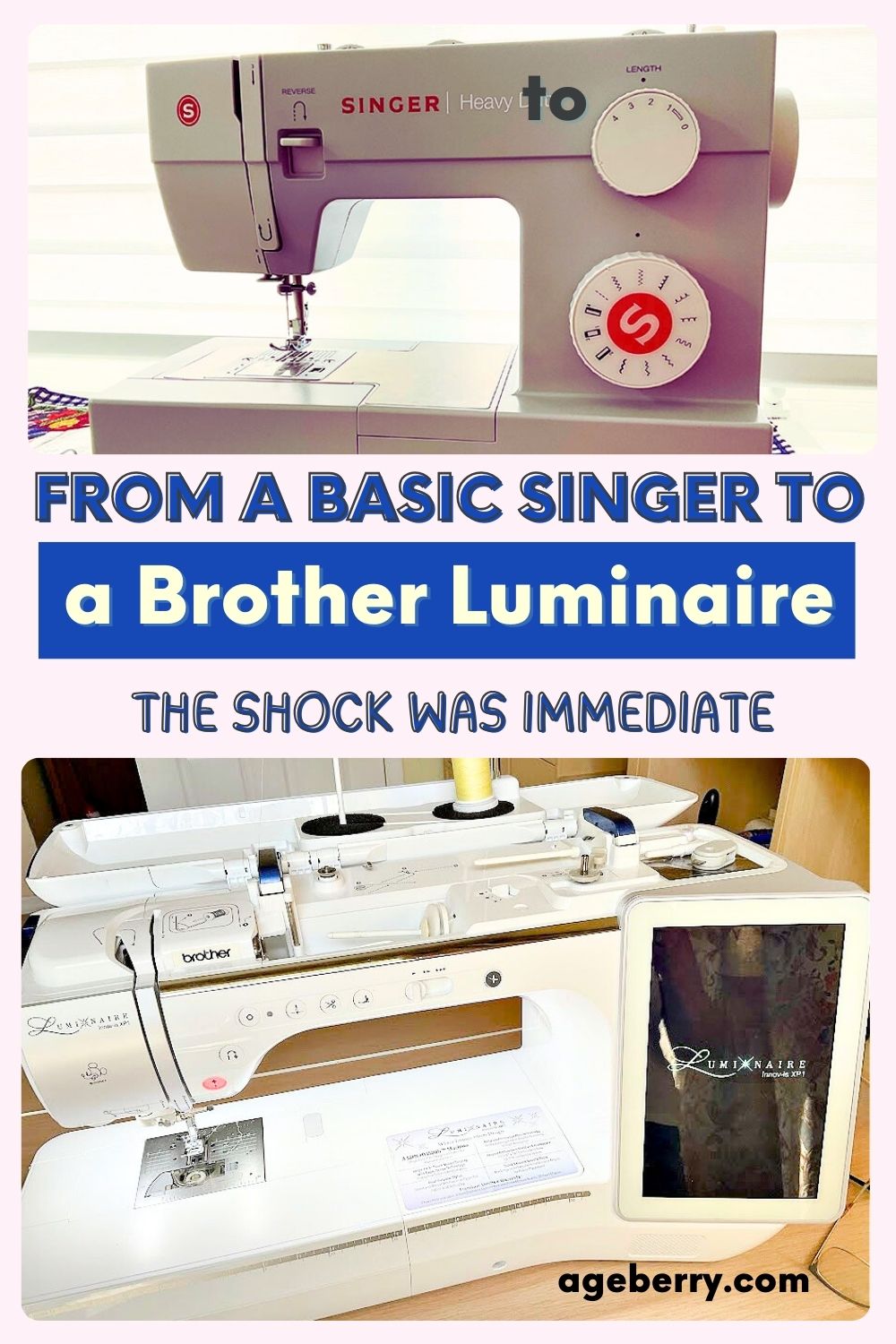
It felt less like an upgrade and more like being dropped into the future with no warning. You know that feeling when something is suddenly way fancier than your brain expected? Yeah. That.
Going from simple to spaceship is a feeling. It’s the moment you realize the machine in front of you doesn’t just sew — it shines, beeps, talks, remembers, reads, adjusts, analyzes, documents, and politely asks for your Wi-Fi password. My old mechanical Singer never asked for anything except mercy and some oil (infrequently).
Don’t worry — this isn’t a review, and I’m not about to sell you anything. This is just a funny little story about what happens when a lifelong mechanical-machine person suddenly meets a sewing machine that behaves like … well, modern computer.
And if you’ve ever wondered what these high-end machines actually do for sewing (not embroidery — that’s a whole other day), consider this your behind-the-scenes tour.
My Life With a Mechanical Machine
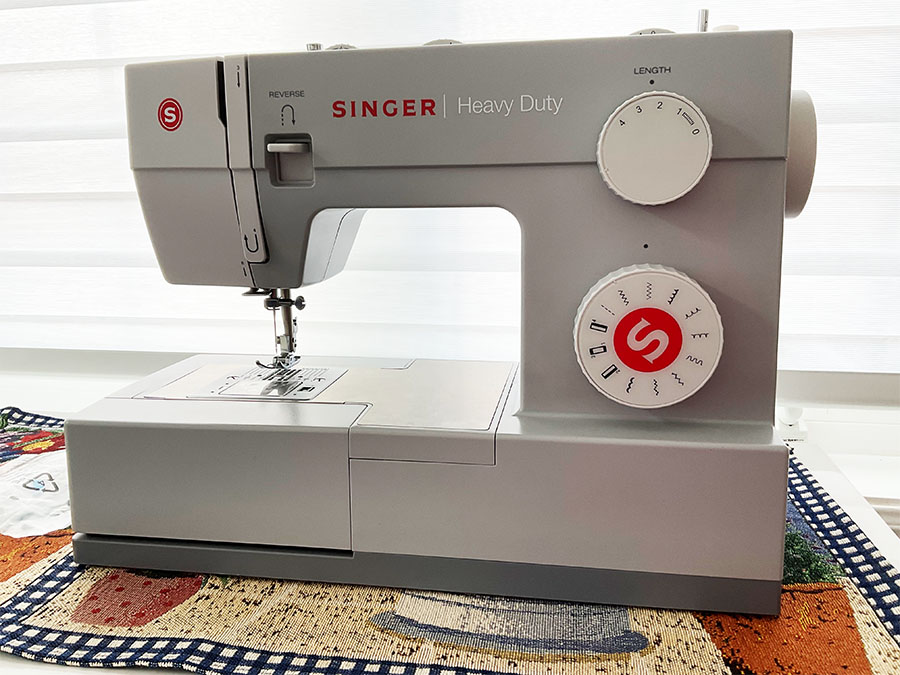
I’ll give credit where credit is due: after learning to sew on my grandmother’s hand-crank machine, this Singer Heavy Duty felt like a big upgrade. It had zigzag stitches! A reverse lever! A needle that moved without me generating momentum with my right arm!
Note: Some of the links on this page are affiliate links. This means I will receive a commission if you order a product through one of my links. I only recommend products I believe in and use myself.


And honestly, this thing is a tank. A metallic, “I-can-chew-through-denim-and-vinyl” tank. It will happily climb over thick seams, stitch leather like it’s cotton, and even do free-motion quilting when it’s in a generous mood.
But then… reality.
Threading it requires a yoga pose that hasn’t been invented yet. Chin down, elbow out, tongue in that special concentration position.
And the stitch selection dial? It goes: straight… zigzag… and straight again.
Using this machine means living with a lot of knobs. Half the time I’m turning knobs like I’m safe-cracking a vault. Honestly, if someone walked in while I’m twisting those things back and forth, they’d think I was tuning a 1950s radio trying to catch a baseball game.
And the noise. My goodness, the noise. When this thing starts up, the entire house knows I’m sewing. It sounds like a small tractor.
The bobbin system is old-school too — one of those “lift the case, tilt the case, drop the case, pray to the bobbin gods” designs. No alarms, no sensors, no gentle notifications… just the machine and me, staring at each other like, “Good luck with that.”
I still have this model at my daughter’s house, so I know exactly how it feels.
But hey — sewing on a mechanical machine builds character. Or at least really strong neck muscles from leaning into that tiny dim light.
Enter: The Luminaire (A.K.A. “The Spaceship”)
And then… the Luminaire arrived.
My first impression? “This is not a sewing machine. This is a computer pretending to sew.”
Going from my mechanical Singer to this thing felt like going from a flip phone to a spaceship upgrade — the kind with glossy surfaces, soft beeping sounds, and a silent judgment that says, “Please don’t touch anything until you’ve read the manual.”
You know; that book, 1000 pages thick. I think I have not read a book that thick since high school. But more about this later.
I opened the box expecting something familiar — knobs, levers, maybe a dial or two. Instead, I unboxed a machine so sleek and high-tech it actually does have USB ports. Two of them. One for a mouse. A mouse. For a sewing machine. At that point I wasn’t sure whether I was supposed to sew something or check my email.
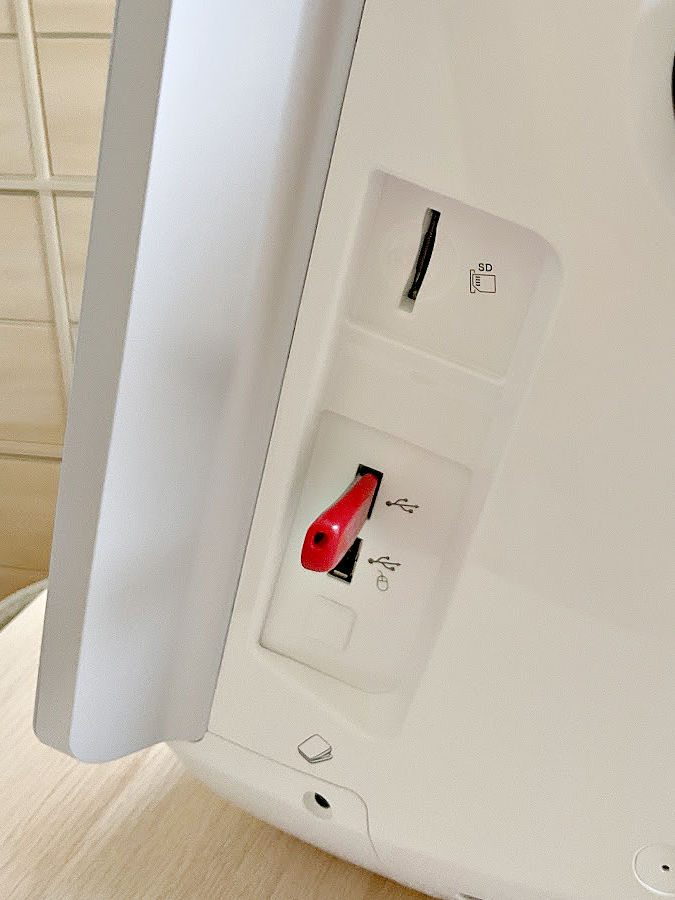
I suspect in the end checking the email on the machine might even be possible. I would not be surprised.
And the giant touchscreen… I’ve owned tablets with smaller screens. I turned it on and immediately felt like I needed tech support.
One thing we have to say about the machine though: it’s definitely not shy. “Magnificent display”, it says! And it’s right.
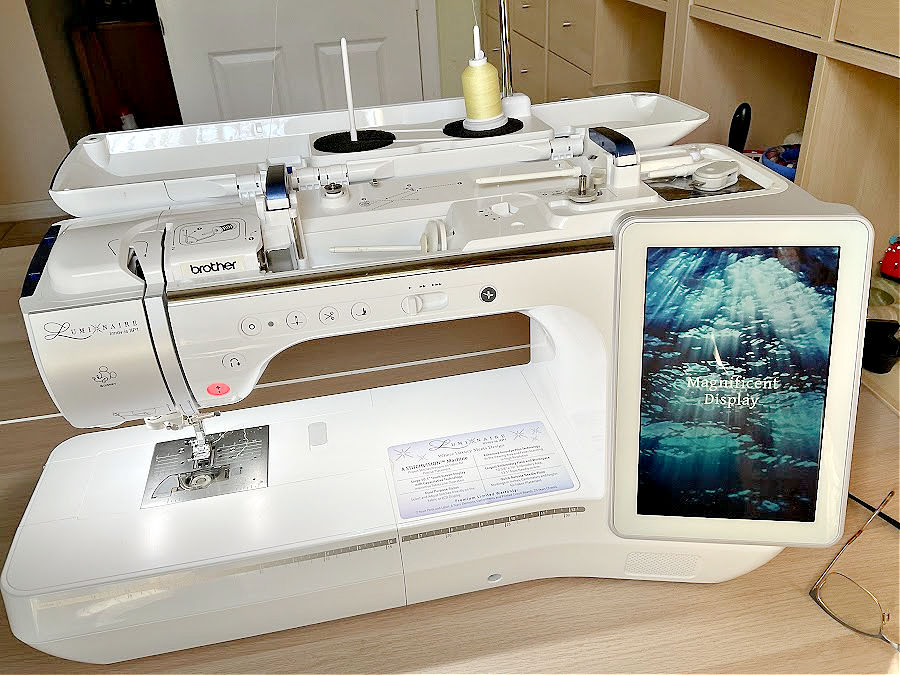
The first thing it did? It politely asked me for my Wi-Fi password. My sewing machine wanted Wi-Fi. Meanwhile I’m standing there thinking, “Okay, but do you sew better if I give you the 5G network?”

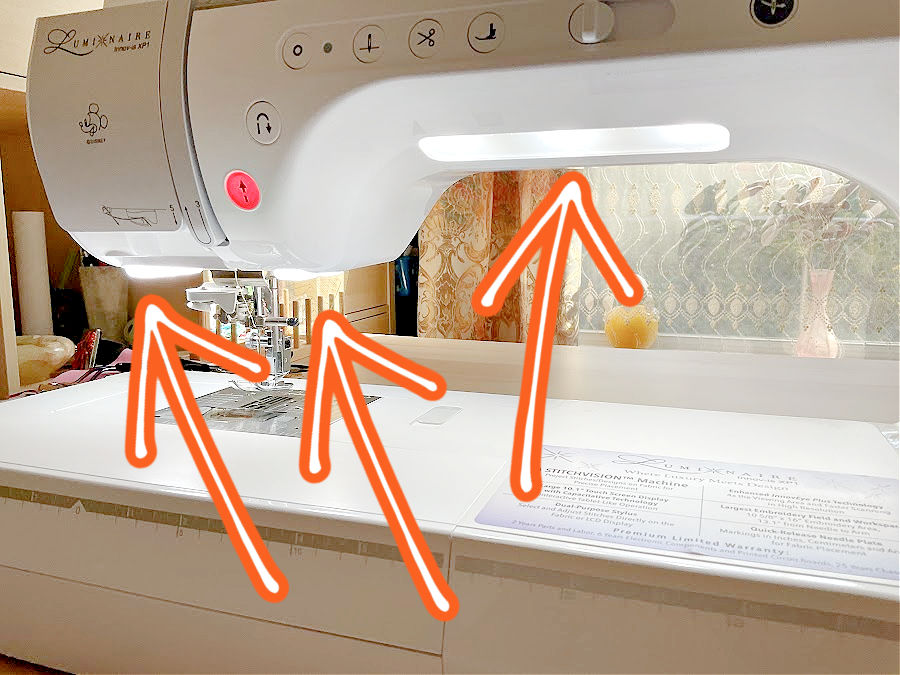
The light was the next shock. Not a normal sewing light — a “who turned on the sun above my sewing table?” kind of light. My mechanical machine has a sad little bulb that basically whispers, “I tried.” The Luminaire flips on and suddenly it’s like, “Welcome to the show, everyone.”
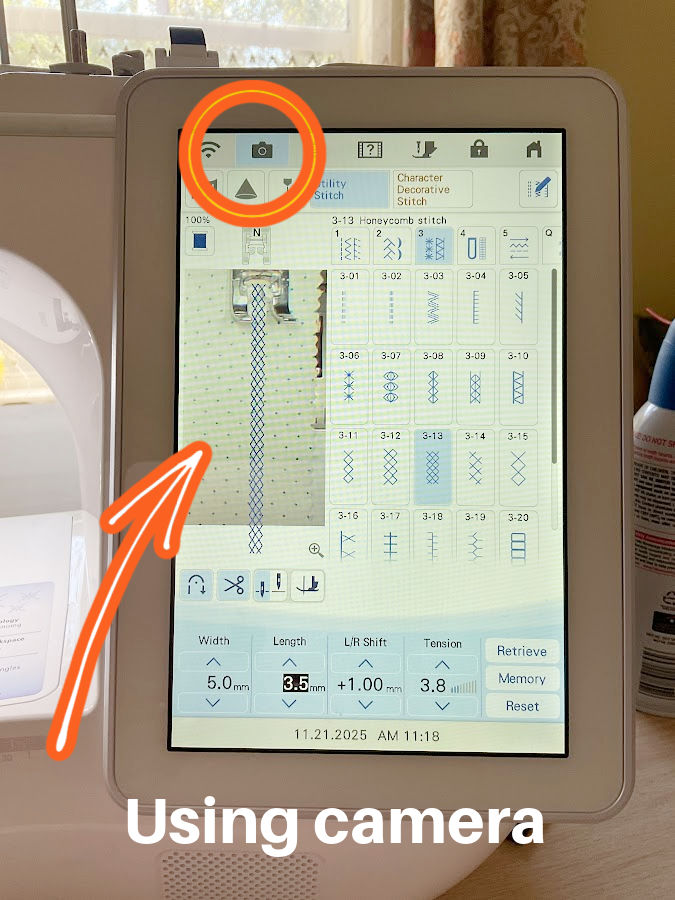
Another surprise – the machine has an actual camera inside it. A real one. It can see my fabric — and then show me that fabric on the screen while I’m sewing. It even lets me place the stitch exactly where I want it, right on top of the real-time fabric image.
Next, I looked for the knobs. And there were… none. Absolutely none. I walked around the machine like a confused tourist: “Where are the knobs? Where is the tension wheel? Why is everything flat and shiny?” It’s so modern it doesn’t even trust us with twisty things anymore.
And then, the sewing bed — that long, luxurious extended workspace. The throat area is so big it feels like I finally upgraded my fabric from economy seating to business class. It’s basically a runway for quilts.
Then came the mild panic: “What if I press the wrong button and break a machine this fancy?” I hovered over the touchscreen, and I swear it gave me the vibe of, “Access denied. User confidence level too low.”
Ok, here’s something my mechanical machine would never believe even if I embroidered it on a T-shirt: the Luminaire can sew sideways. Or diagonally.
Yes. SIDEWAYS. As in: the fabric stays put, and the stitches just… slide horizontally. Left to right. Right to left. And diagonally, because apparently forward and backward directions were too basic for this machine.
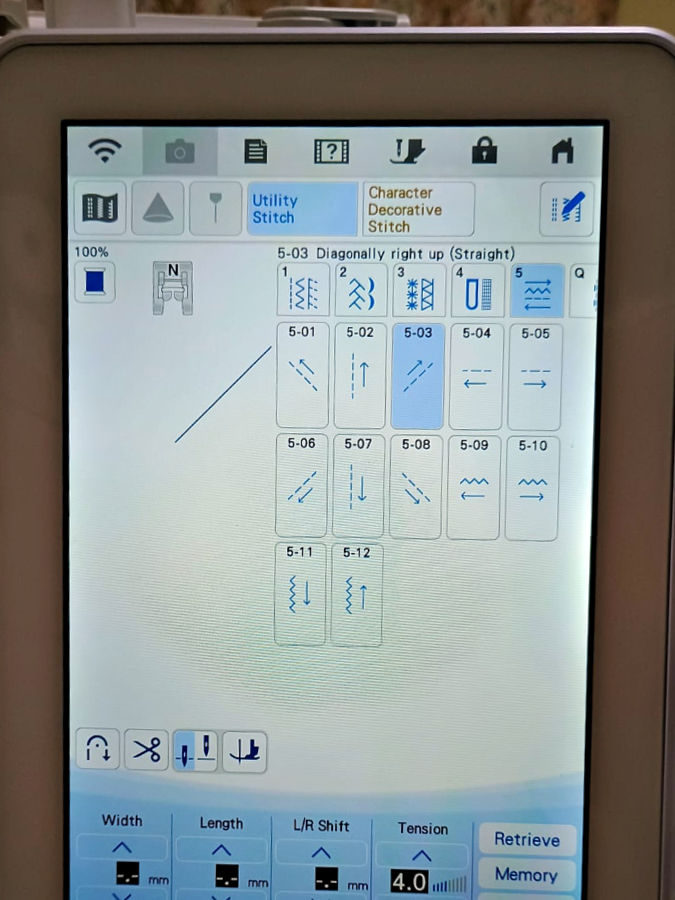
The first time it happened, I froze. Not because anything was wrong — but because I was mentally preparing a lecture, like: “Excuse me? We sew forward in this house!”
But the machine ignored me (as usual) and kept going — smoothly, confidently — like a sewing machine that has absolutely no interest in my outdated expectations.
My mechanical machine can barely sew backwards without sounding like it’s dragging furniture across the floor. Meanwhile, the Luminaire glides sideways like it’s auditioning for a sewing-themed ice skating show.
Sideways sewing is one of those features I never thought to ask for… because I didn’t know sewing machines were capable of such behavior.
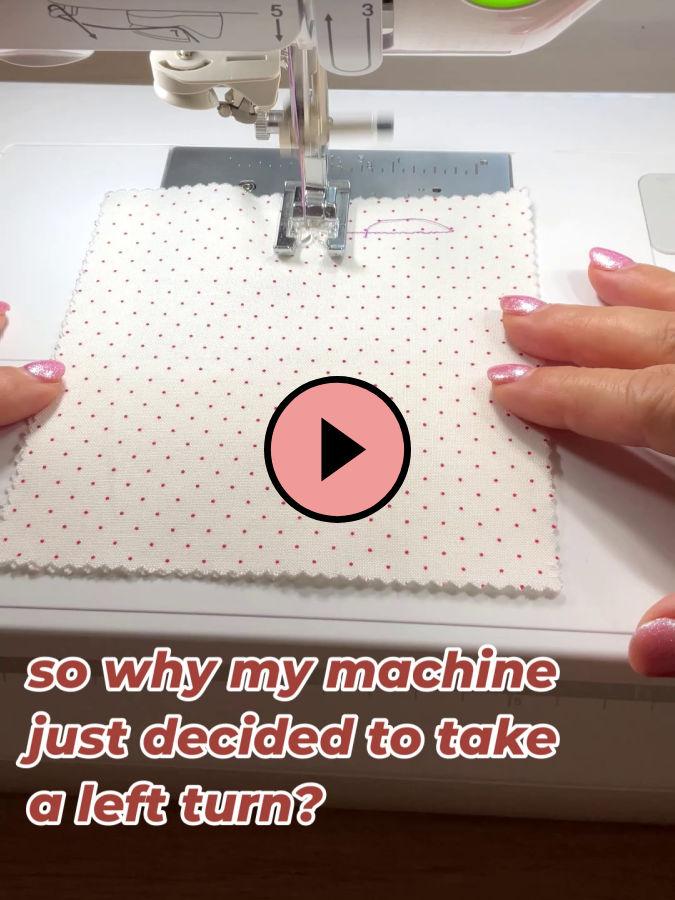
And yes, I filmed it — because who would believe me otherwise? Watch the reel here – https://facebook.com/reel/1620996362646272/
The Manuals: Yes, Plural
With my mechanical Singer, the manual was basically a pamphlet. Ten, maybe fifteen pages. Half of it warning me not to sew through my own finger. Easy.
The Luminaire?
The Luminaire didn’t come with a manual. It came with a curriculum.
I opened the box and found:
- The Sewing Manual — around 210 pages
- The Embroidery Manual — another 220 pages
- The Operation Manual Addendum — because apparently 400+ pages wasn’t enough
- The Embroidery Design Guide — all the patterns and options
- The Disney Design Guide — yes, Disney gets its own book
- And of course, the “Quick Start Guide,” which is adorable, because nothing about this machine is quick
At that point, I was wondering if I needed to register for college credits.
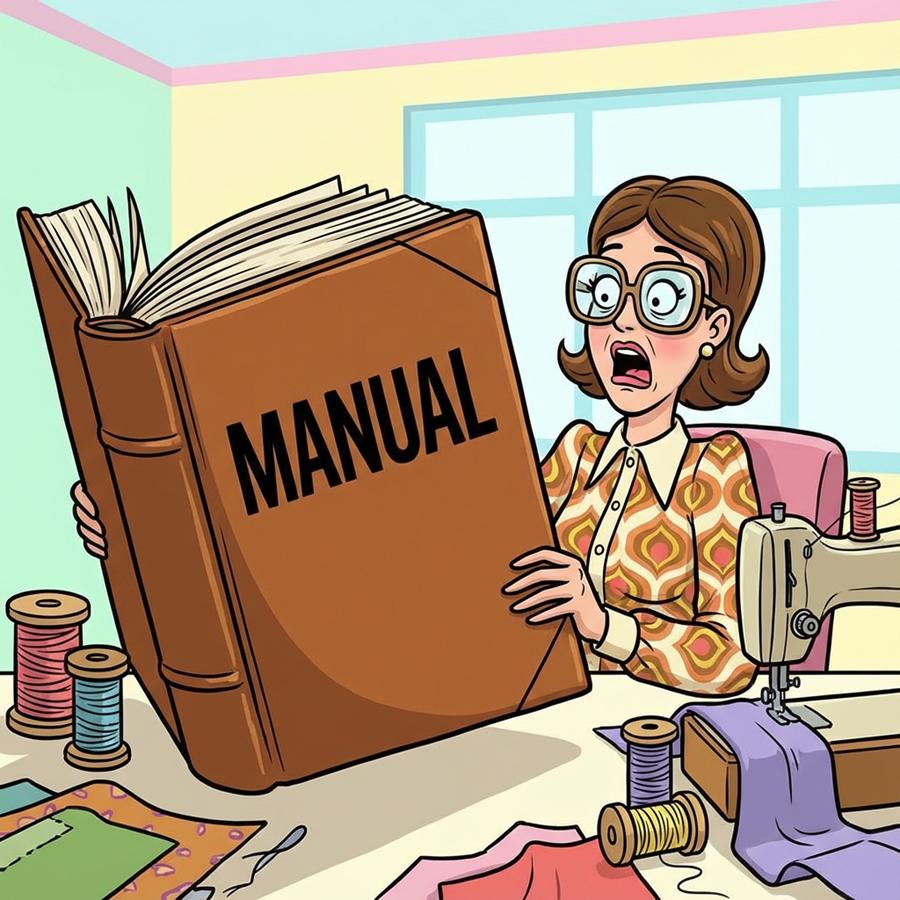
I tried scrolling through the table of contents and had to take a snack break halfway through.
And no — I did not read all of it. No one has ever read all of it I guess. I’m convinced that somewhere around page 147 of one of these, there’s a sentence that says, “If you are still reading this, please go take a nap.”
I then decided to apply one of my husband’s teachings: “When do we read the manual? After we tried everything else.”
5 Modern Sewing Features That Shocked Me (In a Good Way)
Before we go any further, let’s make one thing clear:
👉 These are SEWING features. Not embroidery. Because if I start listing the embroidery features, we’ll be here all day, and possibly into next week.
These are the things modern machines like the Luminaire and Baby Lock Solaris can do while sewing, and yes — they shocked me in the best way.
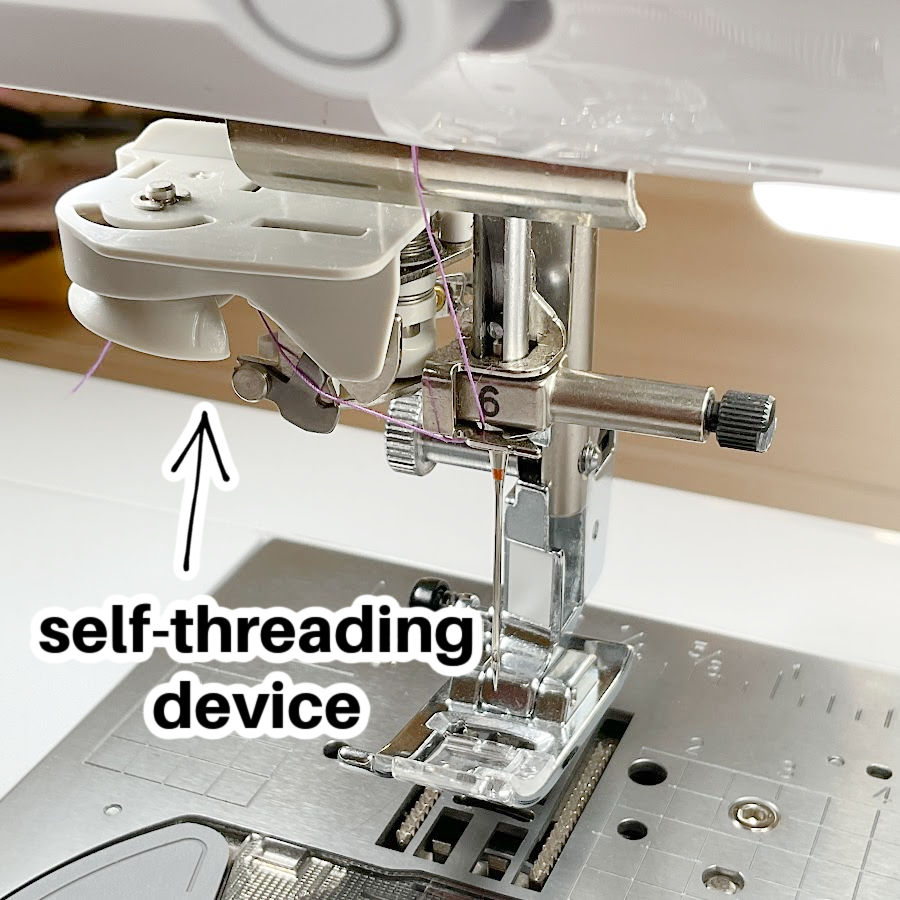
1. Automatic Needle Threader
Mechanical machine: squint… lick thread… squint harder… try again… apologize to your eyesight.
Luminaire: click → threaded. It happens before your brain fully registers what you pressed.
✂ ✂ ✂ ✂ ✂ ✂ ✂ ✂ ✂ ✂ ✂ ✂ ✂ ✂ ✂ ✂
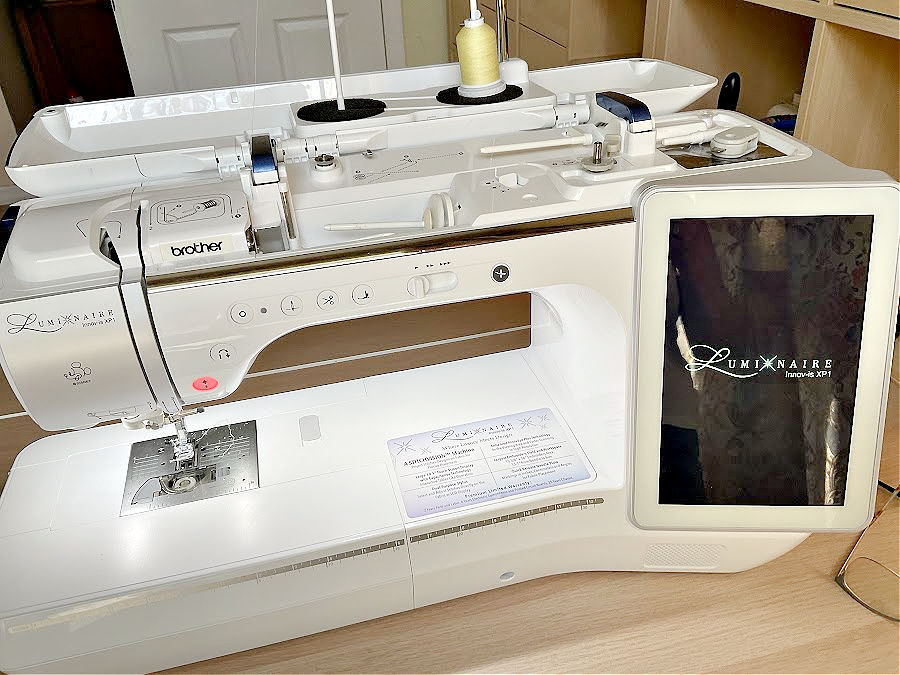
2. Gigantic Workspace (13 inches to the right of the needle!)
If you sew quilts, bags, jackets, or anything bulky, this is a dream. Your fabric actually has room to breathe instead of curling into a stress ball next to the machine.
✂ ✂ ✂ ✂ ✂ ✂ ✂ ✂ ✂ ✂ ✂ ✂ ✂ ✂ ✂ ✂
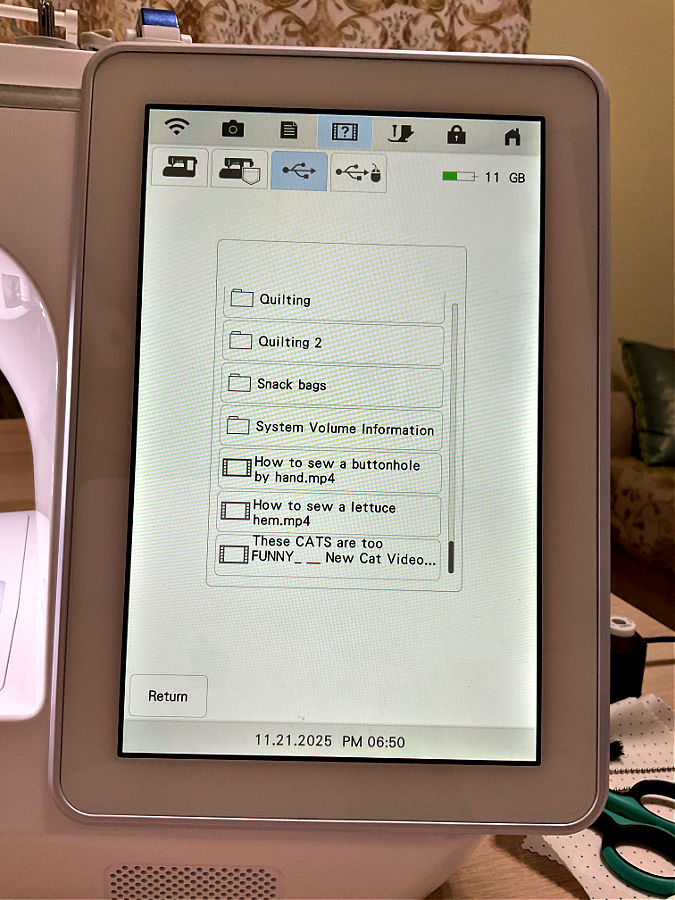
3. It Can Play Videos (MP4 Tutorials!)
This machine literally lets you play sewing videos. On the screen. While you’re sewing.
My mechanical machine barely has a light bulb, and this one is out here hosting movie night. Because you don’t have to limit yourself to sewing videos, if you know what I mean.
✂ ✂ ✂ ✂ ✂ ✂ ✂ ✂ ✂ ✂ ✂ ✂ ✂ ✂ ✂ ✂
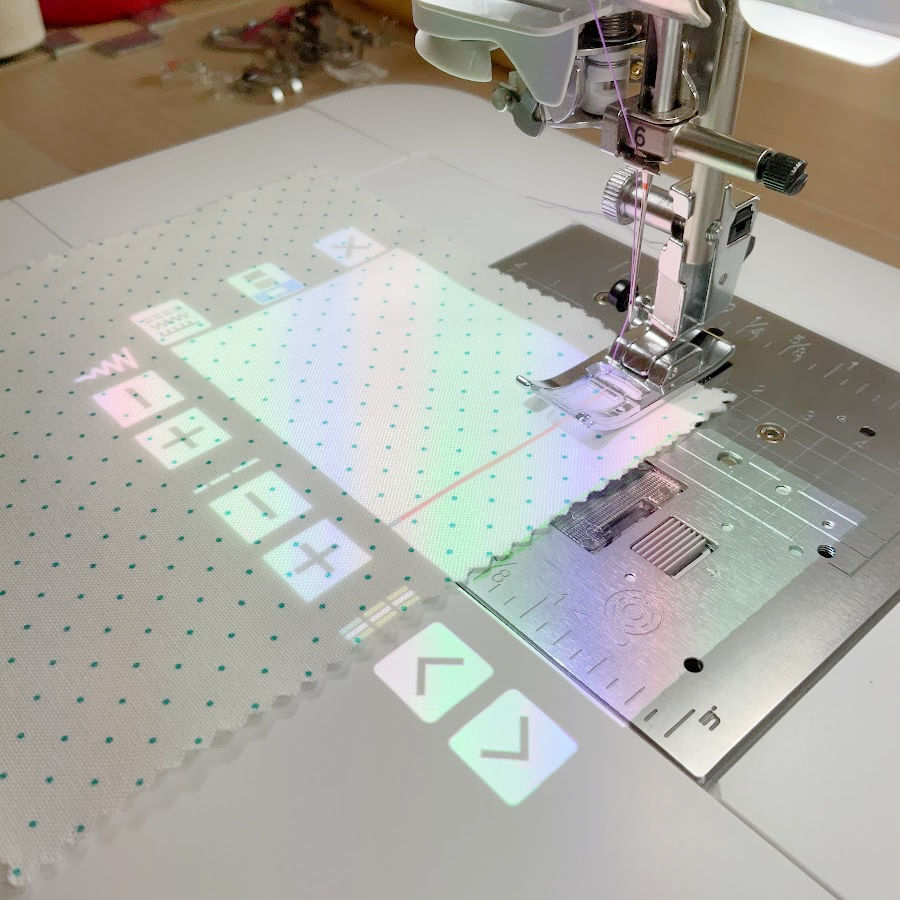
4. Projected Guidelines
The machine projects actual lines onto your fabric. Not a metaphor. Real lines.
Mechanical machine: “Just… um… eyeball it?”
Luminaire: “Here’s your line, ma’am. Shall we begin?”
✂ ✂ ✂ ✂ ✂ ✂ ✂ ✂ ✂ ✂ ✂ ✂ ✂ ✂ ✂ ✂
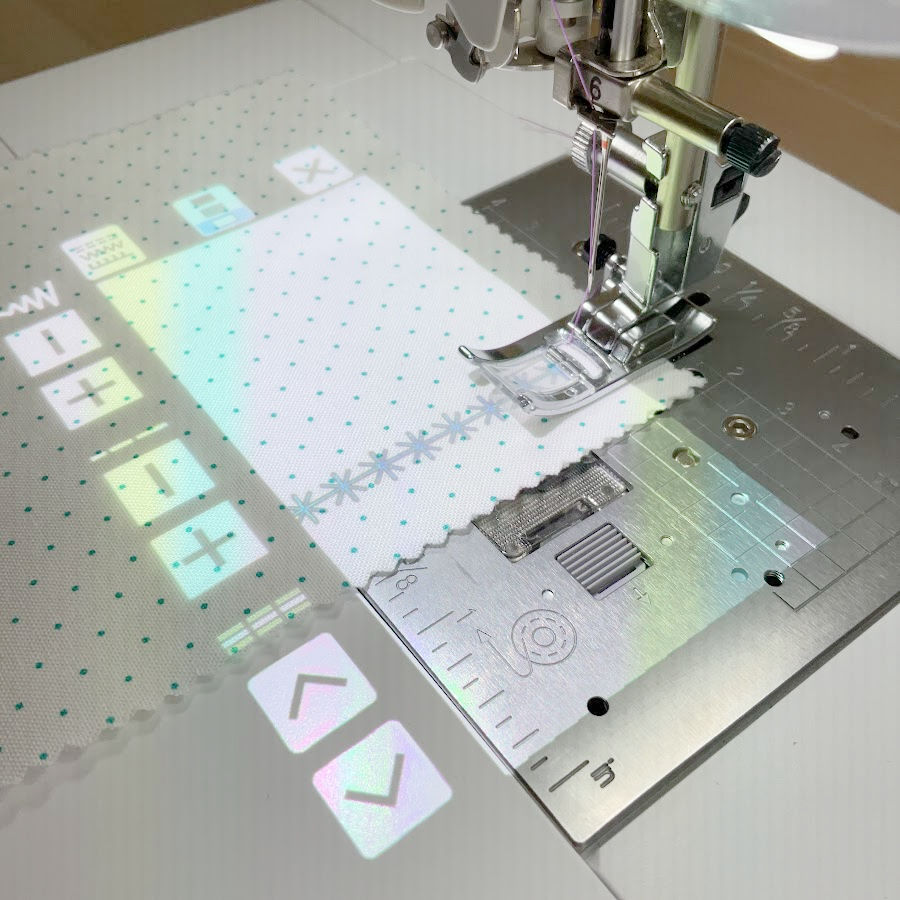
5. Projected Stitch Preview
However projecting a line is obviously a little too basic for out sewing machine. Why not projecting the actual stitch?
You can see EXACTLY what your stitch will look like before sewing. Try explaining this to someone who sews on a mechanical machine — they think you’re joking. I know, I was that someone.
✂ ✂ ✂ ✂ ✂ ✂ ✂ ✂ ✂ ✂ ✂ ✂ ✂ ✂ ✂ ✂
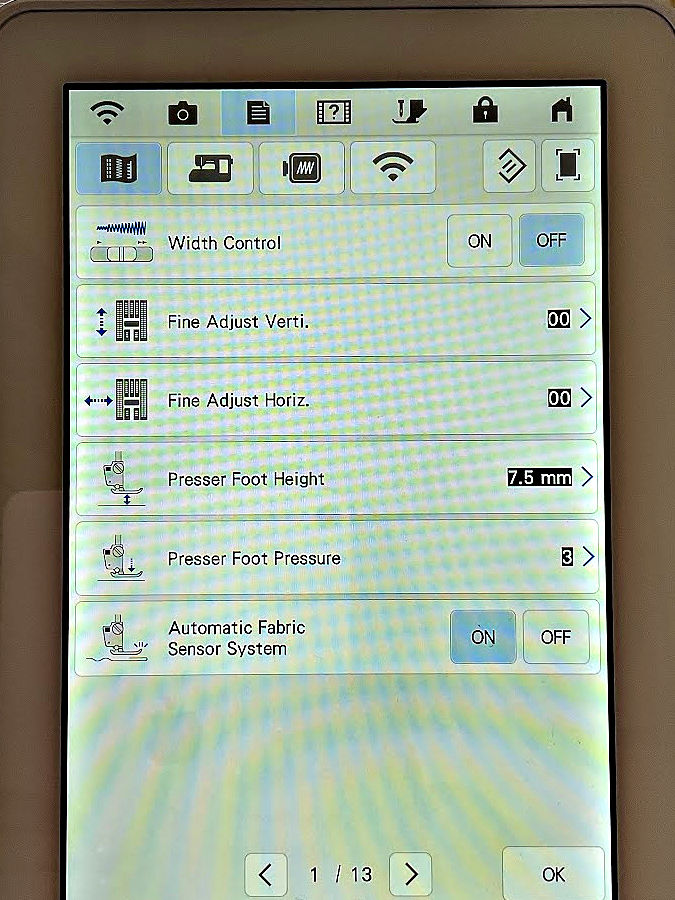
6. Automatic Fabric Sensor (Auto Presser Foot Pressure)
Thick fabric? Thin fabric? Stretch? The machine adjusts the presser foot pressure automatically.
Meanwhile, I spent years turning that little dial on my mechanical machine.
✂ ✂ ✂ ✂ ✂ ✂ ✂ ✂ ✂ ✂ ✂ ✂ ✂ ✂ ✂ ✂
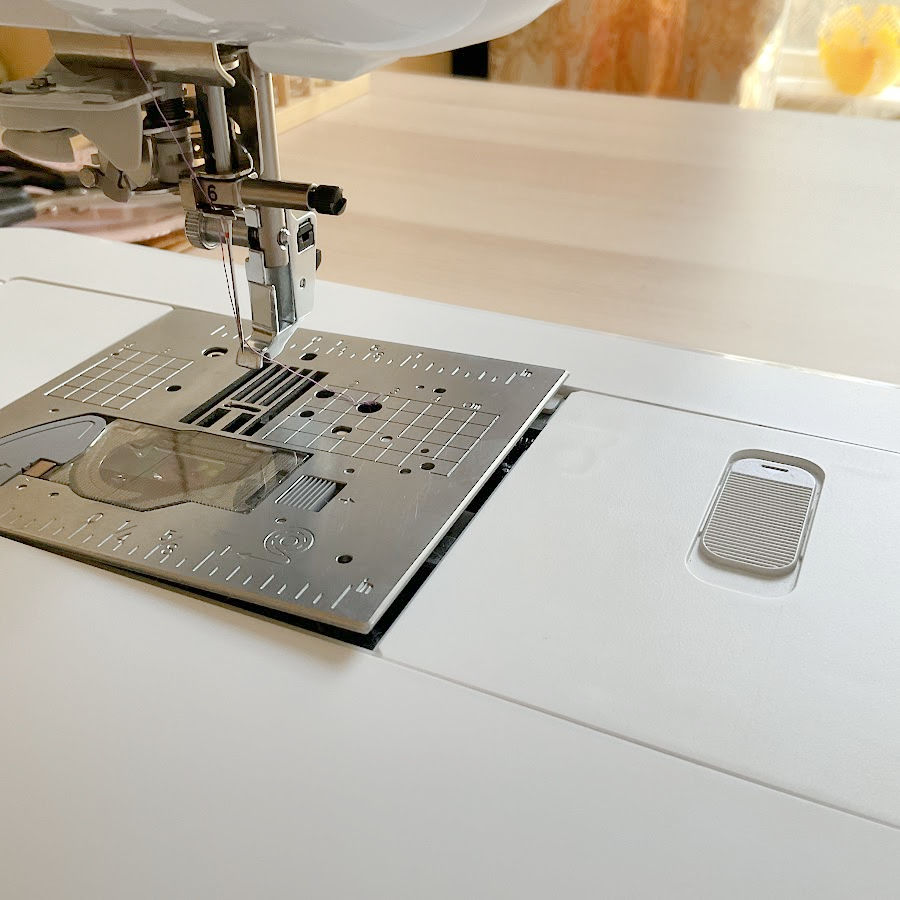
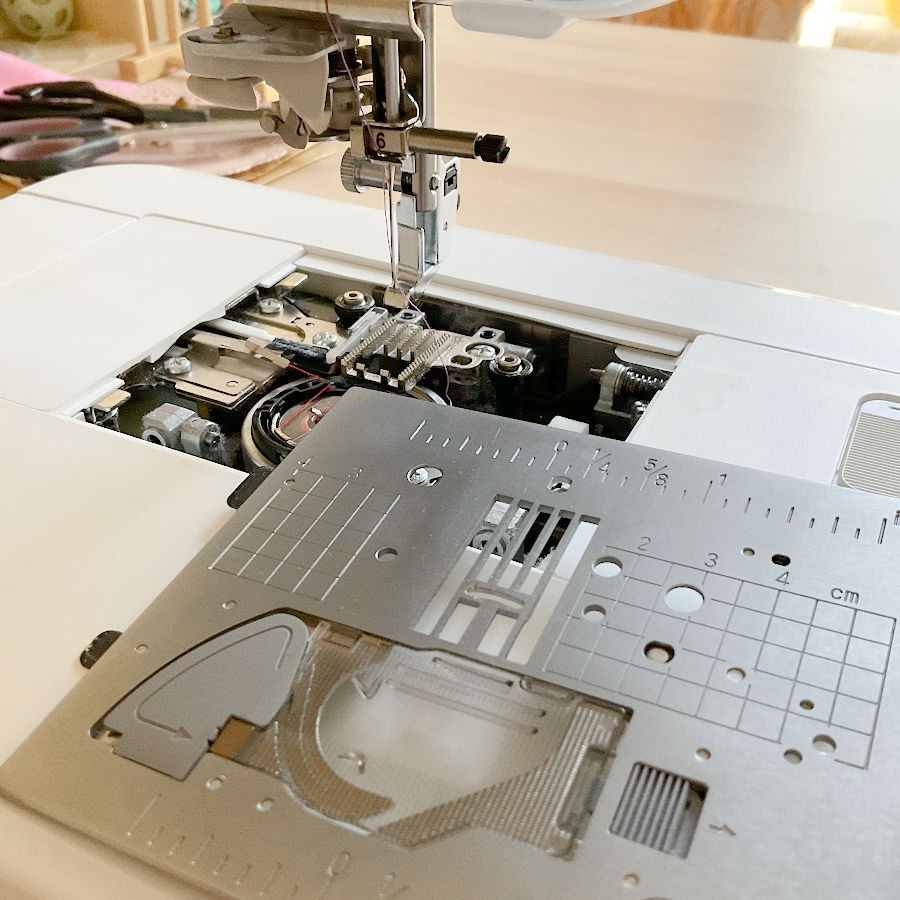
7. Quick-Release Needle Plate
Push a button → the plate pops off. No screwdriver. No drama. No mandatory treasure hunt for the tiny screw you dropped.
✂ ✂ ✂ ✂ ✂ ✂ ✂ ✂ ✂ ✂ ✂ ✂ ✂ ✂ ✂ ✂
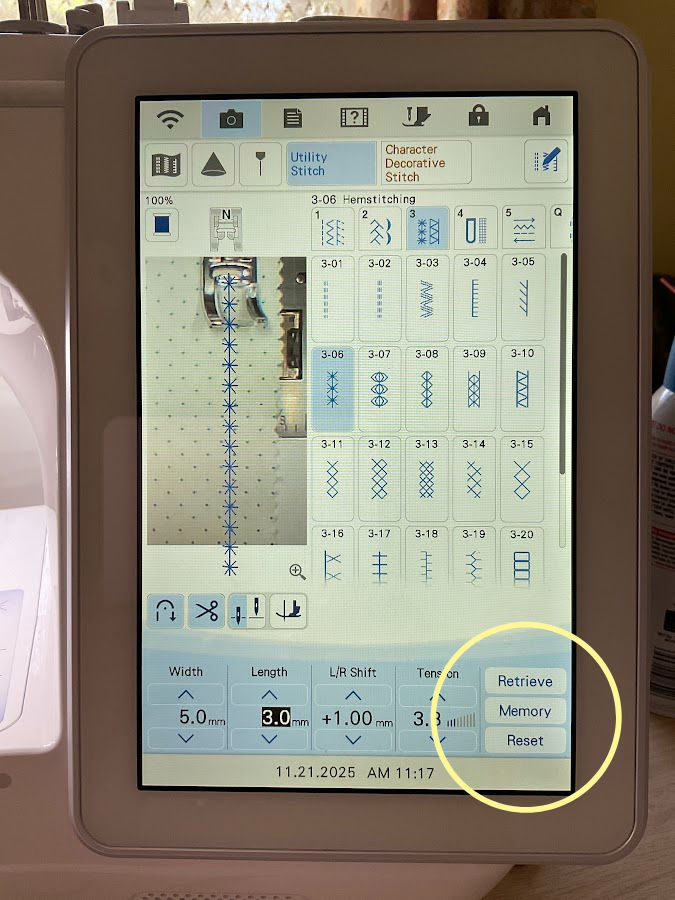
8. Machine Memory (Yes, It Remembers Things)
You can save stitches, settings, combinations — everything. My mechanical Singer remembers nothing. I’m impressed if it remembers how to behave for the length of a seam.
✂ ✂ ✂ ✂ ✂ ✂ ✂ ✂ ✂ ✂ ✂ ✂ ✂ ✂ ✂ ✂
9. Automatic Thread Cutter
Mechanical machine: pause, grab scissors, cut, put scissors down, lose scissors.
Luminaire: press a button → snip. It’s addictive. If you trust the machine, you don’t even need to press the button – it can do this at the end of the stitch automatically.
✂ ✂ ✂ ✂ ✂ ✂ ✂ ✂ ✂ ✂ ✂ ✂ ✂ ✂ ✂ ✂
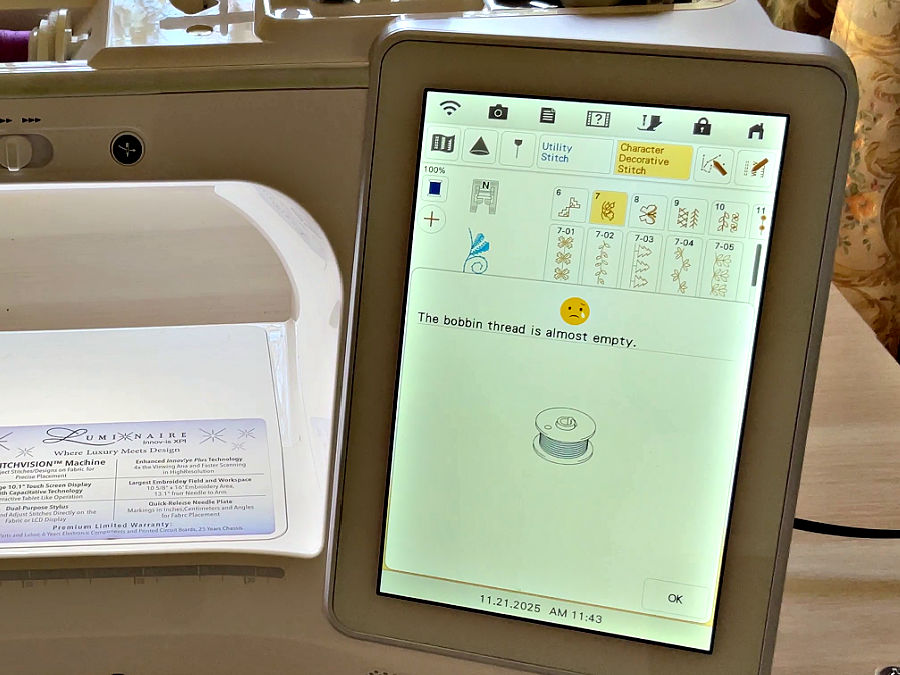
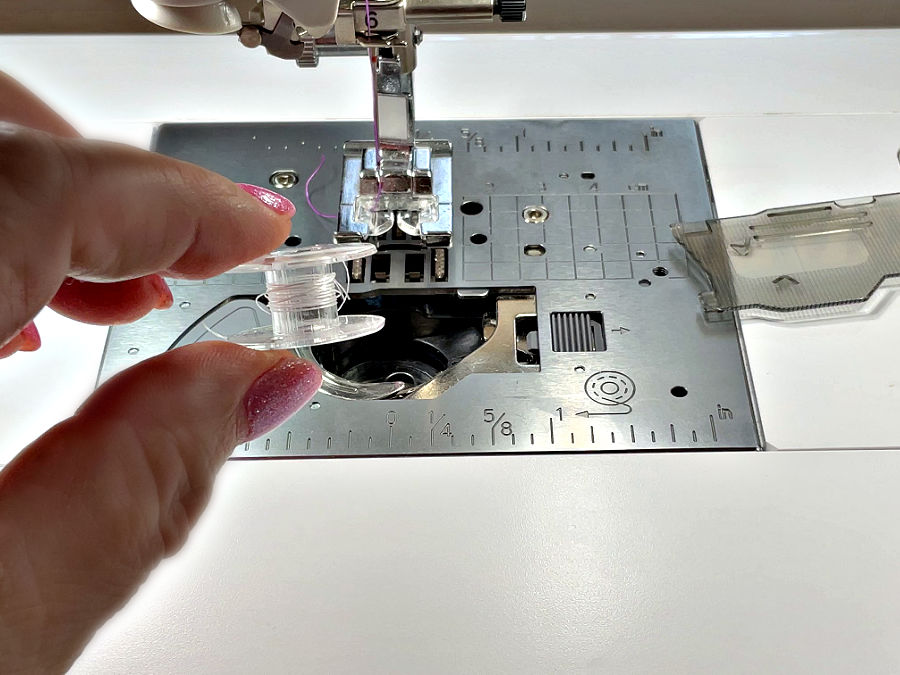
10. Thread Sensors
Thread breaks? Bobbin empty? The machine politely tells you. Even sheds a tear when this happens.
Mechanical machine: lets you sew eight inches of air and then giggles. Not quietly.
✂ ✂ ✂ ✂ ✂ ✂ ✂ ✂ ✂ ✂ ✂ ✂ ✂ ✂ ✂ ✂
11. Custom Stitch Creation
Make stitches that don’t exist yet. Draw them on the screen. Save them. Sew them.
Mechanical machine: “You get straight. You get zigzag. Be grateful. Or else.”
✂ ✂ ✂ ✂ ✂ ✂ ✂ ✂ ✂ ✂ ✂ ✂ ✂ ✂ ✂ ✂
12. Dedicated Bobbin-Winding Motor
Wind a bobbin while sewing. My mechanical machine would faint if it saw this.
✂ ✂ ✂ ✂ ✂ ✂ ✂ ✂ ✂ ✂ ✂ ✂ ✂ ✂ ✂ ✂
13. Smooth, Heavy, Stable Construction
No rattling, no shaking, no dramatic vibrating. Just solid, steady sewing — the kind you can trust.
✂ ✂ ✂ ✂ ✂ ✂ ✂ ✂ ✂ ✂ ✂ ✂ ✂ ✂ ✂ ✂
14. Decorative & Tapering Stitches (SEWING, Not Embroidery)
Fancy stitches, angles, long stitches, tapered edges — all without an embroidery hoop. And there are so many of them I stopped trying to count. Thousands, probably. At this point I’m convinced the machine is inventing new ones while I sleep.
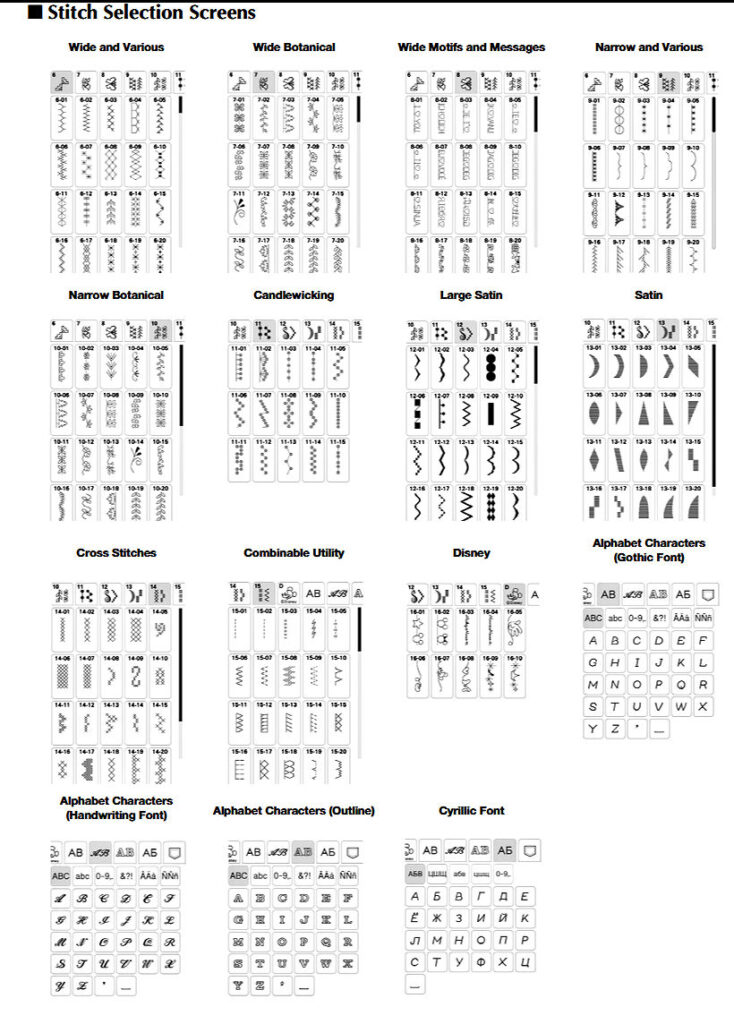
Notice the scroll bars to the right of the stitch panels; there are many more stitches which did not fit on one screen.
✂ ✂ ✂ ✂ ✂ ✂ ✂ ✂ ✂ ✂ ✂ ✂ ✂ ✂ ✂ ✂
15. The “I Didn’t Know Sewing Machines Could Do That” Factor
This is the category for everything else — the little conveniences, shortcuts, and magical touches that make mechanical machines look like charming antiques.
Take a look at this — the buttonhole foot from a regular mechanical machine versus the buttonhole setup on the Luminaire.
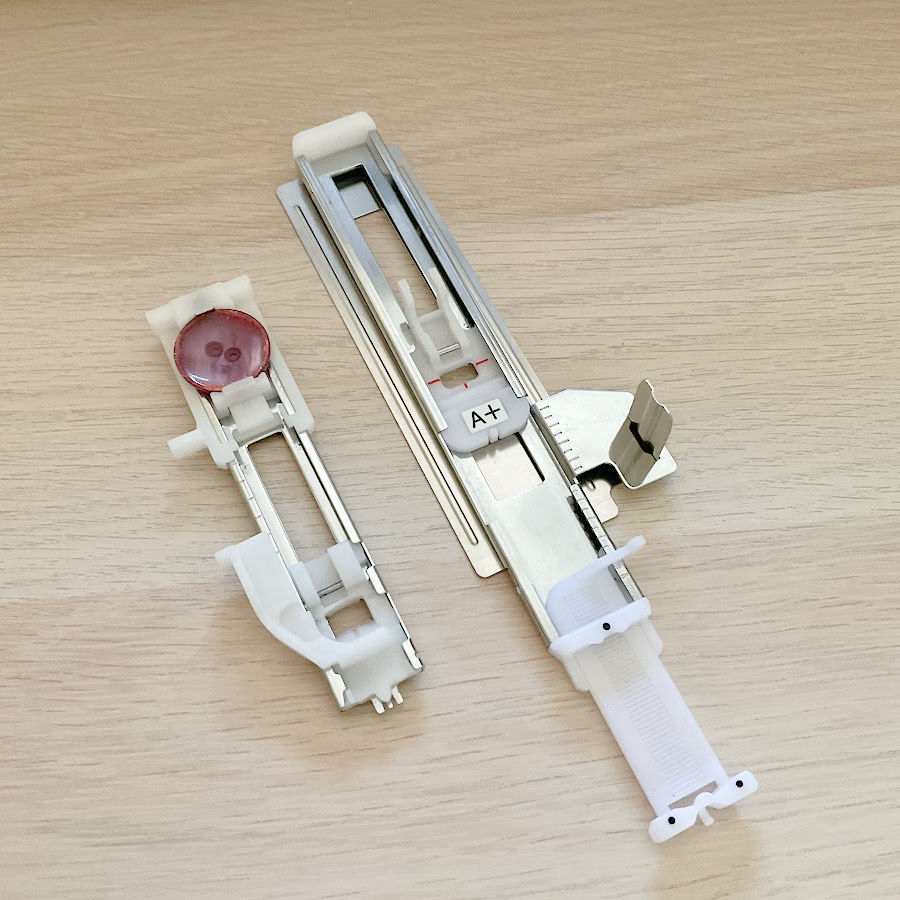
Regular buttonhole foot: “I try my best.”
Luminaire buttonhole foot: “I don’t try. I succeed.”
Now look at these walking feet side by side, it’s clear they’re not even from the same planet. Did you notice the connector from the Luminaire foot? I would not be surprised for it to have a computer inside the foot also.
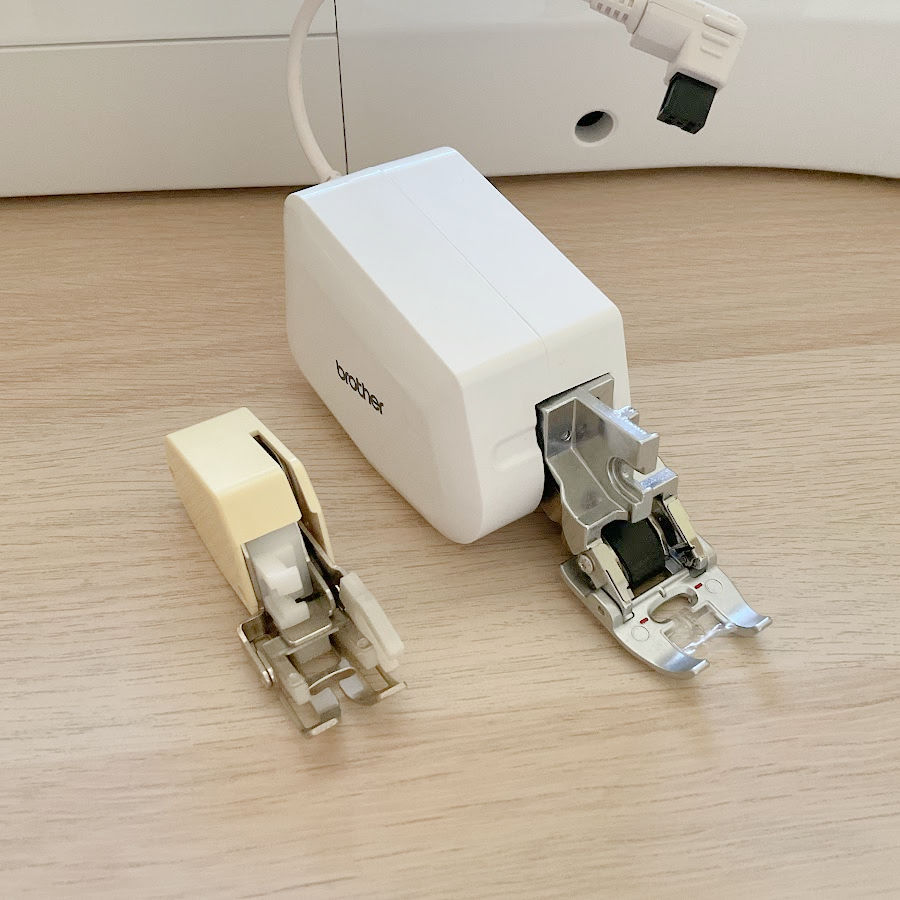
Regular walking foot: “I’ll help you with thick seams!”
Luminaire walking foot: “Move aside. I came prepared.”
Things That Scared Me at First
As much as I love this machine, the first few days felt like I had adopted a small, judgmental robot.
Too many settings — suddenly every tiny sewing choice had a menu item and a submenu. A sub-submenu. And a confirmation screen.
Touchscreen overload — one wrong tap and I was convinced I would open a portal or activate a feature I was not emotionally ready for.
Icons everywhere — so many symbols, and half of them look like hieroglyphics for “Don’t touch this unless you know what you’re doing.” Of course most of the time I don’t know what I am doing.
“What if I break this spaceship?” — because that is a very real fear when your sewing machine looks like it belongs in a tech museum.
Fear of losing simplicity — I used to turn two knobs and go. Now I’m navigating menus like I’m ordering lunch from a digital kiosk.
Fear of becoming too dependent on tech — I caught myself thinking, “Could I even sew a straight line without this machine guiding me?”
In short? It’s like going from a bicycle straight to a Tesla — exciting, powerful, and you’re not completely sure who’s really in control.
What Switching Taught Me
Switching from a mechanical machine to the Luminaire taught me a few things — mostly about sewing, but also about myself.
I still respect mechanical machines… from a safe distance. They’re sturdy, they’re loyal, and they’ll sew through anything (including your nerves, ha-ha) but the moment I sit down at one now, I feel like I switched from streaming movies in 4K to watching cartoons on an old TV from my childhood. Familiar, yes. Comfortable? Debatable.
The Luminaire completely changed how I sew. It changed how fast I sew. It changed how much I enjoy sewing. It changed what I could sew.
But here’s the truth I’ve learned: whether someone sews on a $99 starter machine or a fancy touchscreen spaceship with Wi-Fi, sewing is sewing. Because at the end of the day, the machine is just the tool. And the joy comes from the same place: the fabric, the hands, the creativity, the feeling of “I made this.”
But once you upgrade… you don’t downgrade. You visit the old machine the same way you visit an old neighborhood — with fondness, nostalgia, and a silent promise that you’re not moving back.
Right now I see the mechanical machine the same way I see the snow: I remember fondly the childhood days, when playing in the snow was fun, but nowadays snow is best seen on TV watching “White Christmas”.
Things that scare me now
The Brother Luminaire sewing machine set me back more than my first car—and I didn’t even get it brand new. If it breaks, I might have to go back to the mechanical machine!
Did you find this article helpful, or perhaps mildly entertaining? If so, save this pin (see below) on your sewing board so you can come to this tutorial later if you will ever consider buying a high-end sewing and embroidery machine, and follow me on Pinterest for more tips, tutorials, and inspiration!

latest posts
- Knit Presser Foot: How It Works, How to Use It, and My Sewing Tests
- How to Sew Neat Mitered Corners at Acute Angles
- Sewing Machine Needle Organization: A Clever System I Tried
- DIY Car Armrest Organizer: Sewing Tutorial
- Easy DIY Potholder Sewing Tutorial: Better Shape, Better Grip, Smart New Design
- How to Buy a Sewing Machine (Even If You Already Have 10)
- 23 Kitchen Items That Belong in Your Sewing Room
- What Is a Sewing Machine Piping Foot And How to Use It
- Fixing Sewing Mistakes: Repair an Accidental Cut in Fabric